A history of footballing mardiness

As a kid I would get mardy about football. I would be called mardy. I would be told not to get so mardy. When I was upset or/and crying, invariably I’d be told I was just being mardy or ‘having a mard on’. But being accused of being mardy would only make me more mardy and thus send me into a spiral of mardiness that lasted forever. (For those in the south, and for anyone who has never heard of the Arctic Monkeys, mardy is a Northern/East Midlands word meaning sulky or grumpy). 

noun. Neil was told he was being mardy after he threw his slipper at the wall after Forest conceded a second goal against the run of play.

adjective. Neil was told he could ‘get all mardy about it’ but it wouldn’t change the fact that Forest lost 5-0.

I say ‘as a kid’ I would get mardy. I still am that kid. I never grew out of it. The simple, and obvious, reason is that I have the same brain. But my mardiness is likely a consequence of my neurodivergence. I can’t help being oversensitive and getting overly upset about a game and a football team, plus a myriad of other things in this life.

Two affecting football matches took place within the space of 12 months that I still return to even now after 35 years. In July 1990, England lost the World Cup semi-final to West Germany, with my idol Stuart Pearce having his penalty saved in the shootout. The following May, Forest lose to Spurs in the FA Cup final. Football, and particularly my hometown club Nottingham Forest, had taken its grip before these matches, but the emotional reaction was strong, and some might say over the top, in both.

Stuart Pearce after his penalty is saved in 1990

Firstly, what’s the appeal of football to a neurodivergent brain? Why did I ever get involved, and why, despite my best efforts to abandon it, have I stuck with it? 

People with ADHD have lower overall dopamine levels compared to those with neurotypical brains. It means we have to get our kicks from somewhere else to maintain focus and motivation, and more importantly to feel happy. Watching football, and feeling part of a football club’s community, is great for dopamine due to the excitement that a goal, a win, a modicum of success, can bring. A goal can trigger the release of dopamine, boosting mood and happiness in the brain’s reward system. Winning is a powerful feel-good experience. I’ve never taken a drug like ecstasy, but I imagine it’s a similar feeling – you’re in love with everyone and everything. Nothing can stop you. It’s worth noting here that many ADHDers have addiction problems due to the quest for dopamine. And, perhaps that’s my problem with football.

The connection with others, complete strangers, celebrating success, also floods the brain with dopamine. I’ve built strong relationships and friendships due to Forest (another reason I’ll never escape it) but it’s also soothing being able to share the same experiences, good or bad. Plus, nothing beats the feeling when I’m away from Nottingham, perhaps abroad, and I hear a stranger say, ‘You Reds!’ after spotting a badge somewhere on me. It denotes friendship, a shared love, and validation for the choice of your club.

The opposite of all this during the good times is what happens when your team loses or goes through a bad patch. Negative feelings lead to the release of stress hormones like cortisol. However, the drive for stimulation and dopamine keeps you going and if anything, the stress makes the highs really fucking high. 

Because of the connection I will often say we played well rather than they played well, or, we got spanked, and not they got spanked, which can be problematic for a neurodivergent brain. I take a Forest defeat personally. I shouldn’t, but I do. 

I’ve defended Forest so hard over the years when at times they’ve scarcely deserved it. It’s because it feels like I’m defending myself. Therefore a negative comment from a pundit, a rival, a friend who supports another team, can cut deep. They’re hurting me, not mocking the team’s performance. I know I should keep the two distinct.

ADHDers have a heightened sensitivity to criticism, which is linked to Rejection Sensitive Dysphoria (RSD), leading to intense emotional pain at times. This sounds dramatic and while I joke about mardiness, I’ve learned that RSD is the reason I’ve struggled with my emotions throughout my life. 

When the final whistle went in the 1991 cup final, I was devastated, and what followed was an hour of wild unregulated emotion. I was hysterical. I reacted angrily. I tried to hide the tears from my parents, and a friend who had come to watch the game, behind the arm of my chair, and a cushion. After collecting the cup and their medals, the Spurs players walked down from the Royal Box and in turn celebrated into the barrel of the camera, directly at me. (The one who sticks in my memory is Justin Edinburgh, who had been successfully winding Roy Keane up all game).

They were deriding me, their behavior demonstrated that I was a loser. They, and the result, confirmed all the negative self-beliefs I had about myself, and I reacted by swearing at the TV, sticking my fingers up at them, telling them to ‘fuck off’, in a tearful rage. In that moment, due to the RSD, the inability to not react to the perceived criticism and failings was impossible. I’ve beaten myself up for years for reacting like I did, but now I know I couldn’t help it. 
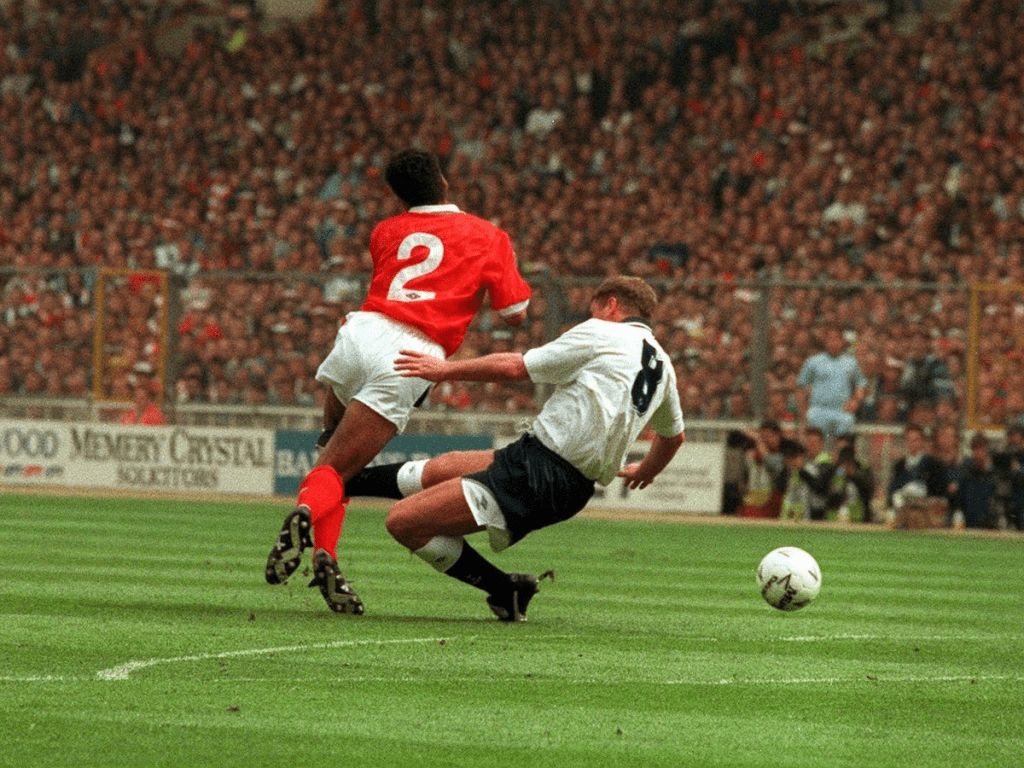
Gazza’s ‘tackle’ on Gary Charles

There’s also the small matter of injustice about the match, something else which led to my initial reaction and had me ruminating in the weeks and months that followed. 

Paul Gascoigne committed two wild brutal fouls on Gary Charles and Garry Parker, which in any other game, and if he was any other player, would have resulted in Spurs going down to 10 men. Gazza eventually left the pitch but on a stretcher – an injury sustained during one of the fouls. He was treated like a gallant hero, when he should have been the villain. Before he ‘bravely’ left the game, the resulting freekick, from one of his fouls, was dispatched into the top corner by Stuart Pearce. Justice served. A goal that deserved to win any cup final. Forest led 1-0 at half-time. Our goalkeeper Mark Crossley also saved a penalty from Gary Lineker. Everything was going right. However, the player who came on Gazza, Paul Stewart, had the best 45 minutes of his life, scoring the equaliser. The game went to extra-time and Forest defender Des Walker scored an own goal (further perceived humiliation) to hand Spurs the cup. It shouldn’t have been this way.
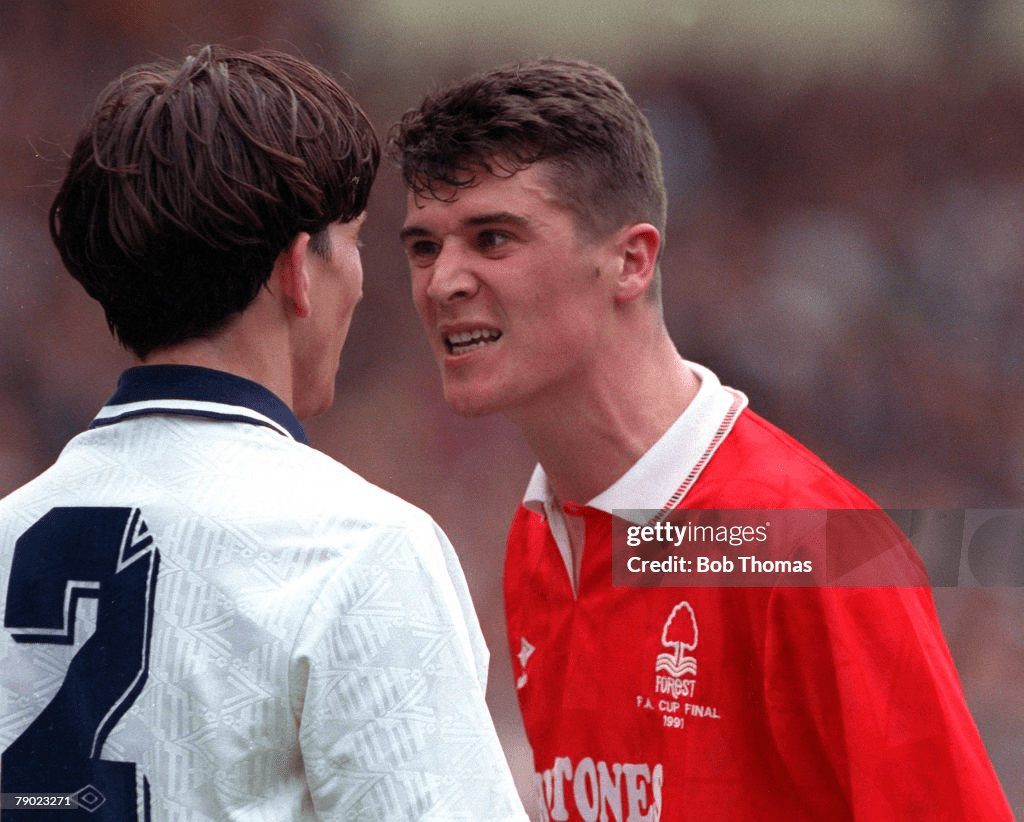
Roy Keane reacts to Justin Edinburgh

ADHDers suffer from ‘justice sensitivity’. We react quite intensely to unfairness while experiencing strong emotions like anger. We also have difficulty letting things go. There’s a strong need to restore justice. This manifests itself in all walks of life from politics to people not picking up their dog’s shit. Justice sensitivity explains my reaction to the 1991 cup final and why it still bothers me from time to time.

I’m now in my late forties. I still get upset, but I regulate my emotions better through a variety of methods – journaling, mindfulness, and good old fashioned talking (something I wouldn’t have done at 13). I can let things go during a match, but sometimes there’s a perfect storm that sends me into a spiral of negativity – thus flaring up my ADHD symptoms.

It’s Forest vs Bournemouth, 23 December 2023. The referee is Rob Jones, who with breathtaking incompetence sends off our defender Willy Boly after 23 minutes. Even at the distance I was sat, 70 metres away, I could see that Boly had won the ball. I even remember excitedly exclaiming ‘great tackle!’, only to see the inept Jones give Boly his second yellow. Replays will show not only did Boly win the ball, he was also fouled in the process – a possible red for the other player. Forest also had a penalty controversially turned down when the ball struck an outstretched arm. Despite the injustice we went a goal up. But then they scored twice in seven minutes. We equalised, only to lose the game late on.

I was so close to the Bournemouth fans I could see their gleeful, smug faces. The derision was all aimed at me. Like in ‘91, I was the loser. I was the one being mocked. Even the neurotypical Forest fans that day would have struggled following what happened. I don’t think I uttered a word to anyone until late in the evening. The justice sensitivity, the RSD, the struggle to control my emotions, the inability to snap out of it, all combined to make me feel terrible. I kept all these feelings inside when perhaps crying and raging would have been more therapeutic. However, displays of emotion as an adult are deemed inappropriate and unacceptable. Man the fuck up, etc etc…
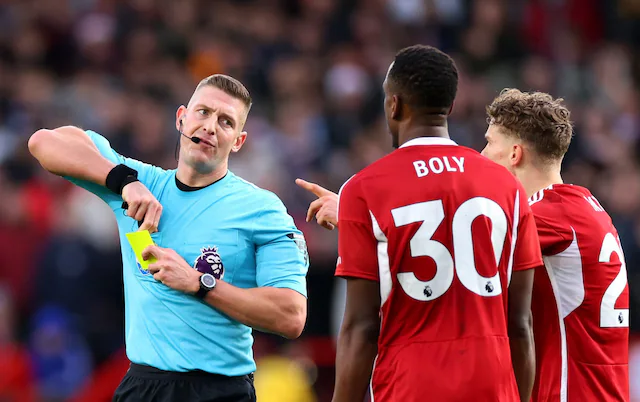
Rob Jones displays his ineptitude yet again

How can I, or someone else with ADHD, or not, have a better experience? 

  • Create distance and separate the football team from who you are. While supporters play their part we don’t make the decisions on the pitch. Not even the best teams win all the time. That would be boring. You need the bad times to feel the good times.
  • When people are taking the piss, they’re aiming it at the team, not you personally. You are not being criticised or attacked. Feel free to laugh it off. If they are attacking you personally then they’re not friends, and if you wouldn’t let them into your house, don’t let them into your head.
  • Be more objective than tribal. You can question players, coaches and the hierarchy. You’re not being paid to defend them.
  • Acceptance. No matter what happens you’ll always support the club and find some joy in that. Joy doesn’t always come from winning. It comes from the connections you make through supporting the club. Do not rely on the football team for your happiness. 
  • We don’t control what happens when things go wrong. No amount of anxiety will change what happens. We can only control how we think about something.
  • Acknowledge that human beings, especially Rob Jones make mistakes (time and time again). He can’t help being incompetent. It’s something he has to live with. Feel good in the fact that when you wake up in the morning you’re not Rob Jones.
  • Finally, as ever, if the plight of a football club or the result of a match, is the only thing causing you anxiety then you don’t have anything serious to worry about in the present.
A seemingly petulant child.

The Neurodivergent Teacher (for 3 months only)

Working in a school as a teacher exposed my ADHD traits. I just didn’t know it at the time. It’s blindingly obvious now.

Following redundancy from the BBC, during lockdown, I wasn’t sure what I wanted to do. Teaching appealed. Schools had stayed open during the pandemic to an extent. I wouldn’t be stuck at home. I would always be with people. I would be able to move and travel somewhere. 

I only wanted to be an art teacher. I wasn’t interested in anything else, the only other consideration was media due to my journalism background, but you can’t train solely as a media teacher. When I applied, and during my interview, the head of the course, Sally, and the woman who’d become my mentor, let’s call her Helga (six foot tall, blond, wouldn’t look out of place in a Bavarian village blowing an alphorn) were seduced by my former profession, and my age. The kids will love that you worked for the BBC

(Did they bollocks). 

My age, and life experience, apparently, would help with authority and relatability. I got the impression they thought I was an almost fully formed teacher. It would be easy to train me. I would breeze it. I was willing to go along with that. I got a lot of comments about my ‘calmness’… I present as calm… inside it’s like playing laser quest with drugged donkeys, set to a 1980s pop electro soundtrack – which sounds fun, but not when you’re trying to concentrate and stop kids punching each other. I did a good job of masking the chaos inside my head, mostly, until the real me showed up and they saw me for who I believed I was. A bit of a fraud. 

ADHD and imposter syndrome are linked. Traits of ADHD, like disorganisation and executive function challenges, lead to feelings of being a fraud despite accomplishments.

The first day of my teaching practice I was given my timetable. They’d added DT (design technology). My heart sank. I had hated DT at school, or CDT as it was known. They didn’t discuss it with me until it was too late. The reasoning was it would give me a better chance of a job. More likely, as there was only one art teacher, and one classroom, there wasn’t enough to go round. I should have done my homework, my research. As an ADHDer, planning and organisation aren’t my strong points. (Unless I REALLY want to do it, like planning a holiday).

I realised I’d been set up. There was more great news – there were barely any art teacher roles to go to after the course had finished. Therefore I could make myself more employable by learning another subject. And, as there was a shortage of DT teachers, voila. We’ll turn you into one… by default.

‘DT and art aren’t that dissimilar…’ 

Totally different.

‘You’re a MAN, you must love making things with wood and plastic.’

Haha. Nope. You’re so wrong. Ask my dad. 

Despite me paying for the course, I didn’t feel I had much choice to teach DT. As a people pleaser I went along with it. I tried my best to teach a subject I had no passion or interest in. God, I tried. But as far as I could tell it hadn’t changed since 1994. Kids were still sawing bits of coloured perspex with blunt hacksaws. The sounds and smells brought it all back. The clunk and slam of the vices, the scent of hot plastic. My old CDT teacher Mr Raynor, returned from the dead in his white jacket, giving off Nazi doctor vibes, to remind me how shit I was, smacking me over the head repeatedly with the crap ladle I’d made.

I fucking hated it. 

ADHDers are driven by what they are interested in, not what’s important or necessary. With the art side, what I wanted to do, I was absolutely fine. More than fine. This was my passion. I was buzzing. I spent ages planning a series of lessons about portraiture for a year 10 group. It didn’t feel like a chore. It was fun. Exciting.

I would dread the DT lessons. Before I had to start planning and teaching them, I would observe the teacher. I’ll call her Mrs P. She was quite stern, abrupt at times, there was a touch of Trunchball about her. She even scared me sometimes. She once told me how grateful I should be for Helga’s time. (I should say here, Helga volunteered to be a mentor, she wasn’t forced at gunpoint). This made me feel guilty and a burden. Classic ADHD.

I nearly killed Mrs P twice. Once by eating nuts in the office… I knew she had an allergy, but I didn’t know how much the nut dust would make her throat constrict. She left once, dramatically clutching her neck, until I’d hoovered all the nutty particles up.  

The second time I thought nothing of liberally using white spirit as oil paint thinner during the year 10 class. The vapors engulfed my room and hers, as well as the ground floor… and the whole school. Of course, white spirit is highly flammable, but I’d used it loads of times before without incident. Mrs P predicted the school would be engulfed in flames, and began opening windows and evacuating classrooms. I was left feeling the shame of potentially causing a major incident, but more the poor planning around this. I felt stupid, and all the other teachers thought I was a knob. They’d all be talking about that art teacher who nearly killed everyone.

I couldn’t help thinking that Mrs P didn’t think I was up to it. ‘You’re very brave to do this at your age,’ she commented once. It was a statement I’d heard a few times. Swap brave for stupid, and you get their true feelings.  During an observation, Mrs P was showing a year 7 group how to change a hacksaw blade, and I zoned out. My attention was taken by what was happening outside, the posters on the walls, the graffiti on the tables. Everything but what I was supposed to be listening to. I was bored as fuck.

‘Sir, can you show us how to do it?’ said Mrs P, after noticing my inattentiveness. ‘Oh fuck,’I thought, but I didn’t have enough time to freak out. Somehow, through intuition and blind luck, I figured it out. ADHDers tend to pull it out the bag under pressure. 

It never got any better. I was bored out of my mind. I couldn’t muster any enthusiasm. I worried over the whole of one weekend about teaching DT. The anxiety made me feel sick. I told Helga I didn’t want to do it anymore, and she took it badly, calling in the course leader for a meeting. I felt like a burden, I’d let them down. They explained teaching DT would help me get a job. They offered me the opportunity to create my own project, something that appealed to me. I accepted this when I shouldn’t have. Impulsively I’d said yes, when it meant more work, extra planning, when I had enough piling up already. I had no idea where to start. I’d only created more chaos, rather than reducing it.

ADHD can lead to a fear of letting people down due to difficulties with time management and impulsivity, often resulting in a pattern of overpromising or making mistakes. 

To make matters worse, in art, Helga decided she wouldn’t let me have her own planning for years 7, 8, 9. She told me the topic, the artists the kids would study, but that was it. I’d have to do it all from scratch. This felt grossly unfair. This wasn’t happening elsewhere among my new friends in other schools. But somehow, I was proving I wasn’t the fraud I thought I was, I was doing it. Pulling it all off. Along with my university work, and the work from class days. The weekly massive list of things to do would be completed by Sunday, and quickly filled back up again by Monday. It was exhausting. But I kept going. 

I loved the uni days. Being with the other trainees, building friendships, having fun. It was a huge part of me wanting to carry on. I felt popular. I made people laugh. I was a good friend. I was someone to turn to. I enjoyed people thinking I was well adjusted and coping well with it all. Breezing it. They say ADHDers are great actors due to the years of masking. I couldn’t agree more.

Dopamine levels are lower in ADHDers. This can lead to a craving for experiences that provide a reward. The novelty and thrill of pursuing new connections, friendships, can provide this hit.

As part of the course I had to have two weeks at a different school ahead of a longer placement there. I had two brilliant weeks. Hayley, the head of art, was brilliant. We were the same age. She was supportive and approachable. She was also a mother so understood family commitments. I didn’t feel the pressure I’d felt with Helga. Hayley knew it was a job, it was important, but it wasn’t everything. It was a breath of fresh air in comparison to Helga. I lost count of the amount of times Helga had said to me: ‘You’ve got to really want it.’ I did want it, but I didn’t want it to come at the cost of everything else. Helga liked to brag about how dedicated she was, staying until 8pm at night sometimes. Good for you, but fuck that.

I cracked when Helga asked me to attend a year 11 parents’ evening. I didn’t even teach year 11. The same date was my son’s birthday. We had plans, and I’d only been given two weeks notice. It was unfair to ask me to do it. After saying no, Helga didn’t give in. Again, she got the backing of the course leader. I could attend half of the parents’ evening and then go home. I reluctantly agreed but I was livid about it. I seethed. Helga could tell, and she asked me what was wrong. It all poured out… She told me the date had been in the diary since the start of term. (I had never seen this). I should have known. It was my fault. I grabbed my coat and I walked out of the room. I never returned to the school. I was called into a meeting with the course leader the next day, and was told if I’d done that as a teacher I’d have been facing a disciplinary. I took the blame, but I still felt I was right. I was being exploited.

ADHD is linked to a heightened sensitivity to injustice, which can manifest as intense emotional reactions like anger or frustration over perceived unfairness.

Following my dressing down, I was asked whether I wanted to continue. I wasn’t sure. I felt so low. I didn’t want to let anyone down. It was an intense feeling and I was really hard on myself. This didn’t stop me feeling like shit while doing a lot of soul searching. 

Reflecting on this experience I realised I was likely suffering from Rejection Dysphoria Syndrome. RDS is an intense emotional reaction to perceived or actual rejection or criticism. RDS can lead to low self-esteem due to the internalisation of past criticism. Over time, this cycle can negatively impact self-worth. I think taking the blame and backing down was probably me thinking I’d caused a lot of pain to lots of people. 

Looking back I struggled with a lot of the work. I wasn’t always sure I understood the educational theories as part of the PGCE. I didn’t ask, I slipped back into an old way of thinking, ‘I’ll figure it out later’ – except I didn’t. Most of the time I’d forget what I’d learned that day.

We also had to do English and maths GSCE papers as part of the course. This was no longer required by the government, but the course leaders thought it was important. I had zero time to prepare, although those working at the school where the course was based, were able to access past papers. I struggled with both exams. I just passed the English paper, but failed the maths. I would have to resit it. I felt embarrassed and ashamed. I cried on my way home. As a teenager it had taken me three attempts to pass maths. I’d always struggled with the subject. 

I remember feeling confused and panicked by the maths questions, and in some cases, thinking I understood only to answer in a completely different and wrong way. I know when I’m following instructions that I don’t always follow them carefully. I’m terrible at IKEA manuals, or instructions for games. My eyes dart around randomly like I’m trying to find a cheat code. 

ADHD can make following instructions difficult because of impacts on attention, working memory, and executive function.

In the end, I left the course. I spent the whole of Christmas 2021 brooding over what I was going to do. Lost in my own world. Not paying much attention to my family. I tried to keep going, but after we had to do online lessons due to another Covid spike, I quit. I was devastated. I remember going for a walk and breaking down. I’d left journalism, to start another one in education, thinking this is what I would do for the rest of my life. I was at the very bottom again. No job, and nothing to show for the three months I’d spent on the course. I’d wasted time. Wasted money. Got people’s hopes up, and now I’d fucked everything up.

Thankfully, I had the love and support of my wife, who herself was struggling in the profession as a neurotypical teacher. What hope did I have? I also had the support of my family and best friend, John. I do wonder where I’d have been without them. Depressed, certainly. Suicidal? Possibly. Adults with ADHD are 5 times more likely to attempt suicide. 

In my journal, on 5th January 2022, I wrote how much I’d enjoyed working with the pupils and students. It’s true, the memories of those connections remain. However, I wrote about what turned me off – ‘the admin, the data, questioning, assessment’. All things I would always struggle with if I carried on. 

I didn’t know I was neurodivergent at this time. But here’s the interesting thing. My favourite times were working with the ‘quirky kids’. The class that needed the most help. The kids with ADHD, dyslexia, autism and other needs. I connected with them and those who it was deemed were not capable of remaining in class due to behaviour issues. 

Apparently, there’s such a thing as a “ADHD radar” due to shared experiences and communication styles. This recognition comes from feeling a similar sense of being different, relating to each other’s struggles, and understanding each other’s communication patterns in a way that neurotypicals may not.

If this is true, how fascinating.

Picture: Me on the teaching away day missing the bar (target) and really hurting my bollocks (pride). This rather sums up my short teaching career.

The Distracted, Mardy Kid with the Busy Brain

As part of any neurodivergence assessment they ask you about the school years. It tests the memory, but it all gradually comes back. Primary school was harder to recall with it being about 40 years ago. But I did remember the frequent trouble I got into with one teacher when I was 8/9. I didn’t think I could do anything to please him. I frequently got into trouble, not for anything serious, but for impulsively calling out, not following instructions properly, trying too hard to please, getting distracted too easily. 

Rejection Sensitive Dysphoria (RSD) is a big part of ADHD. It’s extreme emotional pain from perceived or actual rejection, criticism, or failure, causing deep sadness and mood swings. I cried a lot and got called ‘mardy’ frequently at school in the 1980s, which I now attribute to RSD.

With Mr Howitt, the feeling that I was always pissing him off was off the scale. This had an adverse effect on me where not saying anything at all in class became the norm. The teacher I had in year 5 commented that he’d forget I was there half the time. I was that quiet. (Masking who I really was started early). The same teacher, incidentally, had previously shouted at me for kicking stones in the playground when he was trying to give a speech. I was clearly bored by what he was saying, and the stimulation of kicking stones was preferable.

Thankfully I still have my secondary school reports from 1990 to 1993. The word that pops up a lot in my 1990 report is ‘conscientious’ – wishing to do one’s work or duty well and thoroughly. Which is fair. I wanted to do well. I wanted to please. (ADHDers are generally people pleasers). I tried hard. I also get a lot of comments about being ‘pleasant’, ‘nice’, ‘polite’, and ‘bright’.

Mr Gudgeon, maths, said ‘I was very quiet’. I never asked for help. People with ADHD tend to not ask for help because they fear appearing incompetent. A misguided perfectionism makes you believe you should be able to do it all yourself. 

I came 7th in the exams, which meant I missed out on Set 1. A knock to my confidence, but it was probably for the best. I remember being distracted a lot in his class, he didn’t have the authority he should have. We had some big personalities there. When it was kicking off I’d look out the window and watch the gulls feasting on discarded chip cobs.

I needed to ‘show greater determination’ in music, according to a teacher whose name rhymed with raper. Well, sir, if you took your eyes and hands off the girls for a second, you’d see we only had battered old xylophones to work with. I can’t remember a smidgeon of what he taught us about music. I knew the opening to ‘Oh When the Saints’, but so did everyone else.

In 1991, my maths teacher said the ‘presentation of my work required attention’ – it needed to be in a ‘sensible and logical form’. In science, I had ‘little confidence in my own abilities’. In humanities, I apparently lost my enthusiasm and determination. My written work had become ‘shallow’ and lacking in detail. I needed to show more effort. Mr Raynor, in CDT, slates me. I need to make more effort and concentrate on my own work. (Your lessons were shit, sir, and so was your beard). 

Raper goes after me again. A lack of planning in the early stages shows up in my final performances. What final performances? 

In 1992, my form tutor commented on the need for ‘more detailed revision’. In maths, I’ve had ‘disappointing’ test results and I need to develop a more efficient method of revision. 

In Chemistry, I need to put more care and thought into my homework. In contrast to subjects I was engaged with like RE, bizarrely, the teacher was impressed with my thoroughness and research. But, in Physics, I was capable of doing better. In geography, excellent marks, but occasionally work isn’t such a ‘high standard’ and I need to show more care. Ms Hallsworth seems to suggest I get it, but I can’t be bothered. In French, the first two tests were decent, and the last one ‘rather disappointing’. My oral was acceptable, apparently… (Stop it. She was about 70).

In 1993, lovely Ms Briggs said I’m pleasant and have a ‘serious attitude’ when it comes to English. I remember her enjoying my stories and creative work. But she says I get distracted by other members of the class. In maths, my test results were ‘erratic’. In science, my results are ‘reasonable’. In geography, my written answers would benefit from ‘more careful planning and editing.’ In PE, I’m considered ‘pleasant but reserved’, but I’ve got a ‘good physique’ – erm, thanks sir, kind of you to notice… insert awkward emoji.

In 1994, they stopped handwriting reports, and instead chose statements from a computer programme that matched the pupil’s personality and ability. Except, many of us would end up with very similar reports.

In conclusion, wherever there’s a whiff of planning, strategy, organisation, revision, there is a problem. I recoil at all of those words. There’s also often a lack of care and attention to detail. I make simple mistakes. I forget what I’m asked to do. For example, we’d be told to write our homework out in our diaries. I wouldn’t bother. ‘I’ll remember later…’ But I didn’t because of poor executive function. I got away with it, thanks to friends reminding me on the day it was due. I’d often be doing homework on the bus, even art work in my sketch book. If I didn’t do the homework, I’d plead that I didn’t understand the task, and ask for help. I never got a single detention. If I wasn’t interested in the subject I would zone out, but I wonder, as I was well-behaved, if this was why I wasn’t considered having an issue. 

There wasn’t half as much assessment in the nineties as there is now. There were no records showing patterns of performance, and as a result no intervention could be made. However, there were far more extreme cases who needed help. I was capable, they knew that, but it was virtually impossible for me to summon up any sort of interest and enthusiasm for maths, science, music, CDT…

Even on the morning of an exam I’d be made aware of details I should have revised. I hadn’t remembered. I try to cram it in in the short space of time I have. I hadn’t clocked or understood what I needed to plan for. Ahead of some exams I thought nothing of staying up into the early hours to watch a World Cup football match (USA 1994).

I never publicly asked for help. I feared looking stupid and being laughed at. I couldn’t bear the humiliation – even a simple plea for clarity over a task. Perhaps I didn’t want to be exposed as a fraud. I wasn’t as clever as I believed. The disorganisation was never addressed. I thought it was just who I was, and somehow things would work out. The teachers didn’t pick me up on it. And, yet, the signs were there. As difficult as they were to spot.

My GCSE results were not what was expected. Just one A, two Bs, four Cs. D in English language was hard to take, the paper confused me (and I’m sure it would have been explained in class). I also left the exam early because I’d got so anxious I developed a migraine. The science results were a disaster, not that I had tried. 

I felt I was just as intelligent as my peers, who had got straight As, but they got to grips with what had to be done when it disappeared from mind instantly.

I had to resit maths, and eventually I got a C, after I finally bothered trying to understand the equations. I learned my lesson with English, at A-Level. I was much better prepared. As it was largely literature based I engaged with it more. History, however, I completely flunked, getting ‘ungraded’. Again, I hadn’t tried. I was so bored with it. I put in zero effort even though it meant failing. I left with two Bs, the other in art. I could have done much better.

But then again, beating yourself up is classic ADHD. Feelings of shame and guilt are common. And still are 40 years later!

Misadventures of the Headless Professor

ADHD causes forgetfulness due to impairments in working memory. Holding and processing information is problematic. This leads to difficulties in recalling details and following through on shit you need to do. Losing things is also a core trait of ADHD. Frequently misplacing everyday items due to a moment of distraction is frustratingly common. The stupid shit I’ve done, forgotten to do, and lost over the years!

This does not compute

In my short, ill fated teaching career I was given a laptop to do my planning. It contained the art department’s resources, and sensitive files about the children I was due to teach. I got on a bus that I thought would take me close to home. However, it didn’t stop where I’d been told it would. I got arsey with the driver, and I angrily left the bus, calling him ignorant along the way. I then phoned my wife to see if she could pick me. We agreed on a meeting place. I was halfway there when I realised I’d left the laptop on the bus. I was devastated. I felt so stupid. After a frantic call to the bus company I was told the laptop had been found. However, I’d have to wait a couple of hours before the bus returned to where I had been dropped. The SAME DRIVER. I would have to grovel. But it didn’t matter, I was reunited with the laptop. The relief! All that needless stress could have been prevented by simply looking back.

Patching things up

I was walking my mum’s dog, Patch, when I popped to the local shop. I tied him up outside, and explained, in that way you do with an animal, that I’d be back in a second. While in the shop, I wondered whether my friend John was home. I decided to pay him a visit. I left the shop, walking past Patch, who must have been thinking, ‘Where are you going?’ and strolled up to John’s house a few streets away. Thankfully he wasn’t home because at that point I remembered I’d left Patch at the shop. Panicked, I ran the whole way back. Thank fuck he was still there, and not been dognapped.

Bus-t up

To get to Hucknall to see my friends I got on a bus just outside the village where I lived. I jumped on the first red double decker I saw. As we reached Hucknall I worried it wasn’t going to the right part of the town. I needed to go to the estates, not the marketplace. I couldn’t remember the number, and I didn’t want to bother the driver. As we crawled in the traffic I decided to get off to walk, and find another bus. I reached another bus stop near the cinema, and looked at the timetable to find the bus I needed. It was due, and a minute later I boarded, paid the driver and sat down. Except, it was the same bus I had left minutes earlier. I only knew this when a friend of a friend witnessed what I had done. When I was told I couldn’t quite believe it. How was this possible?

That’s pants

Commuting to work by bicycle presents all sorts of opportunities for forgetting things. You have to take a whole change of clothes for a start. I’d frequently forget my underwear, and spend the day commando. This in turn caused me anxiety. What if for some unfathomable reason my trousers fell down in front of everyone? And I get accused of flashing. I was also haunted by a story I’d been told about my uncle catching his willy in his zip, and my grandma taking the shears to his shorts.

The Wrong Trousers

On another occasion I forgot my trousers, but remembered my pants! I only had my cycling bib shorts to wear at my desk, so I sent an email to the whole office appealing for a spare pair of trousers. Of course it caused a lot of mirth and pisstaking. I get a kick out of amusing people, at the same time I don’t want people to think I’m stupid, a clown. Maybe I should accept I’m a prat, but one who simply can’t help it. The weatherman provided me with a pair of trousers. Black, right waist, wrong length. White socks on show, like a terrible Michael Jackson impersonator.

Captain Underpants

I also left my BBC pass, the key to the building, in my trousers AT WORK. They were hanging in the shower room. I only remembered when I got to work for the early shift. Previous security guards would recognise me and just let me through. But one, who I nicknamed Captain Underpants, as he looked like the Dav Pilkey creation, seemed to have amnesia when it came to faces. He’d make you sign in, and then get a fellow staff member to vouch for you working there. As a repeat offender I’d experienced this before. I didn’t have time for that this particular morning, and so I called a colleague who dropped his pass out of the window for me. After parking my bike, I used the card to open the door. Captain Underpants was waiting on the other side. I explained to him what had happened, and that I would show him MY pass as soon as I got to the shower room. He chased me upstairs, well, he walked slowly, panting like a St Bernard, as I sprinted off. When he finally reached me I presented my pass an inch from his face, and he finally left me alone and fucked off. 

Who’s there?

The BBC landline phones did not display what their number was which was a problem when you needed to give it out for a story. It made it more difficult due to various desk changes, and as you never knew where you were going to be sitting on arrival. One particular time I had a hunch what the landline number was. To check, I dialled it from my smart phone. But annoyingly the phone next to me rang at the same time! I abandoned what I was doing to answer the phone. But there was no-one there. How annoying. I went back to the task and called the number again. Rudely, someone was trying to ring me again, disrupting my task. I hung up my phone and answered the landline. Again, no-one there! Was someone pissing me about? I tried for a final time, and realised the nuisance caller was in-fact me.  

Has anyone seen my Dad?

My most heartbreaking moment of forgetting was when I failed to turn up to meet my youngest son. I was in the flow of making a piece of art. I lost track of time. I snapped out of it when my phone rang. ‘Hello, Mr Heath,’ the voice said. ‘I’ve got Toby here, he said you’re supposed to be picking him up?’ Before she finished I was out the door. I couldn’t believe I’d forgotten him. I was so ashamed. He had just turned 11, but it was a long way from home, it was also winter and dark. I got to the school and apologised to the teachers who waited with him, and of course, Toby. Toby is a very forgiving kid, and probably got bored of my apologies. He told me as all the other kids were leaving and being collected, he walked up and down trying to find me. He asked around if anyone had seen me, and one horrible girl told him no-one cared about his dad. I remembered all the times my dad was late picking me up. The stress it caused me, and here I was, doing the same thing. I think I partly assumed my wife was picking him up, but it’s likely I wasn’t paying attention when she explained the plan.

I used all these stories in preparation for ADHD assessment meetings. Case closed.

20250816_2252478120452546847356862

Totally Wired

‘I’m totally wired. And I’m always worried.’

A porous memory, losing things, listening to people, and realising I’m not listening, switching tasks, worrying endlessly, walking away from conversations thinking, ‘why did you say that?’ 

Trying to do everything, everywhere, all at once, and not always well. Equally, being so deeply involved in a task, that I lose track of time (and forget important things like picking my son up).

Wondering if I’ve upset someone because they haven’t replied to a message. Agonising for days about something someone said, replaying conversations, overanalysing… All the time I have someone in my head telling me why I’m an idiot, why I’m not good enough, and why everything is shit, while playing S Club 7. 

Turns out it’s the way I’m wired. I can’t help it. At 47, I’ve been diagnosed with ADHD. This has come as a huge discovery.

I shared this with someone and she said, ‘What do you think you’ll get out of this… now?’

(Meaning: You’re old. What’s the point? 😂)

Well, it matters to me. It’s like finally being given my brain’s handbook. And now I can help manage things I’ve always struggled with. Others are surprised when I’ve told them – ‘really???’.

I don’t fit what they understand about ADHD, especially in boys and men. Clearly I’ve masked it well, even from myself. Having a neurodivergent brain explains why some things at work, at home, and in the world in general, are harder. 

Everything is set up for neurotypical brains. Instruction manuals, application forms, questionnaires, exams, meetings, timetables, supermarkets… I would be described as ‘high functioning’ – and luckily so, many ADHD males seem to end up in prison, or comedy…

At my worst I’m like a mad professor, à la Dr Emmet Brown, going from task to task in a fit of panic, causing chaos in the process. Maybe I’m more like a headless chicken, starting something only to be distracted by something else. Poulet sans tête. I should combine the two. Ultimately, I’m the Headless Professor. (Which also explains the clumsiness).