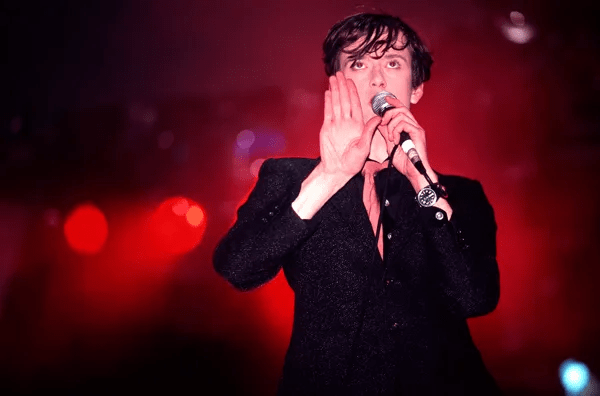
There’s a line in Spike Island, Pulp’s new song – ‘The universe shrugged, shrugged then moved on.’ It’s been taken as a comment on Jarvis Cocker’s and Pulp’s own popularity – after reaching the very top in 1995 / 96, they were swiftly heading back down without anyone really noticing. I can’t help feeling I let Jarvis down, ditching him for the ‘cool’ kids.
Pulp was the first band I ever related to. The songs were about the stuff I knew, I saw, I lived. A working class life. Jarvis would have loved the gossip in Hair by Melanie, my mum’s little corner shop hairdressers. She never knew I was listening, but I banked all the stories I shouldn’t have heard. Sex on pool tables after last orders, 30-year-old virgins being ‘shown the way’, customers discussing illicit affairs and inappropriate crushes.
When I first heard Babies, I thought, yep, I would have definitely hid inside that wardrobe. Talking of which, this reminds me in a roundabout way of being invited into a friend’s bedroom while she and two other girls got changed for a night out. They didn’t see me like the other lads. I was like some benign asexual being deemed to have no interest in tits whatsoever. Well, I did, and I was so shocked at seeing the much discussed breasts of Emily Craven (not real name) reflected in the wardrobe mirror, that I didn’t even tell any of my mates. I kept it to myself. Maybe it didn’t really happen.
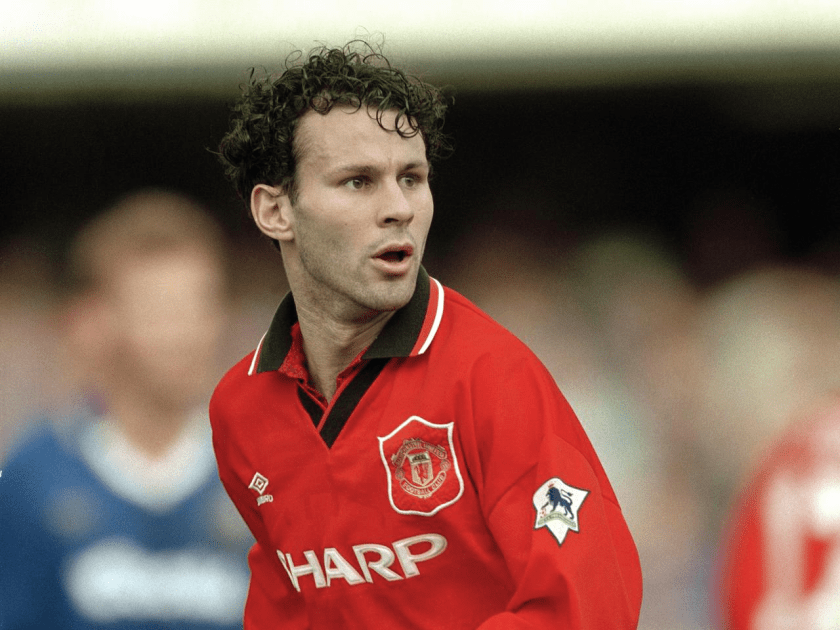
Disco 2000. Fully experienced that. Watching the girls I had fallen for, the ones I had entertained, made laugh, supported and listened to, go off with someone with one brain cell and the personality of a sea slug. But he looks like Ryan Giggs, while I looked like Jonny Briggs, so, you know… can’t compete there.
I always felt like an outsider. I was in the Misshapes gang, for sure. I remember reading the manifesto on the insert inside the CD single and thinking, ‘I’m on your side Jarvis’ and I couldn’t be prouder. I certainly got picked on at school and outside. I wasn’t afraid to tell people that I loved art, comics and a bit of Beethoven. The only reason I probably didn’t get beaten up was because I played football. Not that I was particularly good at it. Being a nerd and into football don’t usually go together. I stopped short of ever feeling the need to properly stand out. When my dad’s Colombian girlfriend bought me a knitted rucksack, with Aztec patterns, I politely declined the gift and gave it to my sister. ‘But all the boys in Paris have them.’ Can you imagine turning up for school, in Hucknall, with that on my back? During my university years, I once went back into Hucknall wearing a long Matrix-style leather jacket. I thought I looked magnificent and fucking cool. As soon as I stepped off the bus I got called ‘gay’.
Sorted for Es and Whizz. I never had the guts to do drugs. The Leah Betts story absolutely killed that for me. (Clearly all the stories about the alcohol related deaths did not). Despite the tabloid froth it was never a celebration about drugs, hence the last line of the song. I never had any desire to go to a rave either. Being given a map and location of the said rave would only lead to me being kidnapped and my kidneys cut out and sold. I’ve never wanted to be lost. A healthy mindset, perhaps. During an overnight outdoors ‘fun’ exercise for youth groups, I, the map reader, managed to get our team lost in the dark of Sherwood Forest. We arrived at a road, no sign of the hundreds of people taking part, and I remember thinking, ‘we’re dead, we’re absolutely fucked.’ So, a rave. No thanks. What the song does remind me of is the feeling that it wasn’t long before I could escape, before life would happen for me. Listening to Sorted in the car with a mate, dark fields around us, post-industrial, post-mining, post-anything Hucknall in the distance. It would soon all be left behind for a new life.
So much has been written about Common People, rightly so. I recognised a lot in the song, but it wasn’t as poignant as when I started university. Suddenly there were proper middle-class kids who had their own cars, paid-for gym memberships, not having to work because Daddy paid for it all. No full student grant? No bother. Why do Safeway when you can go to Waitrose? I remember having to put my mum’s income into my grant forms and feeling embarrassed for her.
I wanted to be Jarvis. At Rock City’s student nights I would pretend to be him and I didn’t care what anyone thought. I saw him and Pulp at the same venue and it still remains one of my favourite gigs, just because it was him and them. It should have carried on like that, but ahem, something changed (sorry). Regrettably I fell in with the group who, at school, would have shot darts at me from the back of the class. The sort who kicks your ball over the fence. ‘Fetch that y’ twat’. We’re talking Oasis here, of course. I fell for the lure of the troublemakers. I didn’t want to miss out. It felt like the cool kids had welcomed you in. A bit like when I was invited to red base, at school, during a wet break. But like red base you never really felt like you belonged. Knebworth was a fantastic experience, but largely for reasons that weren’t Oasis. I was with my best mate John for a start, the last time we spent time together before he went to university. The last adventure. I assumed this was it for us (We’re still mates 30 years on). I also saw for the first time, the Manics and The Charlatans, two bands who still mean so much more to me than Oasis ever did.
That evening, I remember looking around as the front pen got more crowded and seeing Dennis Wise. Proof if ever than I didn’t belong with this lot. It should have finished there really. After that day. But they limped on and on. And yes, I bought Be Here Now.
Pulp released This is Hardcore during my first year at uni. I had a poster of Different Class Jarvis flicking the Vs on my wall. I bought the album as soon as it was released. It wasn’t His ‘n’ Hers or Different Class. Much darker. It reflected my mood at the time. Sad, lonely, pretty miserable. I liked it, but it wasn’t the same. I still have trouble getting through it. My interest dwindled. I didn’t bother with We Love Life. I only bought the Greatest Hits when it was on offer at HMV for a fiver. I didn’t go to the Sherwood Pines gig which looking back would have been amazing. The solo albums were ok. I loved Jarvis’ shows on Six Music or any interview he does. I even named my dog after him. His book Good Pop, Bad Pop is brilliant. An ingenious way of telling his life story through objects he’s taken from house to house in plastic bags, stored away in the attic. I’ll have to do my own version. Why I’ve kept the A-Team sticker album is a mystery.
In one of the many recent articles about Pulp’s new album (which is superb by the way) it said history has been kind to them. I think that’s true. They’re the only ones who have survived ‘Britpop’ with any real credibility.
I never thought I’d get the chance to see Jarvis and Pulp perform again. You know when you get a sweat-on trying to purchase tickets, the fear that it’s all going to crash before you hit pay? That. Take my money. I’ll look at the price later.
The kitchen cupboards smelled the same as they always did wherever my grandparents had lived. A heady mix of opened jars of piccalilli, strawberry jam, Branston pickle and a half-eaten pack of Digestive biscuits. Clearing the cupboard evoked memories of the house they lived in when I was a child.
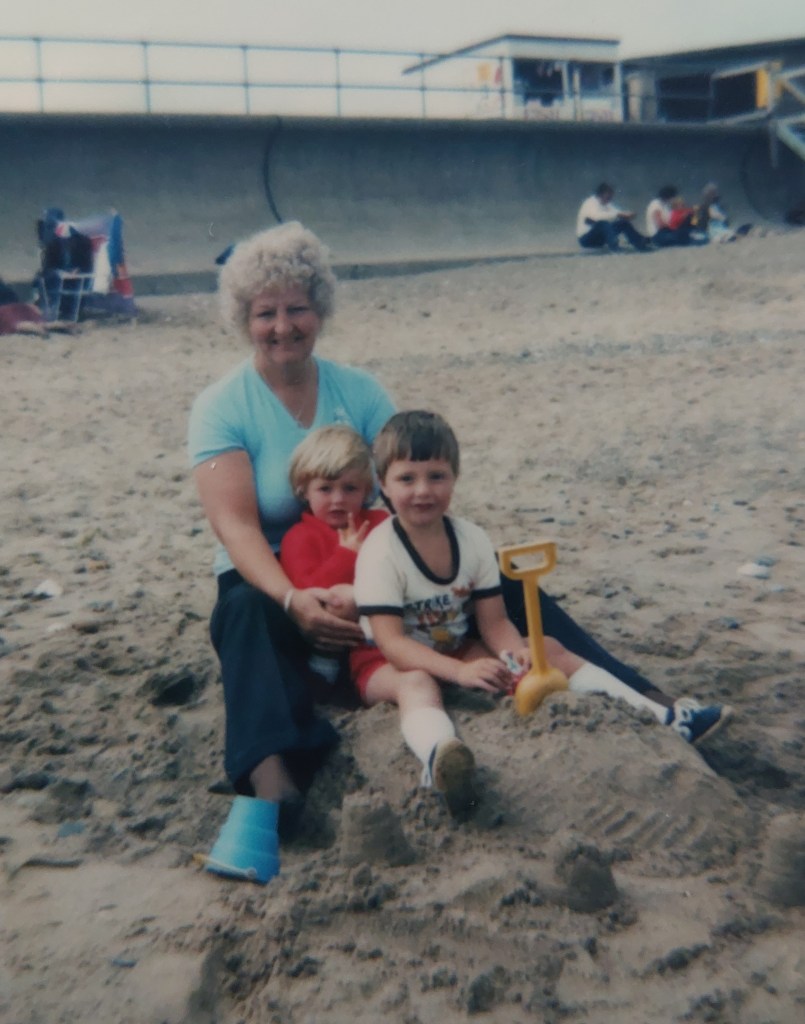
I spent so much time there while my parents worked. I would help my grandma, or Mama (Pronounced Mam-mar) as she was named, construct and bake meat pies. We’d play silly games we’d made up on the spot, watch Candlewick Green and Play School. Cherished memories.
Keep it together.
I shook the contents of the jars into the bin, washed them, and placed them in the recycling.
Three men, from a charity that did house clearances, arrived in two vans. The gaffer wore a black suit. He had a ponytail and a trimmed beard. He introduced himself as Sol. He reminded me of a nightclub bouncer. He directed the men into my grandparents’ ground floor flat. They obeyed him without a single word. My sister Sarah and I had already taken the TV, stereo and some of the bigger furniture away. Sol surveyed what was left, opening doors and poking his head into rooms, his expression never changing. He spied two bottles of Bell’s Whisky on a shelf in the living room.
‘What are you doing with them?’ he said.
‘Oh, would you like them?’ I said, jovially, grabbing both bottles by the neck. ‘Share them with the guys.’
‘No, no, they’re recovering alcoholics,’ said Sol, sternly, like I was supposed to know.
‘We can’t do that.’
One of the men looked straight ahead while carrying out a box. He’d clearly heard every word. I’d only bought the whisky a few days before. I always felt guilty doing so as I knew my grandad, who we’d always named Dada (pronounced Dad-dar), had a drink problem. As soon as he woke up, whether that was the middle of the night or the day, he’d pour himself a generous glass full before doing anything else. I didn’t have the heart to tackle it. What was the point?
He once called me late at night and told me he was in trouble. As my panic set in, he explained he’d run out of whisky. ‘You’ll have to wait until the morning then,’ I told him, annoyed.
Mama was just as bad. ‘We have it with lemonade,’ she’d say, defensively, like it somehow neutralised all the alcohol.
Sadly, the whisky helped soften the pain, for a few hours at least, of losing their only child, my mother.
Calling them after the ‘bar had opened’ was a much happier experience and was usually when the evening soaps had started. Before 6pm, you would get what we called her “Scooby Doo voice” – a tentative, worried, ‘hello?’, like she was expecting the worst from the person on the other end. I loved it when she realised it was me. She’d lighten up, then ask if I’d been to work, and whether Niki, my wife, and our boys were ok, and whether we’d had our tea. ‘Will they talk to me?’ she’d ask. Invariably, as small children, they’d be far too busy and while I tried to get their attention, Mama would be repeatedly cooing down the phone.
My grandparents moved from Nottingham to Ingoldmells, on the east coast, when I was 10. Until that point, they’d been living five doors down from us. They were in our lives daily. My mum ran her own hair salon at the front of our house and Mama would pop in to help out, shampooing hair and making tea. Whenever I was sick, she’d look after me. She’d make me ‘pie in soup’ for lunch, which is a recipe as simple as it sounds – a cooked steak and kidney pie placed in a bowl with hot tomato soup poured over the top. Don’t knock it until you’ve tried it. We’d watch any one of the Rocky films from the sofa. I’m surprised I never wanted to be a boxer I watched them so often. Mum and Dad had babysitters on call, and I remember the excitement of staying up late and watching Benny Hill, the Two Ronnies and even the Des O’Connor Show.
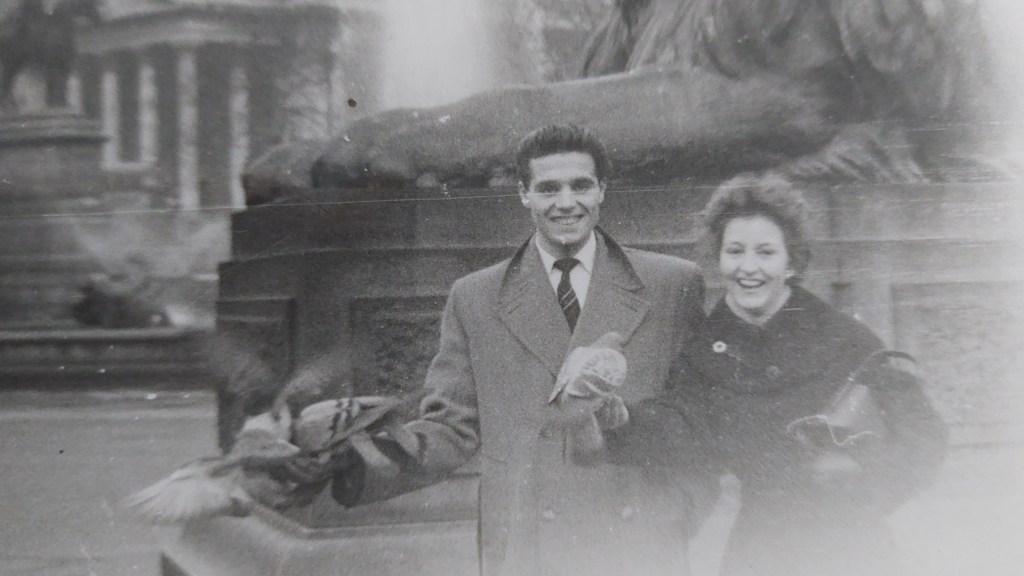
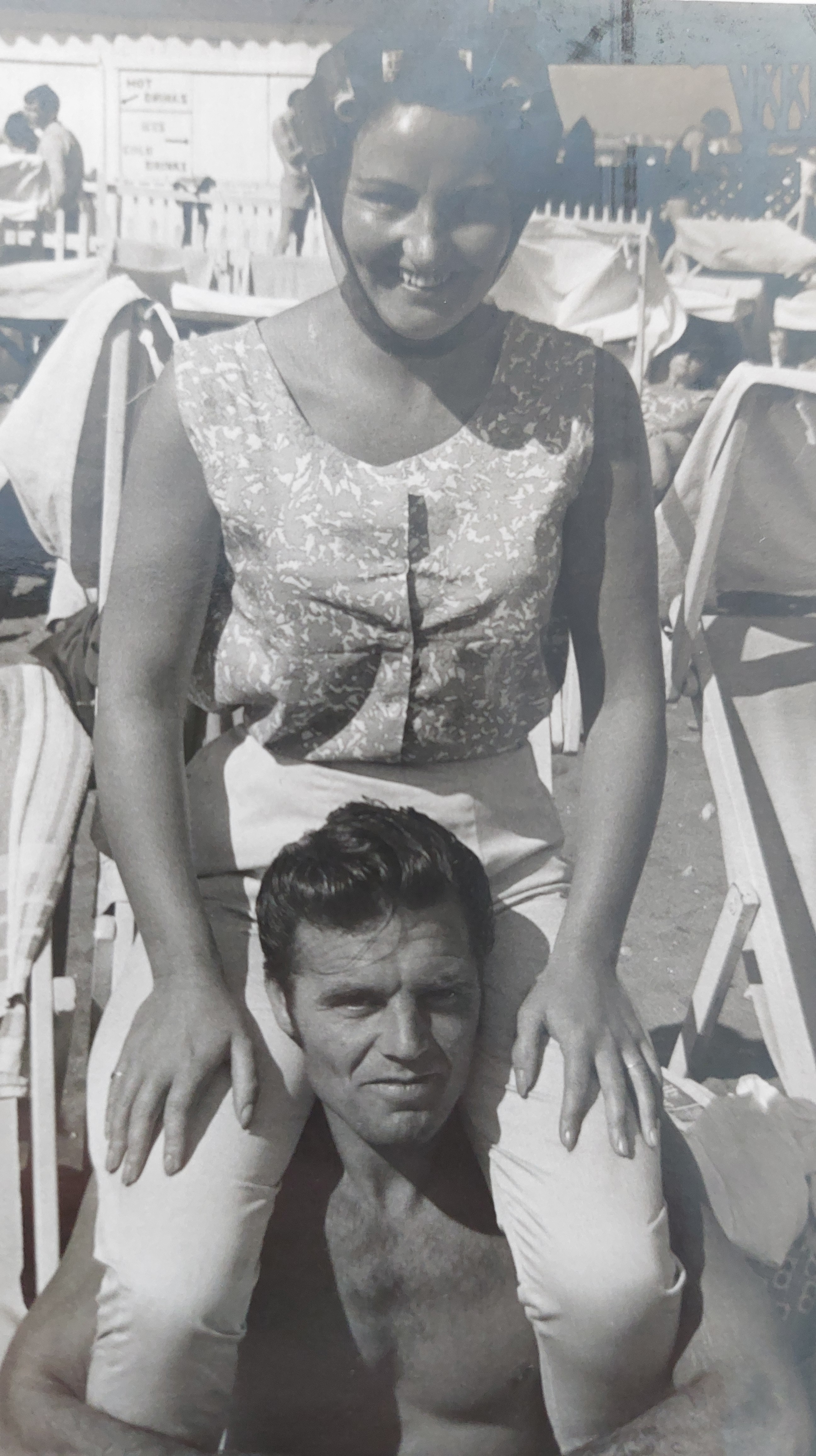
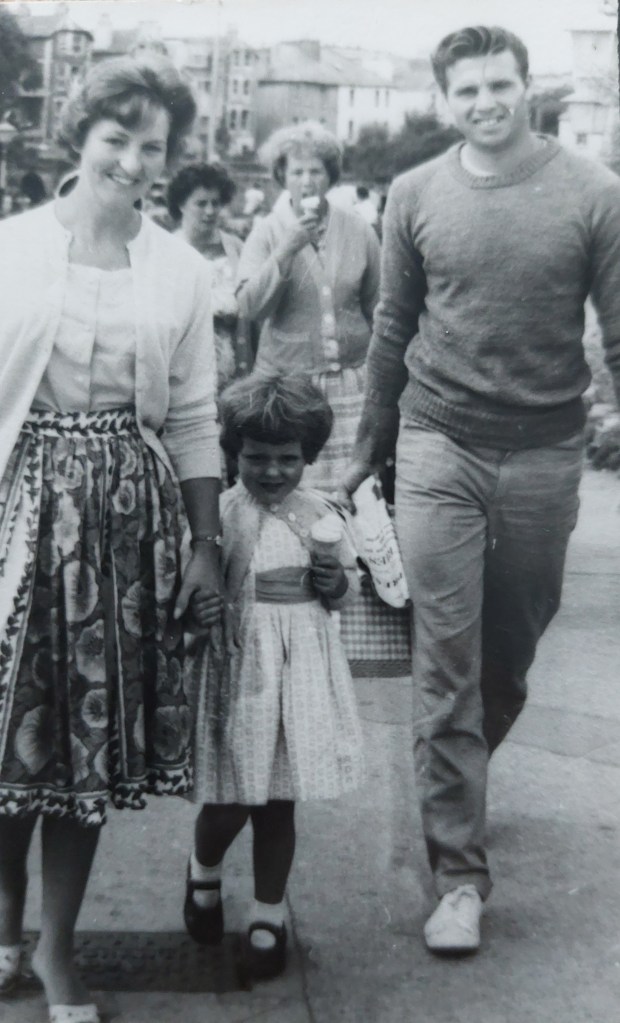
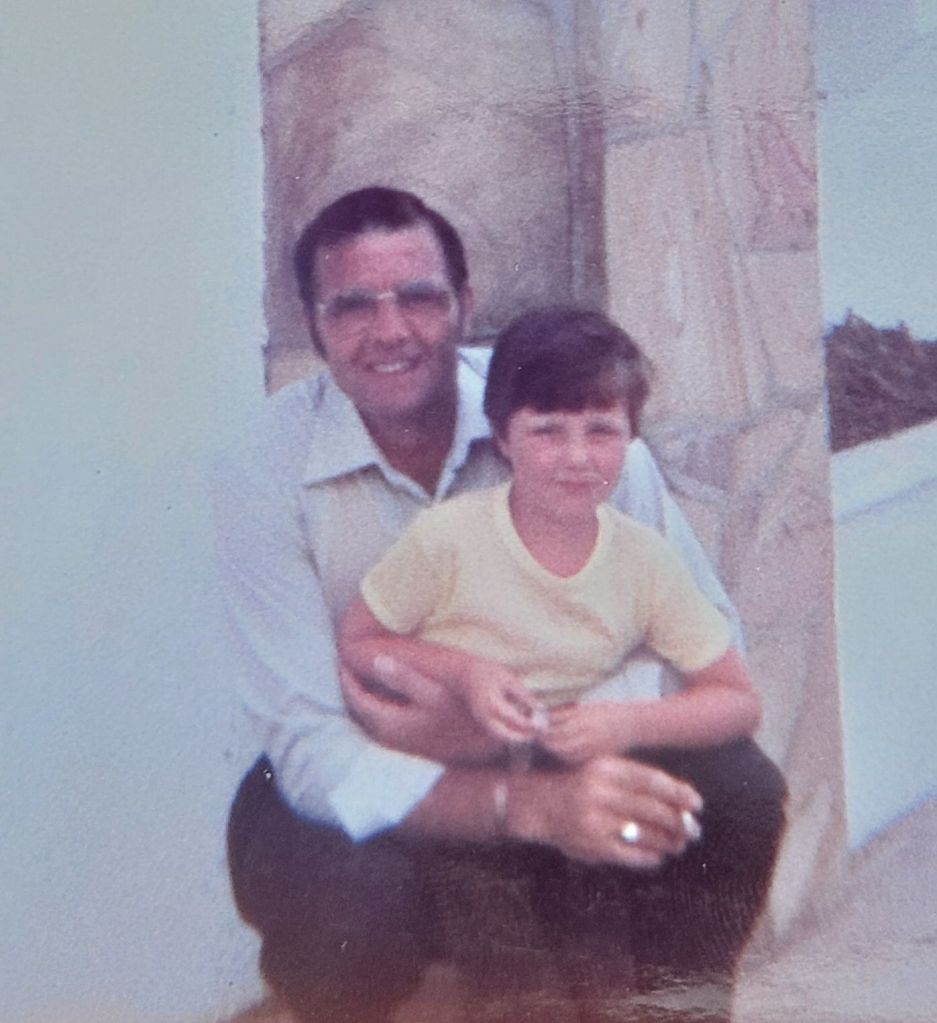
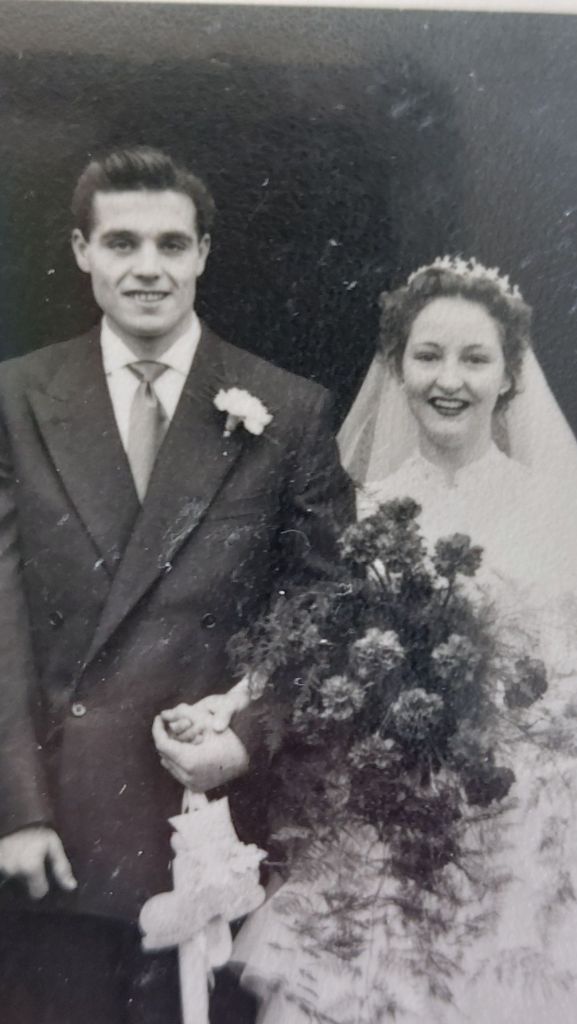
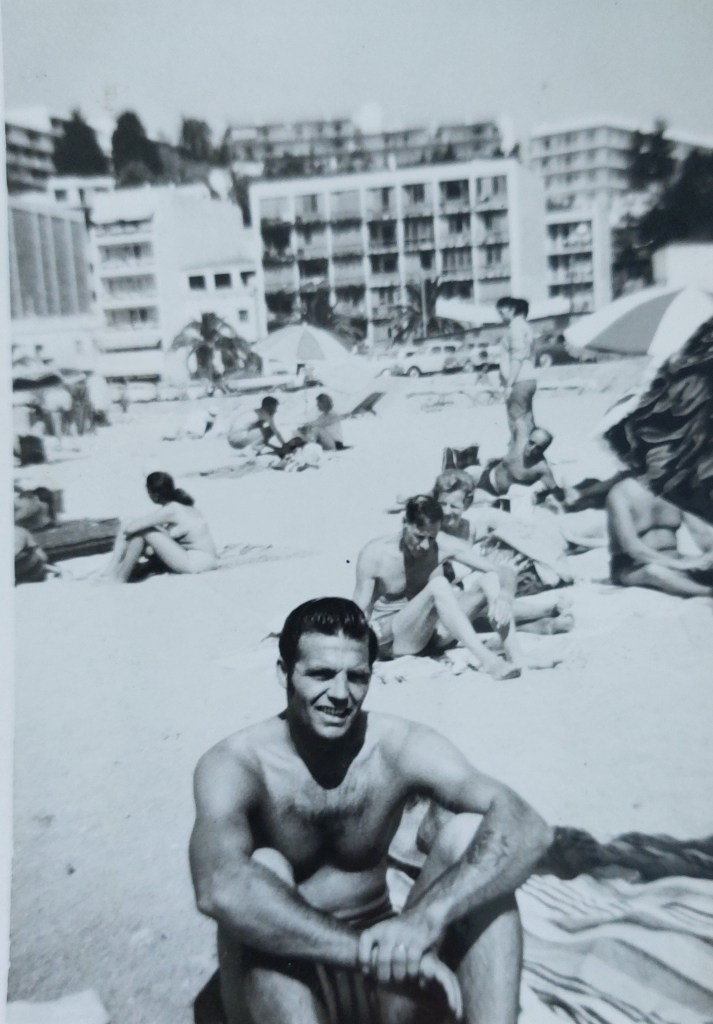
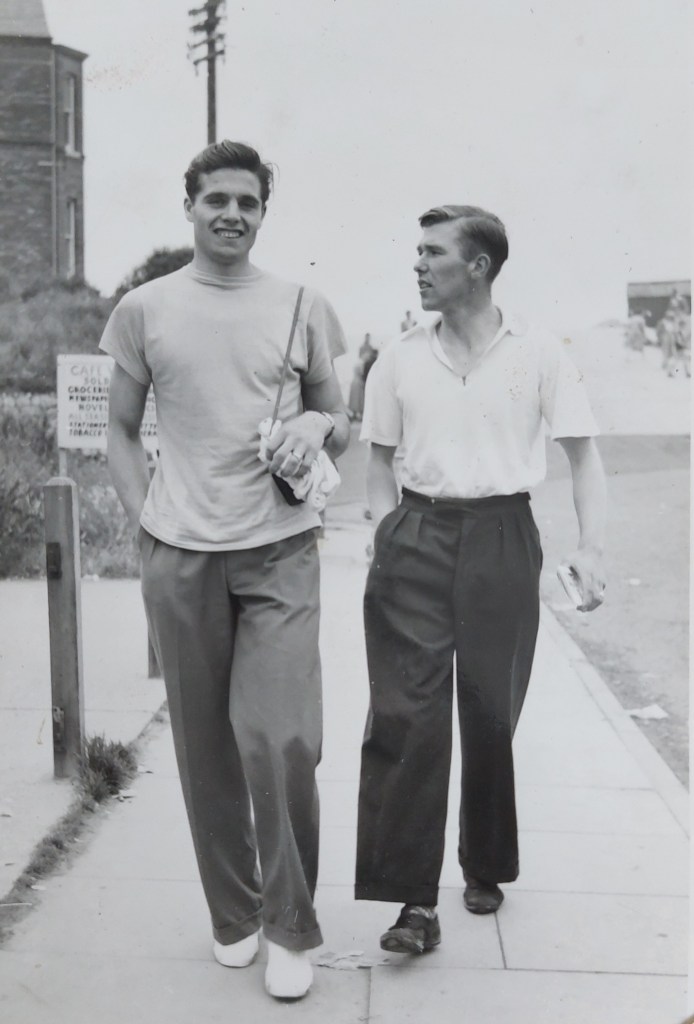
Life changed after Dada, a miner, was made redundant. He worked for a few years doing odd jobs – cleaning, painting and decorating, and gardening, but, still only in his fifties, he needed something else in his life. They’d both always wanted to live at the seaside and this was a good a time than any. They’d been visiting Ingoldmells, near Skegness, since they started courting. I have a photograph of them strolling up Sea Lane. Dada muscular and handsome, his hair like Elvis, and Mama pretty, slim and glamorous.
A golden couple.
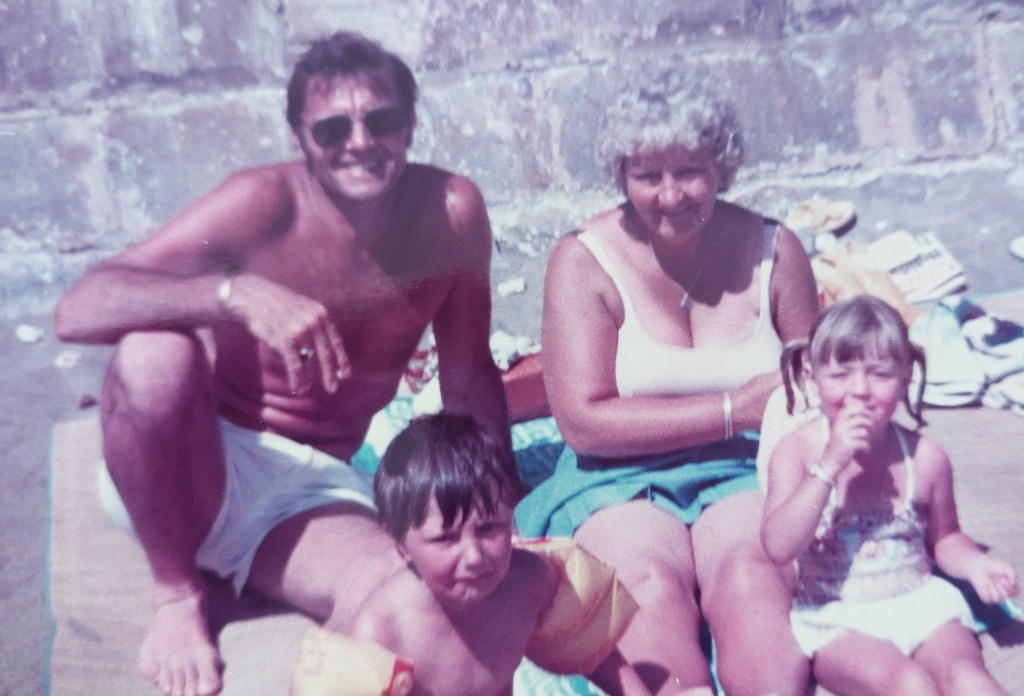
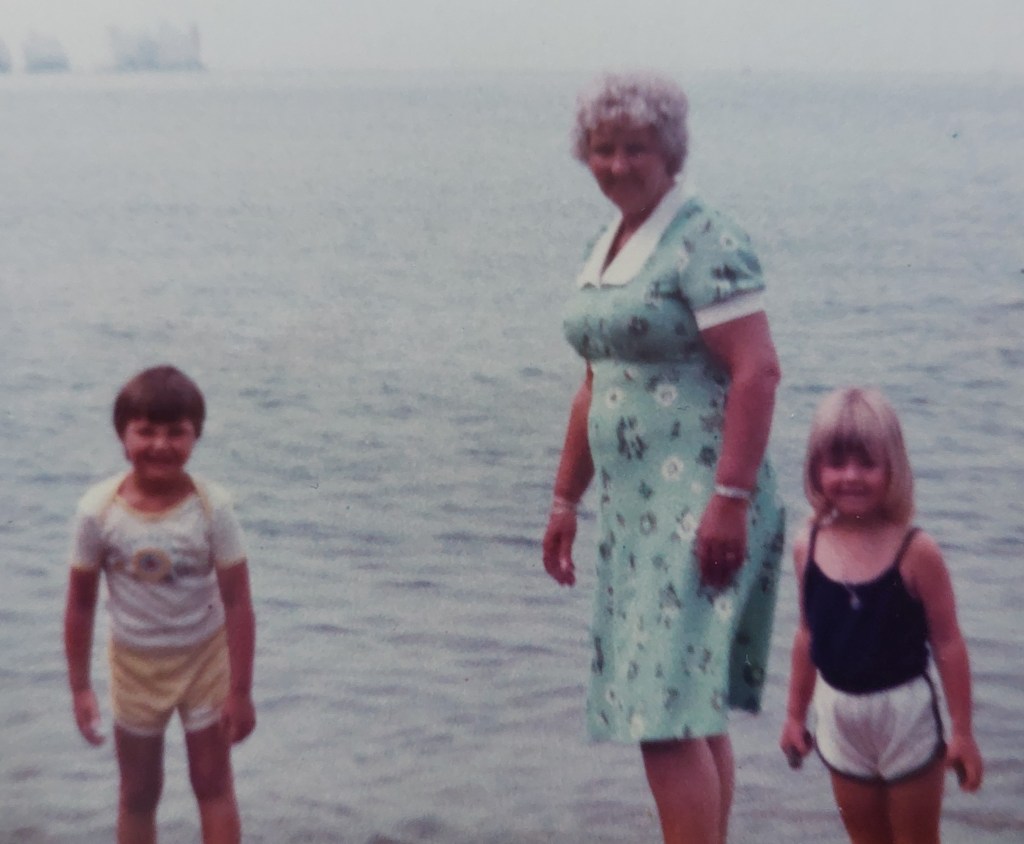
They had a caravan in Ingoldmells since before I was born and we had many holidays there. It was a magical place for Sarah and me, full of colour, noise, fun and excitement. A second home. Arriving in Ingoldmells felt like Christmas Day. Always.
The day they left, we watched them drive off in my grandad’s blue Sierra. I don’t remember crying, but I did feel disconsolate. I remember thinking ‘we’re on our own, now. How will we live without them?’ My parents were barely into their thirties. It felt like my grandparents took care of us all. In those forthcoming years my parents were divorced and entered new relationships. It’s symbolic how things collapsed during the time they were away.
We did see them often while they were living in Ingoldmells. Sarah and I spent most of the school holidays with them. Sometimes mum would drive us over for the weekend, they were only a couple of hours away. They just weren’t on the same street anymore. They were there seven years before returning.
It was hastened by Dada’s heart condition. Once, within half an hour of me arriving on a bus to Ingoldmells, Mama was calling for an ambulance. He was wrapped in a blue blanket, strapped to a chair as it was lifted into the vehicle. He was pale and talking to himself. I’d never seen him that way. Mama broke down in tears.
Dada was a simple man. By his own admission he wasn’t the brightest. He left school and went straight down the pit to work. He was a coal miner for 36 years.
The hard labour made him physically strong, my dad remembers feeling intimidated by his size when they first met. However, poor conditions at the pit and laxed safety left him blind in one eye and having to use glasses. Breathing in coal dust also caused emphysema, which eventually contributed to his death. But, ask him about his life as a miner, and he would say they were the best years of his life. I was proud he was a miner. It meant a lot in the community I grew up in.
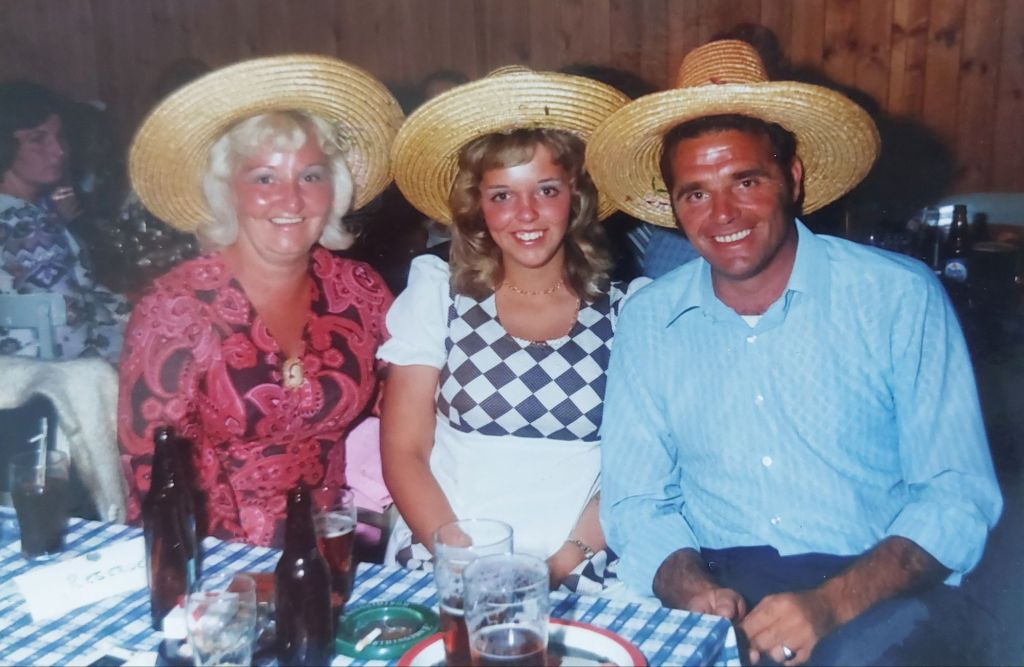
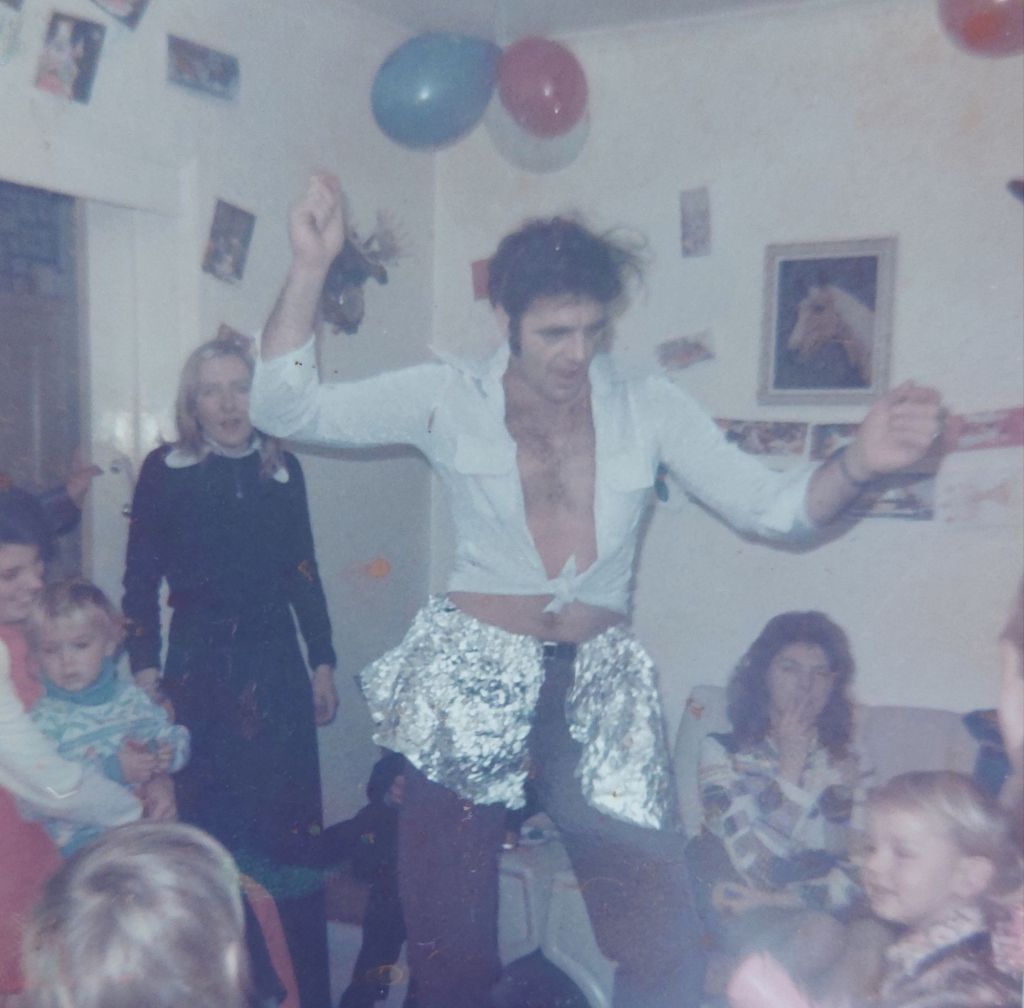
He loved football, he could have turned professional, but the risk of serious injury in the 1950s usually meant be unable to work and that meant poverty. He and Mama decided it wasn’t worth the risk. He was a Notts County fan, but he wouldn’t lose sleep over them losing. He just loved watching any game, whichever team was playing. He wasn’t much of a talker, even when it came to football, Mama usually did the talking for him. When he’d had a few, though, he was the life and soul of the party. There’s a picture of him dressed and dancing like Elvis, silver foil as trousers, and one with his mates with balloons under their tops pretending they had massive breasts.
He never told me off, I didn’t give him much cause to, but I remember feeling like I was taking a risk one night when we were walking back from a pub in Ingoldmells. I gleefully told him all the swear words I’d learned from Beverley Hills Cop II. He chuckled and guffawed as I repeated them, mimicking Eddie Murphy, acting out scenes, giving him the whole plot. All the time we were looking over our shoulders to see if anyone else was listening. There was a real warmth about him, he was kind and caring.
He did have a temper, but usually it was related to frustration and feelings of injustice. He’d apparently offered his brother John out for a fight on his wedding night, because he’d been rude about Mama. As an adult, I prevented him being knifed when some dickhead nearly ran him over. He shook his walking stick at him and the man stopped, wound his window down and started threatening him. My grandad told him to fuck off and it took every ounce of diplomacy I had from it turning into a tragedy.
Mama was one of 13 children and one of the youngest. She told me a middle-class childless couple wanted to adopt her and apparently it very nearly happened. Mama’s mother had a change of heart at the last minute.
Three of her four brothers fought in World War Two. One of them didn’t return. George Smith was on the HMS Hood when it was sunk by the German Battleship Bismarck. Only three men survived out of a crew of 1,418. Mama was only five-years-old when this happened and it was never clear that she had much memory of George, but still, his death had a profound impact on her for the rest of her life. She had a picture of him enlarged and framed. She also bought a plastic replica model of the ship from the Sunday Mirror magazine. They formed a small shrine on a brown varnished shelf as you entered the flat. We named our son, George, not with my great uncle in mind, but we allowed Mama to make that conclusion. She cried when we told her.
Hola
Her brother Walter fought the Germans with the RAF and spent a lot of time after the war in Rhodesia (now Zimbabwe). She often repeated a story about him returning and giving her a huge Easter egg because she was his favourite. He died before I was born, but my grandma stayed in touch with his wife Barbara. There weren’t many who did. She upset a lot of the family with her rudeness. Even her own daughter. Barbara later developed deafness and Mama and her communicated through a special telephone system. She often became flustered with it, having to end her sentences with ‘over to you’. But it only showed how much she cared about her whole family. It was her duty. Everyone got a birthday card. When I was clearing the flat, I found at least 20 unwritten cards in a plastic bag.
If anything, Mama cared too much. She got involved, interfered, with any family dramas she’d be told about, offering to ‘have a word’ with him or her, the so-called trouble causer. She’d also invent scenarios she was adamant were true. She’d once noticed Niki wasn’t wearing her engagement ring and created a narrative whereby the wedding was clearly going to be called off. The truth was we’d been grouting our bathroom and she didn’t want to damage it.
Towards the end of Mama’s life, her agoraphobia, and love of soap operas and crime dramas, helped create this internal fantasy world, blurring the lines of reality, where her neighbour upstairs had murdered his girlfriend (and buried her between his floor and their ceiling). She also told Sarah that Al Qaeda terrorists were training in the woods.
I’d always wondered, but was afraid to ask, why a couple who had 17 siblings between them, only had one child. I’d assumed they were happy with just Mum. But Mama, not long before she died, out of the blue, explained.
‘After your mam…’ she said.
‘We kept trying and when another one didn’t come along, I thought, well, we’ll have to wait for grandkids.’
I assumed there’d been a fertility issue and perhaps little medical help to change that in the late 1950s and early 1960s. My grandparents were only 43 when I was born. Plenty of people have children in their forties. They still could have been parents themselves.
‘When you were born, I ran through work, shouting ‘I’ve got a grandson, I’ve got a grandson!’
As touching as the story was and how my arrival had given them happiness, it was sad they never did have a second child. In later life (while this couldn’t have been predicted) following Mum’s death, it left Sarah and I as their main carers. Sarah was in a relationship and was commuting to Rutland, from Nottingham, to visit her partner. I had two small to children to prioritise. I visited as much as possible. I did what I could. I would do anything for them.
The wider family, that had been so close in the past, were now elderly themselves. The majority of my grandparents’ nieces and nephews had mostly moved around the country. They’d lost touch with the others. There were some who stayed in contact, but largely by telephone. Mama would never ask for help. Even from me at times. I wished for an uncle or aunt to take on the stress of looking after two elderly people
I once arrived at the flat once to find Mama on the floor of her bedroom. An ambulance was four hours away. Dada didn’t have the strength and so I had no choice but to lift her on to her bed. She wasn’t the lightest and it took a lot of effort. It wasn’t what either of us wanted.
*
‘Listen,’ said Sol, seriously.
‘There’s more stuff than we thought. I’m going to need another hundred.’
I knew he was right. There was much more than I had anticipated. How had they got so much into such a small flat. There were two walk-in cupboards. The right-hand cupboard in the short corridor, that led to the sole bedroom and bathroom, was stuffed with sheets, towels and blankets. On the shelves opposite were old plastic plant pots, tins of paint and varnish, tools, trays of screws, nuts and bolts. In the other cupboard were several shelves of videos (including Die Hard, The Guns of Navarone, various westerns and all the Rocky films), and cassette tapes with my grandma’s handwriting on the label – Cliff (Richard), Tom Jones, Tina Turner, Shakey (Shakin’ Stevens), Billy Fury… The videos and tapes brought back memories, which I had to shut down.
Get this done. Clean the place. Lock the door. Leave. It‘s just stuff. They’re gone.
In the kitchen were paper bags full of drugs. All prescription. Pain killers. Multi-coloured capsules. God knows what for. Geriatric junkies. I’m sure popping them with The Bells took them into another dimension, as the Prodigy song went. ‘Never get old,’ my grandma would say, heaving herself off the sofa to take her tablets. When we removed my grandad’s chair, among the crumbs, dust and nail clippings, were countless tablets he’d dropped and failed to retrieve.
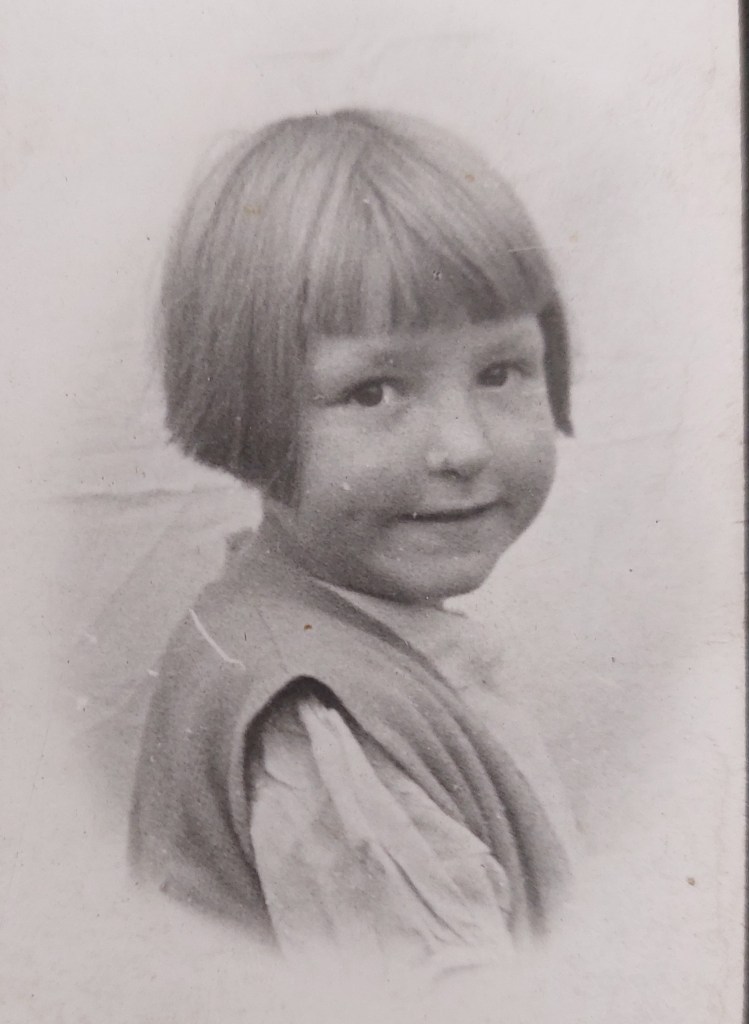
Beneath the neatly folded sheets I found a large plastic bag stuffed full of photographs. I knew it would hurt to go through them, but I had to look. I pulled out one Super Snaps envelope. Inside was a sepia picture of Mum as a little girl, her eyes wide with excitement on a fairground ride. Leafing through I stopped at another picture of her posing awkwardly as a teenager in the back garden, clearly not appreciating the camera being brought out. Time travelling further forward, a photograph of her as a mother, Sarah and I smiling either side. I was wearing a t-shirt with Mr T on the front. There was also a picture of Mum on her last holiday. A walking stick betraying her frailness. She was 45. A short life in four photographs.
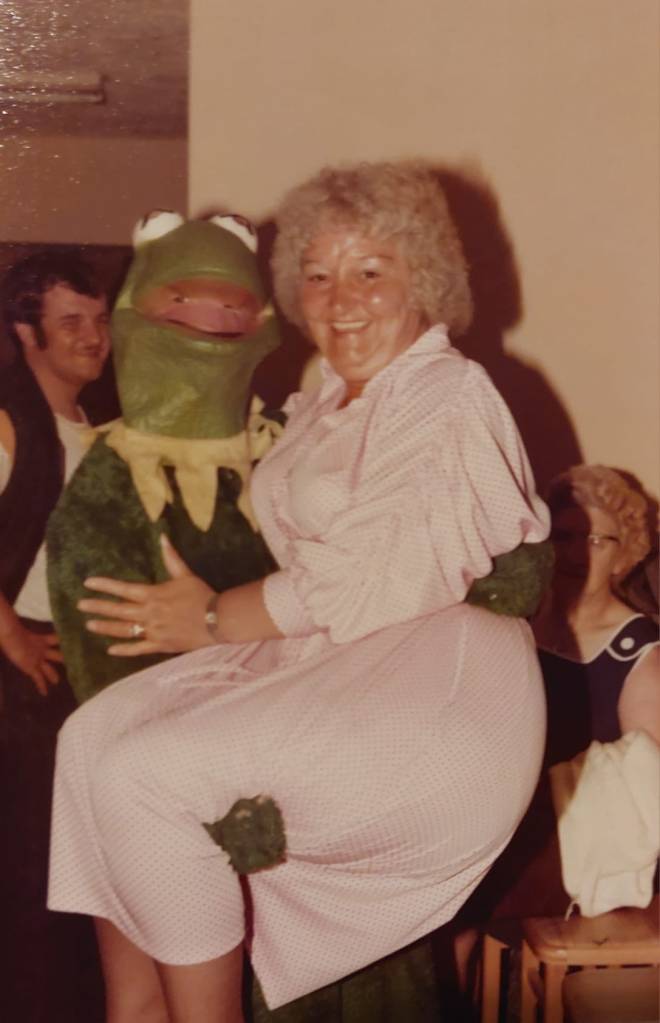
There was one picture in the bag I found quite disconcerting. It was of a woman at a party (held at a pub I knew well as a child) wearing a Miss Piggy mask and fake tits. Who the hell is that? I thought, before it dawned on me. My own grandmother. Why and for what reason, we’ll never know.
*
Once Sol and his men had finished loading boxes of grandparents’ possessions and furniture, he came for payment.
‘I guess you’ll sell all this,’ I said. ‘Make a bit of money for charity?’
‘There’s a few bits which might make something,’ he replied, counting the wad of cash I’d given him.
‘Most will just go in the skip.’
Clean up. Get out. Lock up.
Days before Sol and his crew showed up, two of my grandma’s remaining sisters, Barbara (not the deaf one) and Freda, came round to take some items. To my surprise they had coveted the kitsch plaster cast dogs my grandma had collected. Dead-eye westies and terrified looking terriers were heading for the bin in my mind.
‘Y’not getting rid of them dogs, are ya?’ said Barbara, outraged, like we were binning Fabergé eggs.
‘They might be worth summat.’
I sincerely doubted it. They were three for a tenner in Wilkos.
‘Take as many as you like,’ I replied.
The dog theme didn’t stop in the flat. In their car they’d had nodding dogs on the parcel shelf. It caused some mirth when my wife Niki borrowed the vehicle and pulled into the staff car park.
Dada had to give up the car in his early seventies. He’d been suffering with numbness and a lack of sensation in his feet. The doctor said it was likely caused by excessive alcohol consumption. The car would go before the whisky, though. He’d been driving like this for a while, lifting nerveless stumps between the pedals. Which terrified me every time he went out. His final drive came, according to Mama, when he mistook the brake for the “exhilarator” and nearly careered into someone’s front room. He made the sensible decision to sell the car after that. He bought a mobility scooter instead and his trips usually entailed popping to the corner shop for, well, I think you can guess.
Barbara and Freda were with Mama in her final days. A medical bed was installed for her in the front room. She’d quickly gone downhill following a spell in hospital and was sent home to die. It was an agonising few weeks watching her there, disorientated, making animal-like groans, the cancer slowly killing her. It was never clear whether Dada knew what was happening. Did he think she was going to get better? We didn’t have the heart to tell him. Perhaps he was in denial. The first time Barbara and Freda saw her like this they collapsed into tears. I was watching from the kitchen. The only way I thought I could make myself useful was by making tea and offering biscuits.
‘We’re the only ones left, Fre,’ said Barbara, holding my grandma’s hand, dabbing at her eyes with a tissue.
‘The last two, Barb,’ Freda replied, kissing my grandma’s forehead.
I imagined Mama suddenly sitting bolt upright, responding, ala Monty Python, ‘I’m not dead yet.’
Sarah was with her when she died. I travelled over. I kissed her already cold forehead. In truth, I’d said goodbye to her weeks before. We both knew her time was coming to an end. I wrote her a letter and told her how much she meant to me, and everything she’d done for me. Crucially, I’d explained why she should never feel guilt for moving away. It was something that ate away at her. They could have had more time with Mum. I know she appreciated the words. I found the letter during the clearance among her important documents.
We called for a nurse to confirm her death and issue a certificate. Following their visit we then contacted the funeral director. It all felt quick, but we didn’t want to leave her body there. Dada was traumatised as it was. He didn’t wait for them to arrive. He scuttled into his bedroom and wasn’t seen until the next day. Sarah stayed over and the first thing he said to her in the morning was ‘has she gone?’ before breaking down in tears.
*
Sol was on the phone again pacing outside the van. The other men slammed the back doors shut, got inside and obediently waited. I plugged in the vacuum cleaner and started with the bedroom. I paused as I looked at the carpet. An archipelago of blood stains remained from where Dada had fallen on the way to the toilet a few weeks before he’d died. His blood was so thin from the Warfarin (a blood thinning medication) it barely clotted. He was nowhere near the phone and the emergency buzzer hadn’t worked. We later discovered a cable had become stuck under a chair leg, blocking the signal.
He pulled his duvet on top of him and slept on the floor covered in blood and excrement until morning. He was discovered by workmen who were fitting a walk-in shower. One of them called me to tell me he was in a bad way and an ambulance was on its way. Dada played it down. ‘I’m alright, duck’ he said. ‘Don’t worry. You get off to work.’ I met him later at the hospital. They told me he wouldn’t be able to live on his own anymore. Plans were made, but it didn’t matter, he died a few weeks later following an asthma attack.
He’d lived for four years following the death of his beloved wife. We didn’t think he’d get past four months. I went to see him as much as I could. I usually found him watching This Morning, a glass of whisky in his hand. He never had much to say. He’d react to some of the news items, a special on ‘Killer Clowns’, for example.
‘You know what I would do if some youth dressed up like that and jumped out on me?’
Before I could reply, he continued…
‘I’d give him a good smack and break his bloody neck.’
I went round once when he was watching Rocky III. For a man suffering increasingly from dementia, he knew every word of the film. He’d say the lines before Rocky Balboa and Apollo Creed uttered them on screen. He’d then chuckle to himself and have a swig from his glass.
He lived in a bubble I was slightly envious of. News couldn’t affect him; the worst had already happened. I asked him if he was going to vote in the 2015 election and he replied, ‘I’ve not heard anything about it.’
His long-term memory was unaffected, but he would often repeat his stories. The baby of his family, by at least 10 years, he would tell me how protective his mum was of him. How much she doted on him. How he used to swim in the abstracted water from coal mines, which he said was lovely and warm. But also, how abusive his dad was, kicking their jack russell if he got in his way. Dada spoke of standing up to him before running out on to the fields with the dog. He didn’t talk about Mama and Mum. Not to me, but he would with Sarah. He told her how much he missed them and wanted to be with them. Perhaps it was an old-fashioned thing of not wanting to cry in front of another man.
For 21 years the centre of my grandparents’ universe was Melanie, my mother. She was their sole reason for living, for existing. She was their focus, the source of their anxiety, their fears and worries, but above all, their happiness. She’d survived three apparent near-death experiences as a child. Once when she had measles, her temperature rocketing, another when she was nearly run over by a car following a game of chase with her cousins, and finally, after getting a boiled sweet stuck in her throat – her Uncle Walter having to shake her upside down to release it. The event made the local newspaper and Mama kept the yellowing snippet, perhaps as a reminder of a lucky escape.
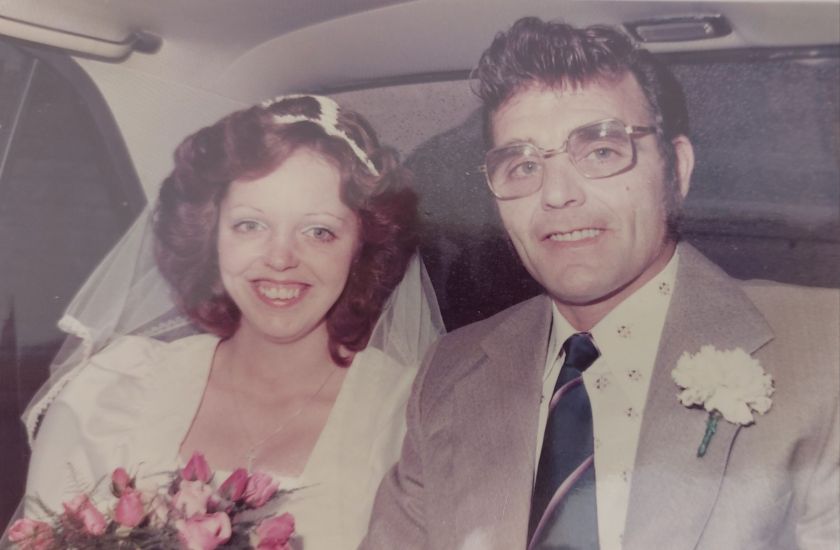
The arrivals of Sarah and me, made that world a little larger. As Mum was barely out of her teens when I was born, it felt like we were all my grandparents’ children. At times I sensed a touch of jealousy from Mum that she had to share. She’d accuse us, jokingly, of being spoiled. Having no siblings, it was the first time she had to share herself. When I went to university and Sarah moved out, Mum got them back to herself again.
Tragically, it wasn’t for long.
It only recently occurred to me the reason why the death of her brother George had been so traumatic for Mama. It wasn’t memories of him that hurt so much, but more the memory of seeing how his death devastated the family, particularly her mother. Her little boy, lost at sea. Never to return.
Mama was the strongest of us all in the agonising weeks as Mum lay dying. She never gave up. She hoped for a miracle. You never give up on your children. There’s not much that will ever hurt more than seeing your mother infantilised by disease. The cancer stripping her of her mind, her dignity and finally her life. But perhaps seeing her own mother nursing her, soothing her, brushing her teeth because she couldn’t do them herself anymore, and talking to her like she would have done when she was a child, was far worse.
I didn’t want this to be a sad story. My intention was to celebrate all three lives. This small family. My favourite times were being in their company, in the front room where I was now standing, and just listening to them. The gossip, the memories and the absurdity of what they talked about. The way they discussed market traders like they were crap superheroes: the Egg Man, Potato Man, Fish Man and Meat Man. There was also the day Mum and Mama were discussing potential pets and Dada, who had been silently watching the TV, suddenly piped up, ‘I’d like a nice cock’.
I chuckled to myself, before putting the two bottles of whisky in my rucksack. I grabbed the keys, had a final look around the flat and left for the last time, locking the door behind me. I took a full black bag to the bin and collected my bike. I passed through the gate, shutting it behind me for the last time. Before cycling away, I had a quick look over my shoulder in case Mama was waving me off. It was only then after holding it in for so long the tears started to fall.
They’re all gone. They’re never coming back.
I felt gratitude too. I was proud of them. They made me who I am.









 Neil Heath