In 2003, I was asked if I could go to a BBC Sport conference on behalf of the whole East Midlands area. I felt flattered. I was only 24. I didn’t do that much sport apart from putting up local football reports on the local BBC website on Saturdays. Why me? I must be doing well, I thought. They must trust me.
“No-one else can go,” came the reply. I was the sixth choice, as far I could tell, but I agreed to go, regardless. Two nights in Glasgow, where I’d never been, everything paid for. What the hell. Yeah, I’ll go even if I was at the bottom of the list.
I arrived at the Arthouse Hotel in the evening. It was the most elegant hotel I’d ever been to. It was a former 19th century townhouse and had a birdcage lift, stained-glass windows, tiled walls and high ceilings. Swish. I dumped my bag in my plush white room with a colourful abstract painting on the wall, and went down to the bar and restaurant on the ground floor.
The restaurant had that paired back look, exposed brick walls and wooden floors with warm atmospheric lighting. Ken Stott, the actor, was at the corner of the bar reading the newspaper. He had a whisky and a cigarette on the go. He looked like he wanted to be left alone. There was a relaxed feel about the place. A dozen or so diners chatted quietly. I felt a little frisson of excitement about it all.
Six years before I’d been sharing a room with my dad and another electrician in a grotty hotel in Paddington. I’d been working as Dad’s labourer to earn some extra cash for uni. It’s fair to say it was not the life for me. Nor was it a life Dad wanted for me. But now I was staying in this beautiful building, and the next day I was due to meet some important people at the BBC. My career was taking off.
I sat down at a table and was greeted by a young waitress, who I presumed was part-time, perhaps she was doing her A-Levels. She handed me a menu and while I scanned it, she placed a small basket of bread in the centre of the table.
I couldn’t decide on what to eat. This was before I stopped eating meat so I was overwhelmed with the choices. The waitress returned and lit a candle, placing it near the basket. She then left to give me more time to decide what to eat. I finally settled on a burger and put the menu down. At this point I noticed the bread basket had caught fire. I was hypnotised briefly as it burned slowly.
“Oh,” I thought. “I’d better…” I looked round, but the waitress was busy taking another order, and the other customers were so wrapped up in their conversations I didn’t want to alarm them. I looked over to the bar which had a queue and the only staff member was rushed off his feet. Ken Stott had gone, and had left the newspaper, not that it was any use right now. I stood and calmly picked the basket up. The flames were small, but showing no signs of stopping. I walked to the bar and waited to be served.
I often wonder why my fight or flight didn’t kick in that day, after all, I was holding something that was on fire. Ultimately, and perhaps this is the most English thing I can say about the matter, I just didn’t want to cause a fuss.
There was one more person ahead of me in the queue. Half the basket was on fire. The bread was getting scorched. But still I waited. And then finally, “Hello sir,” said a young man with a warm Glaswegian accent. “How can I help?”
I paused, before presenting the flaming bread basket. “Erm… This is on fire.”
I did it in a way that someone would do if they were delivering a surprise. Ta-da! I mean, it was a surprise, but it wasn’t a bunch of flowers or a bottle of wine.
“Oh shit!” he said, taking it from me and shoving it under a gushing cold tap with the appropriate urgency needed when something is on fire.
Breathing fast, and with his cortisol levels up, he looked directly at me with an ambiguous expression. I couldn’t tell whether he wanted a high five or more likely an explanation.
“I’ll just go back to my table now,” I said, leaving everything up in the air.
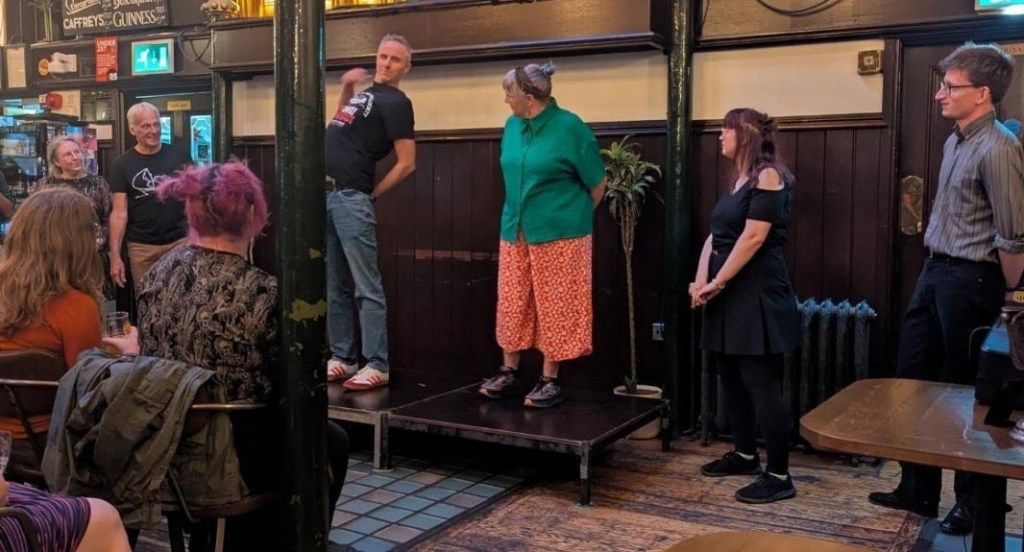
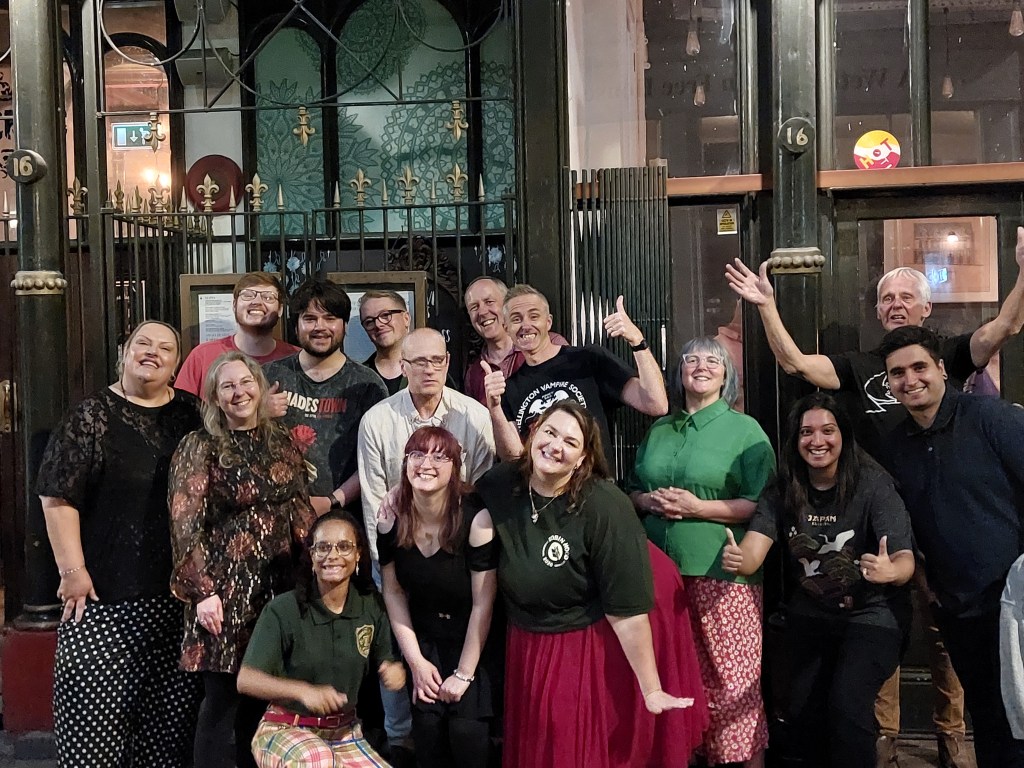
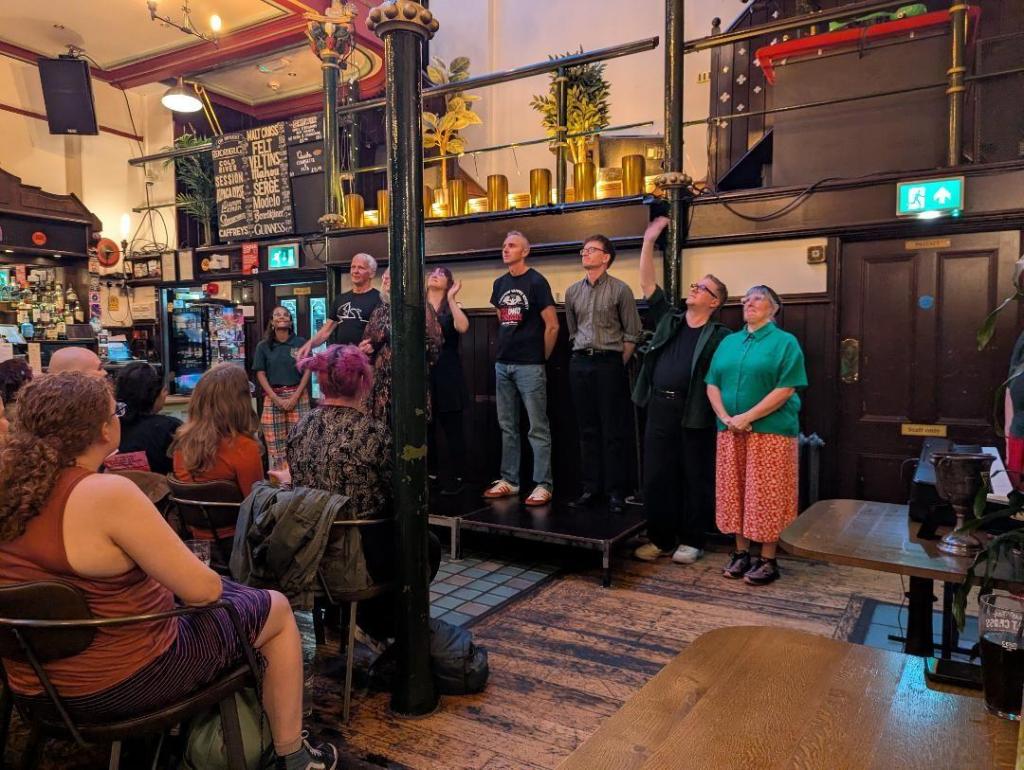
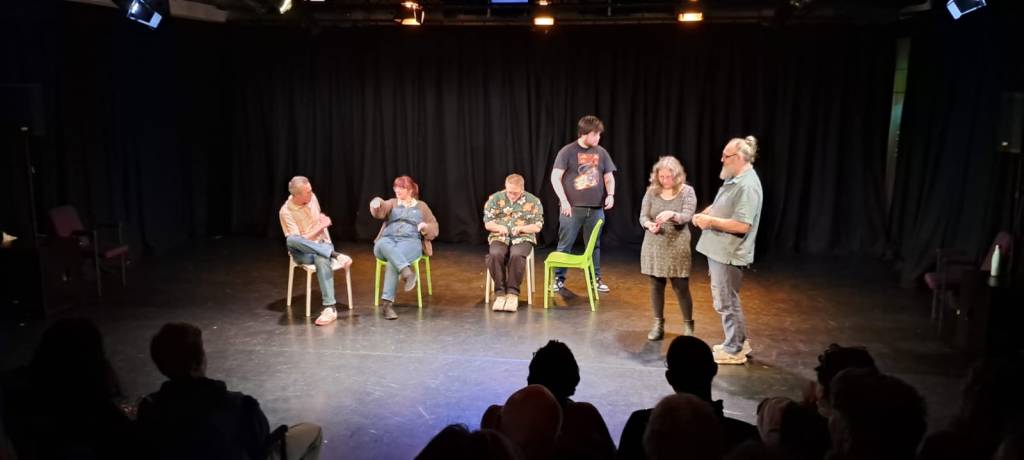
The opening night of the Robin Hood International Improv Festival (1 September 2026). I’m with my friends at the Malt Cross, in front of the world’s best improv performers and they’re loving what we’re doing. It’s so joyous. I can hear them laughing and it’s the biggest buzz. I feel like I belong here. I’m part of something. I’m accepted for who I am. It’s wonderful.
The festival has finished for this year, and won’t return until 2028. It’s been amazing and I feel bereft that it’s over. I’ve seen 14 astonishing shows and some incredible performances. I’ve also made new friends and learned so much. It has marked the beginning for me in so many ways.
To my shame, despite living in Nottingham, I had no idea about the festival, which began in 2022. I think there’s a few reasons for this. Firstly, since leaving the BBC, and my avoidance of news, I have little idea of what’s going on in my city. The festival would have certainly been something I would have jumped on as a journalist. Secondly, improv wasn’t really on my radar. I knew about it, and as a kid I faithfully watched Whose Line Is It Anyway every Friday night, but that was pretty much all I knew.
Despite everything I’ve learned in the classes I’ve taken this year, and the shows I’ve been in (a total of four now), the bit that was missing was seeing more performances. But not only the quantity, watching a diversity of shows was important too. It’s left me with a feeling of awe and appreciation for what can be created on stage. Out of nothing, pretty much, of course. Ideas have since been pinging off out of my brain like warm popcorn from a machine.
As a creative person nothing has been more exciting. I love art, I love writing, but with improv and performing, the possibilities feel endless. I don’t know who said it, but with improv you never ‘complete it’, you never master it, you’re never done. I think that’s why the art form is something that I’ll do for the rest of my life. And there’s never been a better time than here in Nottingham. While the festival, and its organisers, are taking a well earned break, there will be a focus next year on building on the work already taking place in the city. Developing performers, shows and teachers. It’s really exciting.
My biggest regret is that I didn’t start all this much sooner. I’m steaming towards 50. Not that it matters. Age isn’t an issue. It’s never too late. However, I do wonder where I’d be now. The sad thing is it’s always been there and for various reasons I’ve sat it out. I wonder what happened to the boy who performed on stage at the school Christmas show. The one who did all the Harry Enfield characters, without a shred of fear or what people would think. I was doing things like that all the time at home. Writing comedy, pretending to be Blackadder and Baldrick, making up plays… My sister and I used to improv being Radio DJs (although one particular show ended with us just farting down the mic – she was better at this than me and I so wish I still had the cassette tape).
In the 1990s, teenage working class boys didn’t do drama. They didn’t act. They didn’t perform. Especially in Hucknall. I wasn’t Billy Elliott or anything, but I would have benefitted from doing something in the performing arts sphere. If anything for my confidence and self-esteem. I survived at school because I liked football, playing and watching. An ‘acceptable’ hobby for a ‘lad’, but even then, I quit playing for school because I was fed up of being told I was shit. Largely during a match. We were on the same team, apparently.
I always chuckle when the ‘90s are held up as this golden age. Any little sign you were different, if you showed vulnerability, sensitivity, if you didn’t want to fight someone, or talk about girls in a derogatory way, you were not a lad or a ‘real man’ and was most probably gay. I didn’t fit the ‘mold’ of what a man apparently should be and there were times when I doubted my sexuality. There were also occasions when it was assumed I was a homosexual. (My best friend John, who is gay, would laugh here because he once said I’m the straightest person he knows). But I remember overhearing a conversation where someone confidently announced to those listening that I was gay. It shouldn’t have bothered me, but it did because it wasn’t true.
The desire to perform continued at university. Ultimately I wanted to work in radio and TV, and so I did a combined honours degree in Art and Media Studies. In the first year you had to take two other subjects. I chose English and Drama. Drama because there was nothing else I fancied. I remembered those rare drama classes at school – once a month if you were lucky. (The performing arts weren’t exactly a priority for the government or the school). I always enjoyed them. They were fun and clearly lit something up inside. However, the reality of a drama class at university hit me within minutes and I wanted to escape. I was seriously out of my depth. Even the warm up was too much. When it was my turn to mime what I liked to do, I told the tutor I couldn’t do it. The embarrassment was overwhelming. Someone tutted. Others were more encouraging. There was an activity where you had to choose an emotion and say your name repeatedly, and I just wanted to die. Quickly. I survived the hour and then immediately went to swap subjects. I did Business Studies instead which did nothing for me, apart from make a few new friends. I should have stuck with drama.
I did get to work in the media. But not as a presenter. I did bits on the radio and TV and they were fairly well received. But I decided that being an online journalist was best for me. When no-one was looking (late shifts usually) I was writing sketches, characters and stories. Material that no-one else would read or act out. The kid that loved being on stage and making people laugh was in there somewhere.
I’ve always suffered with low self-confidence. I’ve never felt comfortable in my own skin. What people have liked about me and found endearing, I have loathed at times. However, as I approach my sixth decade on the planet I’m feeling more like the person I want to be. Or, more importantly I accept who I am.
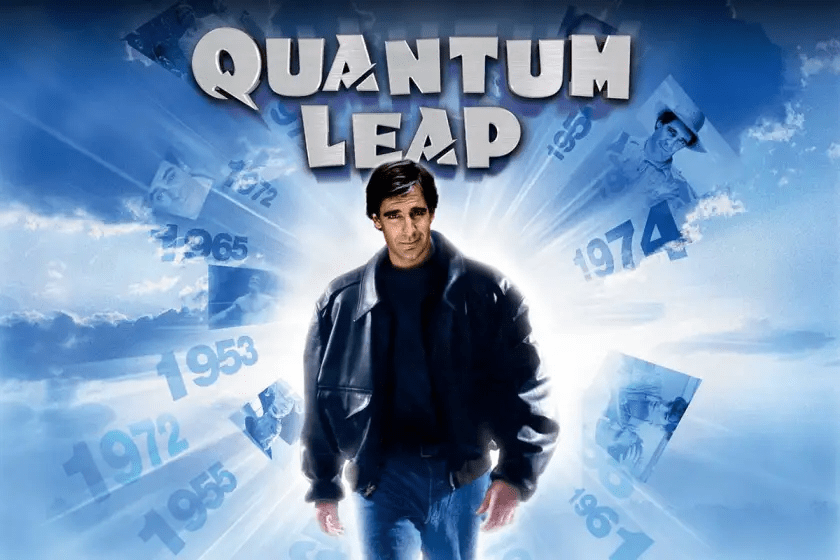
Quantum Leap was my favourite TV programme when I was a kid. It felt like it was made for me.
I loved the ideas of time travel and being someone else. Which probably said a lot about me and how I felt about myself. Escaping my time and my body.
The sci-fi series ran for five years from 1989 to 1993, and starred Scott Bakula as Dr. Sam Beckett, a physicist who has invented time travel. But unlike Marty McFly and his DeLorean, Sam doesn’t have a flux capacitor, he can’t go to a specific year, and returning isn’t as straightforward as driving 88 miles an hour or finding 1.21 gigawatts of energy.
Instead, Sam inhabits the bodies of people in history, within his own timeline, and with his own mind. He learns that in order to get home he has to change events in the past to make the final leap home. It was such a brilliant idea. Every episode he’d be somewhere different, as a different person, doing something he’d never done before.
Who, where, what.
Sam had to figure out who he was, with the help of Al (Dean Stockwell), a friend who only appears as a hologram and Ziggy, a super computer, and fix whatever had gone wrong in someone’s life. He never said, after leaping into a body:
‘I can’t do this! I know nothing about flying a plane, playing baseball, firing a machine gun, or even being a woman.’
He just had to work with what he knew and what he had. He even jumped into the body of Lee Harvey Oswald (an episode I missed!).
This was what was so fascinating about the programme… How would Sam get through this problem, inhabit the character and complete the mystery? And will it lead him to returning home? Invariably [SPOILER ALERT] it didn’t, until the 97th time, when he finally made it back. Sam would say ‘Oh Boy!’ each time he leapt and saw who he was. A family-friendly version of ‘Oh fuck!’
I was reading Will Hines’ book, How to be the Greatest Improviser on Earth, when he drew the comparison of Quantum Leap to improv. It was like a 100 lightbulbs going off in my head. Of course it is! It’s exactly the same, and just like Sam, you can’t say I don’t know how to ride a horse, fix a car, play guitar or be an old person. If someone tells you that’s who you are and what you do then to the best of your knowledge you inhabit that character and their skills. Obviously unless you truly know how to be or do those things, you do your best. And fucking that up is part of the fun and the comedy.
Denying what you’ve been told, rejecting that offer, and countering with a reply that you’re someone completely different, is of course wrong, and not much fun. I’ve seen it happen and it spoils the scene. You may well have a great idea, but if your partner starts with something then you build on that. That’s who you are and what you do. Don’t change it because it’s not what you wanted to do.
The consequence is you’ll both get confused and so will the audience. I’ve walked into scenes not fully knowing who I was and found out along the way. But like with Quantum Leap, you become that person, but instantly, and it doesn’t matter whether that’s in what you say, how you behave or in your body language.
There are exceptions and the possibility of a twist. For example, I was once told I was a phlebotomist (a person who takes blood) and I was retiring. My patient (scene partner) was the last. Except I thought it would be funny if in my 30 years in the job I’d managed to avoid extracting any blood at all and I didn’t know what I was doing. Totally preposterous, it would never happen, but it was a funny idea and it worked. There’s a distinction between that and an out right denial, e.g. ‘I’m not a phlebotomist, that’s not my name, I’m actually a cowboy named Tex and this is all a dream… etc.
So, take a deep breath. Say, ‘Oh boy’ (in your head), let go of that idea you had, and see where others and the scene takes you. And, enjoy, because unlike with Sam, the stakes aren’t as high.
You’re still going home at the end of the evening.
Show night. I’m feeling good. I feel confident. I feel excited. I feel lots of trust in my fellow performers. I’ve got a character I want to try and their voice, and if the suggestion comes up, I’d like the chance to play a dog. Of course, with improv, things don’t always go to plan. Well, you don’t plan full stop. I realised I’ve learned more about leadership in one night than I have in the whole of my working life.
During my second term I’d spent a lot of time playing walk-ons. I played a weird grumpy caretaker, a holiday camp mascot, a vampiric dentist, a downtrodden butler, a gnome that was basically a prop for 10 minutes before coming to life after its owner had taken LSD… I developed a slightly camp character named Nigel Boggins – a ufologist who worked for the council and lived with his mother. I’ve been living my dream. A chance to embody someone I’d created on paper, through a story or a drawing. I never thought I had the bottle to do it. It has been a joy.
I found it easier in class to let others lead and start a scene, and then when I was ready with something I would join in. This is a pattern throughout my life. Hang back, assess, make an offer, try and help improve things… This isn’t because I’m afraid of leading, it’s more about trusting what your team does and then seeing what you can add. Unless I have a really good idea I’m not going to just dive in and waffle until I figure it out, especially at the expense of someone else’s better ideas and plans. I’m not letting them do all the work, I’m there when they need me.
Improv indirectly teaches you about teamwork and leadership. I don’t believe leadership is about ignoring people and telling them what they should do, or castigating them for not doing something. Leadership is not about knowing all the answers or stomping around and shouting until everyone agrees with you and your actions. Or, get pissed off because someone has the audacity not to be able to read their mind. I believe leadership is about trusting people to do their jobs and being there for them, encouraging them and telling them why you think they’re awesome. Leadership is not about making people fearful due to a fixed idea of how things should be – this only shatters confidence and increases self-doubt. Second guessing what a ‘leader’ wants is draining – equally, so too is feeling scared you’re not doing what they want or would do themselves. If you feel intimidated it’s for a good reason. They want you to feel that way because it empowers them in a completely misguided way. It’s all very exhausting and doesn’t need to be this way.
Naomi, our brilliant teacher and leader, put us into teams before the show. I would have been happy with anyone, such is the trust and camaraderie we have built within the class. Our team was on first and we opened the show. As part of the form, in this case a sitcom, it has to be introduced and audience suggestions taken. It’s not something I’ve done before and if others want to do it, I kindly step aside. But no-one did and I respected that, it’s not easy and is quite scary in front of a full house. So, I volunteered. I believe this is what leaders do and I was happy to do it. A leader should never say, ‘well I guess I’ll do it, then!’ in a passive aggressive way, spreading guilt. Or point the finger at others and say, ‘you need to do this in order to grow’ or repeat another wanky meaningless statement uttered by a random unqualified influencer on Instagram. However, I was also conscious as the middle-aged guy, that it looked like I was denying my much younger Gen Z colleagues the limelight, and so I made a joke about them forcing me (the old guy) to do it. Which got laughs. Self-deprecation is attractive in a leader, I feel. It means you’re fallible, open and have a sense of humour.
I also had the responsibility of anchoring the sitcom. Beforehand I asked Naomi who the anchor was, and she said it was me, of course. Instead of freaking out, I thought, ok, cool. I had zero fear. Let’s see how this goes… This is because Naomi fosters a supportive, and inclusive atmosphere. You trust her. You’re free to try stuff. You’re free to fuck up. You value her feedback. It comes from a kind and genuine place. When she laughs at your choices, it means the world.
Anchoring is something I haven’t really done much of, and I’m happy to let others do if they want to. The anchor role is there to keep on top of what is happening, make sure the scene and story is making sense, while working with the team’s ideas and suggestions. The team relies on you for direction if things are going awry. I’m by no means great at it. But I do know at no point should it be about you and what you want to do, you have to work with what you get. So, no canine behaviour for me this evening. Another time, hopefully. Woof.
With improv you don’t know what’s coming. That’s the beauty and the terror. But again, fucking up is funny, right? The audience, your team, laughs with you because perfect doesn’t exist, you’re working at the speed of your internal processor, you don’t have a script. Scripts are boring. You marvel at the miracle of the mind and your own creativity. You think, ‘I wonder what’s coming out of my mouth next?’ The audience respects this, especially if you’re committing and being brave. They would be in your place if they had any desire to be, they’re not, because they would rather watch you and have fun.
In my short comedy improv career, I have found the audience to be hugely supportive. Hecklers, I thought, only exist in late night comedy clubs, but even there it’s frowned upon. You don’t pay money to hear some (not so)smart ass shout out something dumb. But we had a heckler. I’ve often imagined what I would do in the event of this. It happened so quickly. I remember feeling surprised by it. But after watching the video, it’s evident I simply decided not to draw attention to it. I carried on with what I was doing. Plus, the audience did my work for me, they put him in his place and he then apologised and quietened down, mostly*. Carrying on without calling him out was the right thing to do. If I had, there was a danger of throwing everyone in the team off their own game. Again, I think this shows leadership. We’re not going to stop, we’re not going to get angry, we’re here to have fun and make people happy.
As the anchor you’re directing a bit as well as acting. Without ever being dictatorial you instinctively know who needs to come in, or some in cases leave. You may be aware someone is hanging back, maybe because they’re not sure who they are in the scene and what to do. Then, you can help them: this is who you’re going to be (because you’ll be fantastic as that character) and this is where we’re going with the story. I’ve learned that from others in the class who have helped me massively when I’m stuck.
Nothing has made me prouder than watching a certain classmate improve each week. After his first week I didn’t think he’d come back. I knew he’d found it tough and I told him, through my own experience, that the hardest thing he’d done was to walk through the door on day one. Ten weeks later he did a show in front of an audience including his family and he was absolutely hilarious. It was so rewarding to witness this.
After we had finished our sitcom we returned to our seats. It had been a blur and I was shattered. A cold pint of lager would have been perfect at that moment. My brain inevitably started its critique. Let’s call him Gavin. Gavin pipes up when all is quiet.
‘You should have done this, that wasn’t very good, why didn’t you do this instead? People didn’t laugh enough. You’re not very good at this. Give up, you’re just embarrassing yourself.’
What a bastard, eh? And, indeed, why would you listen to such a heartless bastard? We assume that voice is who we are. But it’s not. They’re just thoughts. What I love about improv is that Gavin is mostly quiet. This is because I’m in the moment. I’m present. If I let Gavin in then I’m fucked. I’m overthinking. I’m planning. I’ve lost what is happening. Gavin has held me back over the years because I believed what he was saying. I’ve seen this happen to others in improv. Really funny people who doubt themselves because they’re listening to their Gavin. If that voice was silenced forever we’d all be happier.
What helped me was the support and reassurance of others. I think there’s a misconception that people who lead shouldn’t need feedback. Poor leaders may believe: ‘They don’t need validation and encouragement as they should believe in their own convictions and decide what’s right by themselves. The opinion of others is not necessary as it shows weakness.’ This is bollocks and goes against what it is to be human. We all need help. If you don’t think you do, then you’re an idiot. Also, if you can’t recognise when someone needs a lift, or if you’re denying them your support because you think it’ll make them stronger, then you’re also an idiot. If you create a culture of fear and are vague in your expectations, because you think that somehow inspires people to work harder, well, you’re simply a sociopath.
And so to get that support from my team, teacher and classmates was so important. I wasn’t feeding an ego, I was trying to reframe everything that happened on the night and correct Gavin’s negative story about me until he shut the fuck up. Kindness made me feel happier and more grateful. Life should work like this…
Be free to make mistakes. Don’t wallow in fear that others have generated, as hard as it is to navigate, they need to own it. Laugh at yourself, no one is perfect. Be warm and kind. Make people feel loved and supported. Have fun and don’t let anyone internally (Gavins etc) and externally, drag you down into their own self-inflicted misery. Above all do what comes naturally. Be human.
*It turned out, fairly innocently, he said he’d been told he could do this as part of audience participation. But, it didn’t stop him speaking out loud about the price of lager, and why he didn’t approve of oat milk, after I returned to my seat.
I can’t see the audience, but I can hear them laughing. I’m saying stuff and they’re actually LAUGHING. How is this happening? Maybe if I’d written what I was saying I’d have scribbled it out. But I’m not in the audience’s position. I’m not looking at me saying shit. I have no idea how this looks, how I’m coming across. I’d made a pledge to be myself to say what I feel. Don’t try to be funny. Just commit and act like a normal person would. I can’t see my wife and boys, I know they’re there and I know they’re enjoying it. I keep going. Encouraged, I do things that feel right. I make good moves. They keep laughing. It’s intoxicating. I’m getting the biggest hit of dopamine. Where have you been?
Two hours before the show at Nottingham Playhouse’s Neville Studio I was feeling out of my depth. I watched the others in my class and it felt like they were leaving me behind. They were so good. I was proud of them, but I couldn’t help thinking I wasn’t good enough. Maybe the show will be better without me? I tried too hard in rehearsal and missed things I should have done. I picked it up later and relaxed. The anxiety dropped and I started getting excited. The team I was put in felt right. We’d be fine. I could do my own bit without worrying about what they were doing or going to do.
A pep talk from Naomi. You’re funny and you’re really good. I believe in you. This felt massive. Just do your thing. We went second. The first team opened the show, which must have been hard. They grew into it and finished strongly. Then it was our turn. The audience suggestions included a pub, a sauna and a super villain’s lair. Dean suggested melding the lair with the sauna. Genius. We created the room and I made an icy bucket shower just outside the sauna. It made sense to me. Just making it got a laugh. Well, I gotta use that now, haven’t I?
I settled myself into the sauna. Cat, my scene partner becomes some masculine brute who wants to have it off with my wife. She decides I’m ‘Jim’ and I reply, ‘Super Jim, you mean?’ A guy in the audience says out loud, ‘ha, Super Jim’. I’m buoyed by that. I give Cat a name. Darren. An evil super villain called Darren. He wants my wife and I’m reacting, not with words, but with concerned expressions, and we’re getting laughs. Big laughs. Will Hines said the audience should be able to smell the bravery, and I think that’s what is going on. We’re confident and the audience is with us.
The next scene starts. Charlie is outside the sauna, at the water cooler. Yes, even super villains install water coolers in their lairs. He says something about the side of his face feeling hot and I get up and shut the sauna door. ‘Thanks, Super Jim,’ he says, and I acknowledge it. He then establishes his masterplan for world domination. He’ll make all water cooler conversations boring across the world. I know what to do. I leave the sauna, get a drink and say something really dull. ‘See, it’s working already,’ says Charlie. Mental fist bump.
I can’t remember the moment I decide to use the ice bucket shower, but I do. I react with ‘ahhh shit!’ and there’s more laughs. It’s like someone has taken over. I overthink so many things in my life. I plan so much of what I’m going to say and do, and here, in front of 40 people, I’m just doing it without thinking. No internal judgement. No voice saying, ‘stop, you look stupid and they’ll hate you’. I’m living in the moment. It’s liberating.
It ends. Applause. Bows. I can’t stop grinning as we return to our seats. Did that just happen? The love of my family. The pride. I pulled it off. I was brave and committed. I had fun.
This whole experience, including the classes, has changed my life. Seriously.
With Improv the most difficult thing you can be asked to do is be yourself. Which for me was the problem.
At the start of my first workshop, surrounded by strangers, I looked at the exit. Should I just leave? I wasn’t sure I could do it.
What if I opened up and they didn’t like me?
But surely it’s more embarrassing to go than stay, I surmised?
When did I accept I couldn’t be silly anymore? At school? It was cooler not to join in, apparently.
And yet, I used to take part in Christmas shows, doing Harry Enfield sketches. I did one-man Blackadder shows for my family.
I loved farting about.
At uni, I took drama as an elective subject behind Art and English, I didn’t know what else to do. I thought it would be like at school in year 9.
I felt out of my depth, and when I expressed that I felt uncomfortable, someone rolled his eyes and tutted. It was like a bullet to the heart.
I should have stayed and kicked his drama ass.
Those drama memories came back to me during my first Improv session.
But, while I was in a perpetual state of awkwardness, something happened…
Joy. I was having fun. Being silly.
The reason I looked into Improv was due to a suggestion that it helped with ADHD symptoms.
You have to listen for it to work. You have to hear what your fellow performer says and work with their offers.
I’m easily distracted and it’s shown over the weeks. I forget what’s happening and I lose track.
This has got everyone laughing, and one person actually thought I was doing it deliberately. I wasn’t. I’d just forgotten what we were doing.
I’ve got better at listening.
Also, in life it’s not natural to embrace mistakes. To embrace failure. To let go of control.
So often we deflect when we should be joining in because it matters what we have to say.
It’s also difficult to be present without worrying what comes next.
Improv helps with all of this.
Naomi, our awesome American teacher, has created a safe space to play. She’s fantastic to be around and I hope we’ve given her lots of laughter too.
No one is there to show off, be the best… we are there to learn and to have fun.
Accidentally, maybe on purpose, we’ve created a comedy ensemble and we’re getting better.
The curious thing I’ve learned about myself is I am not the voice in my head. That guy is a joyless prick. I don’t have to listen to him anymore.
The real me keeps showing up, laughs at himself, and has a go. It shuts that little fucker up.
I play. I am free. And, my face hurts from smiling.
It’s a great way of getting out of my head as I shift focus from me to my partner.
There’s nothing better than the buzz knowing what you’ve done together has been pure joy for you and those watching.
There have been moments when I’ve felt desperate to be funny. I know this is when the ego is in control. It feels the need for validation. The desire to be good at it.
But what I understood from Naomi is when your brain says, ‘this needs to be funny’, you stop reacting and you start writing, killing all the spontaneity.
It’s the quickest path to freezing. I did that one week in reply to a scene partner who asked a simple question. Instead of answering I tried to find a funny line.
The brain searches, it judges, it hits a dead end and… Blank.
The scene ends before it has even started.
The laughs come from the situation and the circumstances.
One week I was a vampire at a blood donor clinic. Hiding in plain sight. I didn’t have to try too hard for that to be funny.
Or, with another scene partner, figuring out we were divorced dads having forced fun in adult soft play. I’m trying to stop him from harming himself by drowning in a deep ball pool. Dark themes. But the absurdity of it got the laughs.
That’s the beauty of it all. You don’t know where it’s going to go.
I’ve always believed I wasn’t enough. I thought my physical clumsiness, my social discomfort, and my general twattery were weaknesses.
But, while my brain may sneer and try to stop me joining in, it turns out people actually like it. It’s my funny.
They like me.
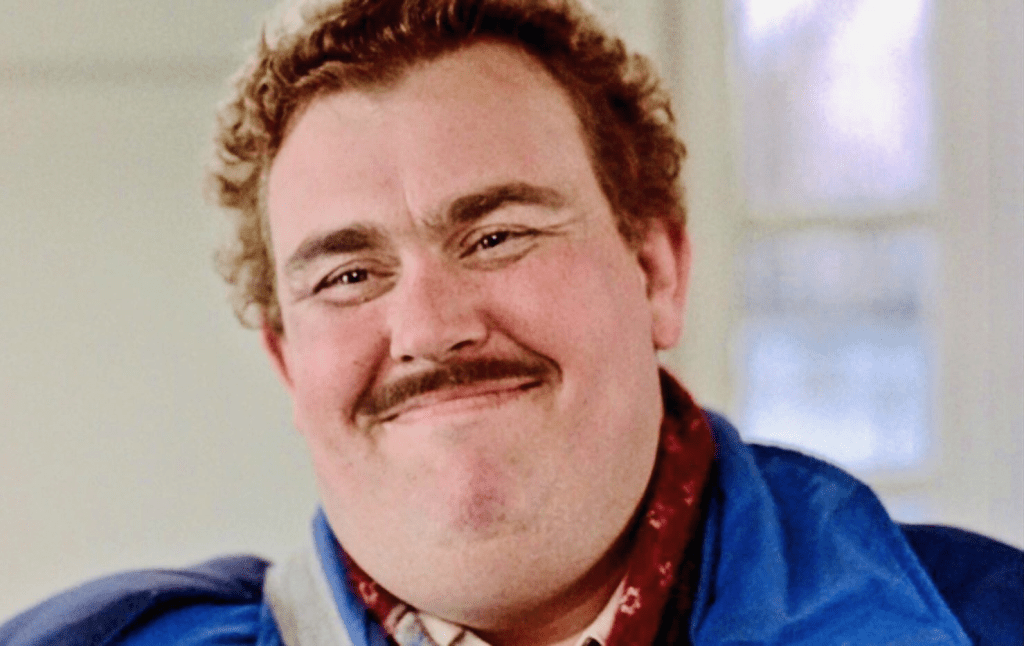
And, to quote John Candy – in Planes, Trains and Automobiles – I’m starting to ‘like me’.
Pop songs conjure up a place and time. Even if they’re a bit crap. The kind of tunes your brain tortures you with when you’re lying in bed squirming about something stupid you probably said in 1997. Agadoo by Black Lace is a track as good as a time machine. Always has been, always will be. For good, for worse.
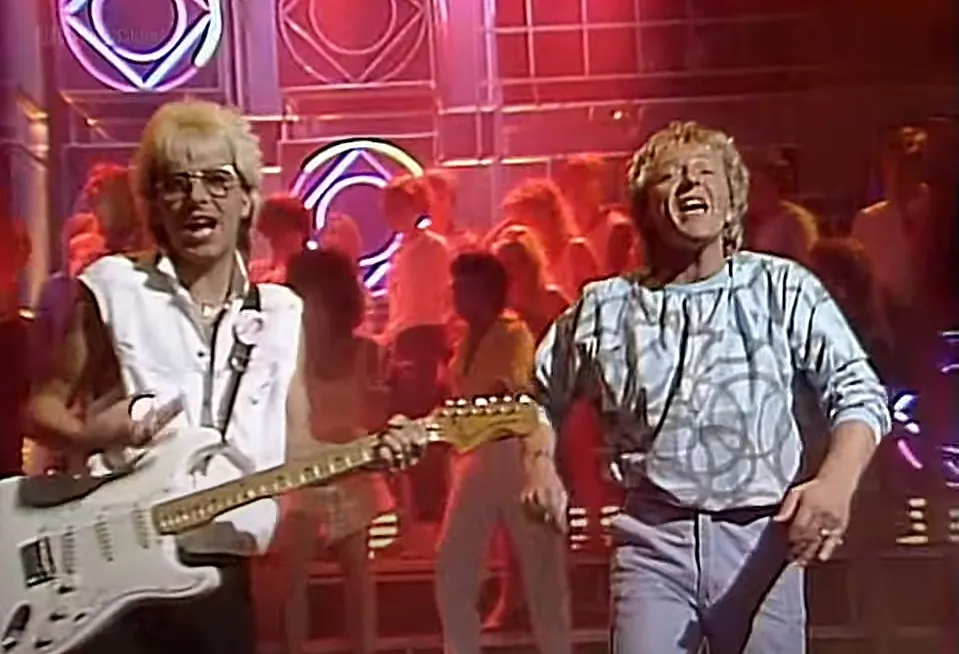
I was watching an episode of Top of the Pops from 1984, and there they were, with their mullet-lite peroxide blonde trims looking like the Scandinavian Chuckle Brothers. Alan Barton is wearing a knitted jumper with circular patterns, and light coloured jeans. Guitarist Colin Gibb is in a white denim jacket cut off at the arms, with sunglasses, and black jeans. They’re both walking from side to side and flicking a foot out, the same way your great aunt would dance to, well, pretty much any song at all.
The lovely beach and the sky…
The Eastgate Bar, in Ingoldmells, near Skegness, was as big as a school hall, and had a bar down all one side. It had a high wooden partition to encourage a queue rather than have the chaos of a six-deep free for all. Kids weren’t allowed at the bar, unless you were ordering a milkshake in the daytime. Dads would queue in silence, holding the glass they’d keep all night – it made the lager taste better, apparently. One hand in their pocket, shaking their change, fondling their car key. The look on their faces told a tale, they’d rather be anywhere else than here. ‘We could have been in Bendidorm…’ doing exactly the same thing.
The back of the Eastgate was mainly windowed, and in front of them were a row of arcade machines including Space Invaders. It disappointed me when I was finally tall enough to see the screen, after hearing such exotic sci-fi sounds coming from the box. That, and the artwork on the side, promised so much more than the crappy green pixels on display. But still, lads from Nottingham, Derby, Leicester and Sheffield, united over this game, it would be in play all night. Records broken. The joystick, and buttons, sticky with sweat and crisps.
The Eastgate Bar was referred to as Mr Tutts’ in our family. Named after, I believe, the magician who returned every summer. Real name unknown. Thinking back, Mr Tutts had these dead eyes, the enthusiasm long gone. The same look on his promotional photographs – posing with a dove on his arm – that he signed as a prize. There’s only so many times you can hand a magic wand to a kid, and act surprised when it goes floppy when your back’s turned.
The smile of his assistant (his wife) revealed her disdain at entering a cupboard only to ‘disappear’ (she wishes she could have). Or, folding herself up in that box to be sawn in half… again. I’m sure there was a happier time when they packed in their jobs in teaching, or in a bank, and decided to pursue their love of magic and entertainment. Maybe there was a part of them that thought they’d end up on New Faces with Marti Caine, and then the Des O’Connor Show, or Wogan. Spending their winters in the Canaries, or even the Bahamas. As it was, they spent the holiday season on England’s east coast, doing the same act night after night after night. Perhaps they made just enough to get through the lean months, before starting all over again.
Once Mr Tutts finished his act, he’d start up the disco, get the lights going, and mumble something into the microphone. The air would be thick with cigarette smoke, and the windows dripping with condensation. ‘Burning up and sopping wet’, faces blue, red, and sticky from sugary drinks, a hundred kids would pile on to the dance floor, and Mr Tutts would slap on Agadoo, and then disappear for a few minutes while he sank a pint and thought about his life choices.
Agadoo plonks me in a metaphoric DeLorean (or more relevant to eighties Nottingham, a Ford Cortina, a Flux Capacitor in the glove box), and transports me to the Eastgate Bar. Six years old, and messing up the moves our grandma had shown us in the caravan, mouthing something vaguely similar to the actual words… ‘Agadoo doo doo, push my apples up a tree, Agadoo doo doo push my apples, I need a wee.’