Pop songs conjure up a place and time. Even if they’re a bit crap. The kind of tunes your brain tortures you with when you’re lying in bed squirming about something stupid you probably said in 1997. Agadoo by Black Lace is a track as good as a time machine. Always has been, always will be. For good, for worse.
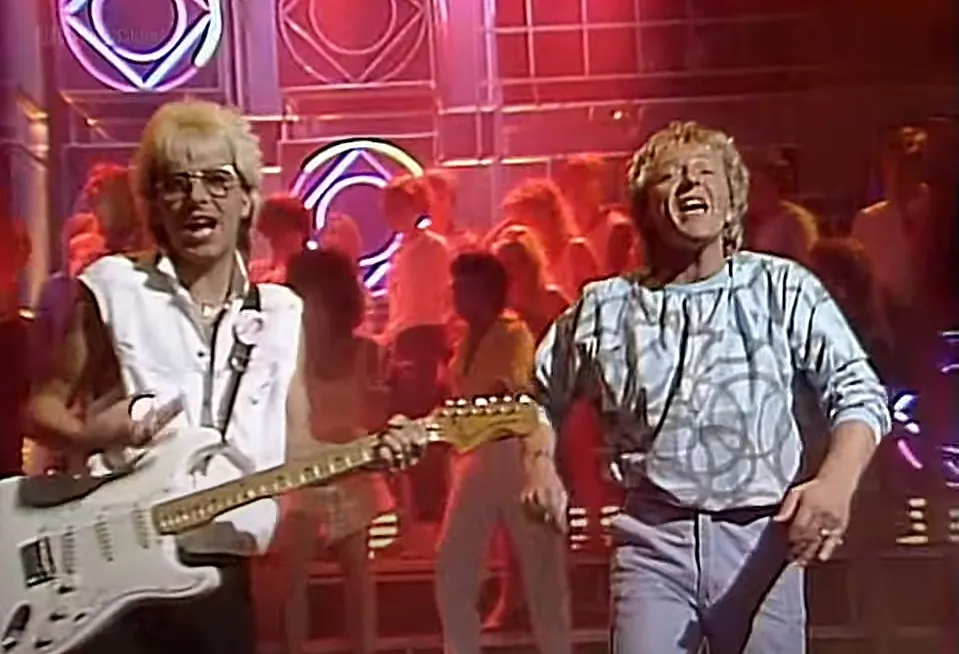
I was watching an episode of Top of the Pops from 1984, and there they were, with their mullet-lite peroxide blonde trims looking like the Scandinavian Chuckle Brothers. Alan Barton is wearing a knitted jumper with circular patterns, and light coloured jeans. Guitarist Colin Gibb is in a white denim jacket cut off at the arms, with sunglasses, and black jeans. They’re both walking from side to side and flicking a foot out, the same way your great aunt would dance to, well, pretty much any song at all.
The lovely beach and the sky…
The Eastgate Bar, in Ingoldmells, near Skegness, was as big as a school hall, and had a bar down all one side. It had a high wooden partition to encourage a queue rather than have the chaos of a six-deep free for all. Kids weren’t allowed at the bar, unless you were ordering a milkshake in the daytime. Dads would queue in silence, holding the glass they’d keep all night – it made the lager taste better, apparently. One hand in their pocket, shaking their change, fondling their car key. The look on their faces told a tale, they’d rather be anywhere else than here. ‘We could have been in Bendidorm…’ doing exactly the same thing.
The back of the Eastgate was mainly windowed, and in front of them were a row of arcade machines including Space Invaders. It disappointed me when I was finally tall enough to see the screen, after hearing such exotic sci-fi sounds coming from the box. That, and the artwork on the side, promised so much more than the crappy green pixels on display. But still, lads from Nottingham, Derby, Leicester and Sheffield, united over this game, it would be in play all night. Records broken. The joystick, and buttons, sticky with sweat and crisps.
The Eastgate Bar was referred to as Mr Tutts’ in our family. Named after, I believe, the magician who returned every summer. Real name unknown. Thinking back, Mr Tutts had these dead eyes, the enthusiasm long gone. The same look on his promotional photographs – posing with a dove on his arm – that he signed as a prize. There’s only so many times you can hand a magic wand to a kid, and act surprised when it goes floppy when your back’s turned.
The smile of his assistant (his wife) revealed her disdain at entering a cupboard only to ‘disappear’ (she wishes she could have). Or, folding herself up in that box to be sawn in half… again. I’m sure there was a happier time when they packed in their jobs in teaching, or in a bank, and decided to pursue their love of magic and entertainment. Maybe there was a part of them that thought they’d end up on New Faces with Marti Caine, and then the Des O’Connor Show, or Wogan. Spending their winters in the Canaries, or even the Bahamas. As it was, they spent the holiday season on England’s east coast, doing the same act night after night after night. Perhaps they made just enough to get through the lean months, before starting all over again.
Once Mr Tutts finished his act, he’d start up the disco, get the lights going, and mumble something into the microphone. The air would be thick with cigarette smoke, and the windows dripping with condensation. ‘Burning up and sopping wet’, faces blue, red, and sticky from sugary drinks, a hundred kids would pile on to the dance floor, and Mr Tutts would slap on Agadoo, and then disappear for a few minutes while he sank a pint and thought about his life choices.
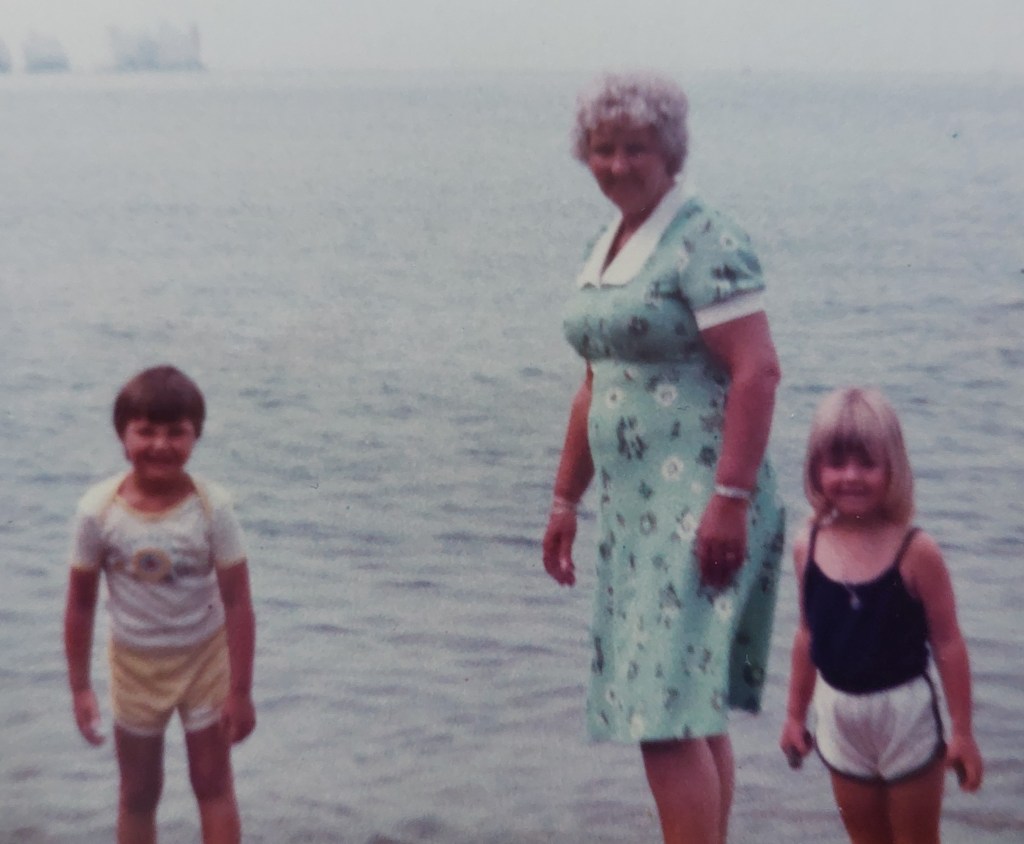
Agadoo plonks me in a metaphoric DeLorean (or more relevant to eighties Nottingham, a Ford Cortina, a Flux Capacitor in the glove box), and transports me to the Eastgate Bar. Six years old, and messing up the moves our grandma had shown us in the caravan, mouthing something vaguely similar to the actual words… ‘Agadoo doo doo, push my apples up a tree, Agadoo doo doo push my apples, I need a wee.’
Danny and I had a difficult friendship. I’m not sure most of the time we even were friends. We were in the same form and the same sets. We spent a lot of time together. He was one of those kids who was always there, and he probably thought the same about me.
Danny never combed his hair, or it would appear washed it, and his protruding teeth were not always clean. He was gloomy at times. He talked about the end of the world. Oddly, he kept a spider in a matchbox. He was small and scuttled about, his head down. His physiognomy and manner earned him the gangster-style moniker of Danny Rat. Kids can be cruel.
Danny and I had a fight in the changing rooms before PE. It was over something stupid, and we suddenly found ourselves going full Lord of the Flies, punching each other wildly, while the other boys savagely bayed for blood. There was a moment when the human side of my brain said, ‘What are you doing? This isn’t you!’ The ape side cackled – ‘Make him bleeeeed.’
The mob got their blood. Danny, who did taekwondo, had the perfect guard and, from nowhere, punched me twice in the nose. Like a boxer with high cheekbones, it was my weakness. Not that it was ever that hard to cause my nose to bleed. Blowing it and even sniffing in dry weather has the same effect. The fight was stopped, and I was taken away to be patched up. Danny was deemed the winner. He drew blood. It was not something I ever wanted to do again.
Things changed in the sixth form, and we started getting on better. Danny was taking more care of his personal appearance. He grew his hair and kept it washed. He looked like he was modelling himself on Dave Grohl, who had just released Foo Fighters’ debut album.
Danny did two important things for me, which I’m grateful for. Firstly, he introduced me to alternative music. He lent me a compilation CD that included Radiohead. It was the first time I heard Creep, and like many other teenage boys at the time, I instantly related to it. I imagine Danny felt that way, too.
Secondly, most importantly, he invited me to go to Rock City with him, with a few others. A bidding that changed my life.
Life before Rock City involved going out in Hucknall every Friday night. My whole sixth form did. We were mostly underage, and this wasn’t something the pubs and bars seemed to care about. They were raking it in. Unless the cops felt arsed to do a patrol, the bar staff hardly ever requested to see our NUS ID cards, with, of course, doctored date of birth details.
Hucknall had no nightclubs. What it did have was The Byron. The pub had an upstairs room half the size of a tennis court, where a DJ played the latest Euro cheese dance music and remixed chart hits. For some reason, it was the place everyone wanted to be. You would have to queue for ages to get in, and there was no guarantee you would. The bouncers were strict. You weren’t always told why they weren’t letting you in. If you did, it was deemed an achievement. I remember celebrating at the top of the stairs whenever I did. That was the good bit, being chosen. Getting what you want is another story. Too loud. Too packed. Too many pricks. The lager, expensive and pissy. You couldn’t talk to anyone because you’d just be shouting and spitting in their ear. I spent some of the time in my own head, the words to Creep and How Soon is Now, on repeat, while watching my school friends having a great time, laughing, dancing, flirting, kissing… maybe something else later.
What the hell am I doing here?
I tried nightclubs in Nottingham. The music wasn’t right. I hated the dress code – shirt, trousers, shoes. Anything reminding you of school surely should be avoided. You had to pay for the pleasure back then too. I enjoyed being with friends, getting drunk and farting around, but I spent most of the time hypervigilant. I worried about spilling someone’s pint and getting glassed in return. I witnessed violence inside and out. Bouncers pressing heads against the pavement until the police arrived.
They were often sleazy places. I would watch from the side, or balcony, as men prowled, creeping up to women on the dance floor. Grabbing and then gyrating themselves, uninvited, against an unsuspecting victim. Was this something that was ever encouraged? I’d seen women get off with men just so they left them alone.
I don’t belong here.
‘Come with us to Rock City,’ said Danny.
Mum had warned me about Rock City. It was full of Hell’s Angels, apparently. She made it sound rough and unsafe. I wasn’t sure it was right for me. I imagined long haired oily rockers with big beards who would delight in humiliating me by putting me in a headlock. I don’t know why. I think I’d watched too many old Clint Eastwood films, the ones with the orangutan who liked sticking his middle finger up at people.
‘It’s nothing like that,’ said Danny, laughing. ‘It’s student night.’
‘And, no dress code?’
‘Wear what you want.’
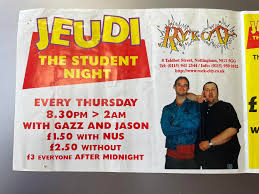
The student night was named Jeudi and was on every week from 8.30pm to 2.30am.
I laid out my jeans, random band t-shirt, and cheesecloth shirt (to be tied around the waist due to inevitable temperature increase as the night wore on). My blue Adidas Gazelles waited by the door.
It’s hard to explain the first time, but you know when it’s significant. You know you’ll remember the moment forever – like your first day at school, or seeing your football team for the first time. At Rock City it was when I walked the stairs from the lobby, and opened the double doors to hear music I loved, sounding better than ever.
There was black everywhere. The walls, the ceiling, the furniture, the bars, the lino, apart from the wooden sticky dance floor. (I made the mistake once of wearing white jeans and I woke up the next day to see them covered in black streaks like a miniature car had driven over them).
A Rock City mural on the back wall of the stage, made with different tones of glow-in-the-dark-paint, had a thousand different names scratched into it.
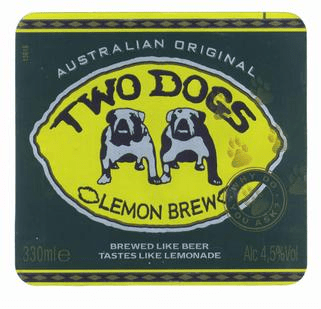
As innocent as I was, and after what Mum told me about Rock City, I couldn’t help thinking it was all a bit illicit. Something shouldn’t be this much fun. Should I even be here? This was highlighted when someone offered me a sip of their can of Two Dogs. Not an E, or anything illegal like that, but alcoholic lemonade. I hesitated. I thought he’d smuggled It in. Alcoholic pop? Alcopop. Oh, you can buy it here? Wow.
‘You’ll never pull a girl at Rock City,’ Danny told me as we sipped from cans of Red Stripe. We were chatting, enjoying the music, watching people dance, and building up the courage to join them.
Some girls had the Mod look, others modelled themselves on Louise Wener from Sleeper. Some had an androgyny similar to Justine Frischmann, the lead singer of Elastica. They mostly wore tees, jeans and trainers. No-one was bothering them which was great to see. I never saw any trouble. ‘Safe space’ wasn’t a thing in the 1990s, but if it was, Rock City was for us all.
Danny wasn’t being mean. It was just his experience. This wasn’t the main reason for going, and it wasn’t like he or the others had much luck anywhere else. I was, however, desperate to meet girls, like those on the dancefloor – girls who didn’t know me. Who didn’t know my character or the reputation I had. Nice, funny, smart, but just a friend… I could start afresh. It never felt like I could be with any girl in my sixth form. Many of them were already in relationships, but also, why would I? I couldn’t think of anything more awkward. The biggest reason of all, perhaps, was that none of them appeared to be into what I liked, and that mattered.
At Rock City, I felt I could be myself. I felt safe. I felt I was among people who cared about what I loved. Feeling that I wouldn’t be mocked for wanting to dance like a twat to Blur’s Sunday Sunday, or Black Grape’s In the Name of the Father, was liberating.
The knock-on effect of feeling free and having fun, was that it was actually quite attractive. I suddenly found I was getting attention and despite what Danny said, it turned out you could pull a girl at Rock City. In my case, every week (until I got a girlfriend). Maybe they pulled me. This sounds like a massive brag. Hear me out. When you’re in a safe environment, when you love the place, when you feel free to dance, sing and twat about, with a big smile on your face… Well, funnily enough you’re much more fanciable than if you’re standing at the side looking like the world is on your shoulders and wondering why no-one wants to snog you (I refer you to the bit about The Byron).
I recall catching the eye of a pretty redhead, as we sang along to Pulp on the dancefloor. We met at the bar and I bought her a JD and coke. We sat down. We talked. We kissed. She finished her drink, said thanks and walked off. I’d been used, but hey ho. I chuckled to myself.
The Thursday night Rock City routine, along with the gigs I went to, continued until I went to university in summer 1997. I didn’t visit again until the following year, and sadly, it had all changed. I went during Freshers week before I was due to return to my uni. It was all wrong. There was an Ali G impersonator on stage. I was never a big fan of the character, but an impersonator? Nah. The DJ played hits by the boy band Five and Robbie Williams. It was crushing. I left early.
I’m a late GenXer, born in 1978, so perhaps this new crowd were the first Millennials to experience Rock City. A fresh crowd, new tastes, music and fashion. It had changed in a short space of time. I felt sad, but nothing lasts forever. Who’s to say what I experienced in those two years wasn’t to the expectations of others previous to me?
I have plenty of contentment in my middle age, but whenever I go back to Rock City I feel homesick for those times in my teens – a version of myself that’s long gone. Gleeful, carefree and happy.
Dad has decided to take you to a Nottingham Forest match. It’s your first. Your debut. Why now? You’re nearly nine-years-old, you’ve been showing an interest for a year or so. You know the history, you can name the current team and you’ve been collecting Panini stickers with the faces of these men you will soon be calling your heroes. However, it’s only three years since the Bradford City fire when 56 people were killed, and only two years after the Heysel Stadium disaster when 39 Juventus fans died after they were crushed under a wall. Violence outside and inside England’s football grounds appears to be the norm. As a result, fans are caged in at matches, treated like animals, and that will lead to the one of the worst sporting tragedies ever seen. It’s not a cosy time to be introducing a child to the sport, and its surprising Mum ever let you go, but Dad believes in the positives of the game, the magic, the glory and he also knows it will bring you closer together as father and son.
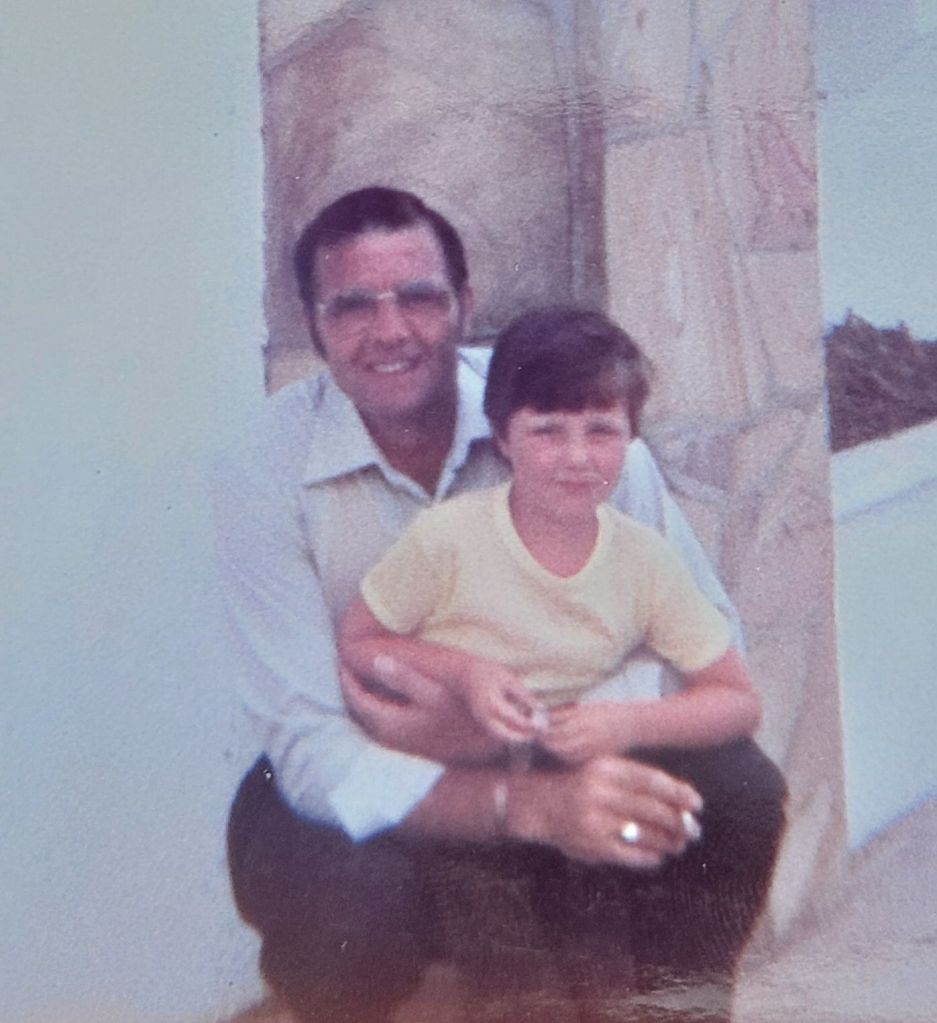
It begins on a Sunday in March 1987, a home game against Leicester City. You and Dad are clearly late for the game, or so it would appear. He drives you speedily through the city to the match in his red Dodge van that he uses for work. You wish the van was black so it would like the one from The A-Team. He parks it somewhere he shouldn’t, a pub car-park designated for customers only. There is no chance of getting anywhere near the ground and he doesn’t want to pay to park. It means you have a bit of a walk.
You jump out the van. Tatty invoices, bits of electrical cable and an old coke can follow you. You pick them up and stuff them back in the footwell and then scuttle around the other side to meet Dad, who has been putting on his coat. He smiles at you affectionately and asks if you’re warm enough? You are. You’ve got a red and white scarf, that a great aunt knitted, wrapped several times around your neck. It really is stupidly long.
You hold his big rough hand that has been gripping power tools all week and then he starts to stride towards the ground, your little legs try to keep up with his. You think you’re late but then as you cross London Road the crowd walking in the same direction suddenly swells. There’s a mixture of voices, mostly happy, discussing what we need from the game. Another man just wants to see some good football. You hear swearing too but nothing you haven’t heard before.
As we approach Trent Bridge, you hear sausages and burgers sizzling on a small griddle. The vendor, a small animated man, whips the charred meat into fluffy cobs, followed by soggy onions and a squirt of tomato sauce and mustard. He moves quickly on to the next customer.Our pace has slowed now as we start to cross the bridge. The swirling, murky waters of the River Trent make you feel queasy. But you look to your left and see the City Ground and a warm feeling comes over you, it makes you skip a little. You can make out the word FOREST spelled out in white seats on the stand facing you. A mass of bodies glow orange under sodium lamps as they make their way to the turnstiles.
It gets more congested as you get nearer and you hold Dad’s hand tighter as you ease your way past people. There’s a man selling pin badges and old programmes including those from when Forest won the European Cup seven years ago. Those days are long gone but there’s much optimism. We still have the same manager, the one and only Brian Clough, who is still very much in his prime and desperate for more trophies. He’s got a good crop of talent at the club including Neil Webb, who you like best because you both share a name (you’ll later copy the way he writes Neil which will eventually form your own signature). There’s also Des Walker, a quick and at times unbeatable defender, Johnny Metgod, a Dutch midfielder with a shiny pate and a powerful right boot, Nigel Clough, the manager’s son and the club’s top scorer, and finally there’s Stuart Pearce. You’re not sure about him at first, his fixed, serious, glare scares you a little, but this man, who will later become the captain, will prove important to you. One of the greatest players ever to wear the shirt.
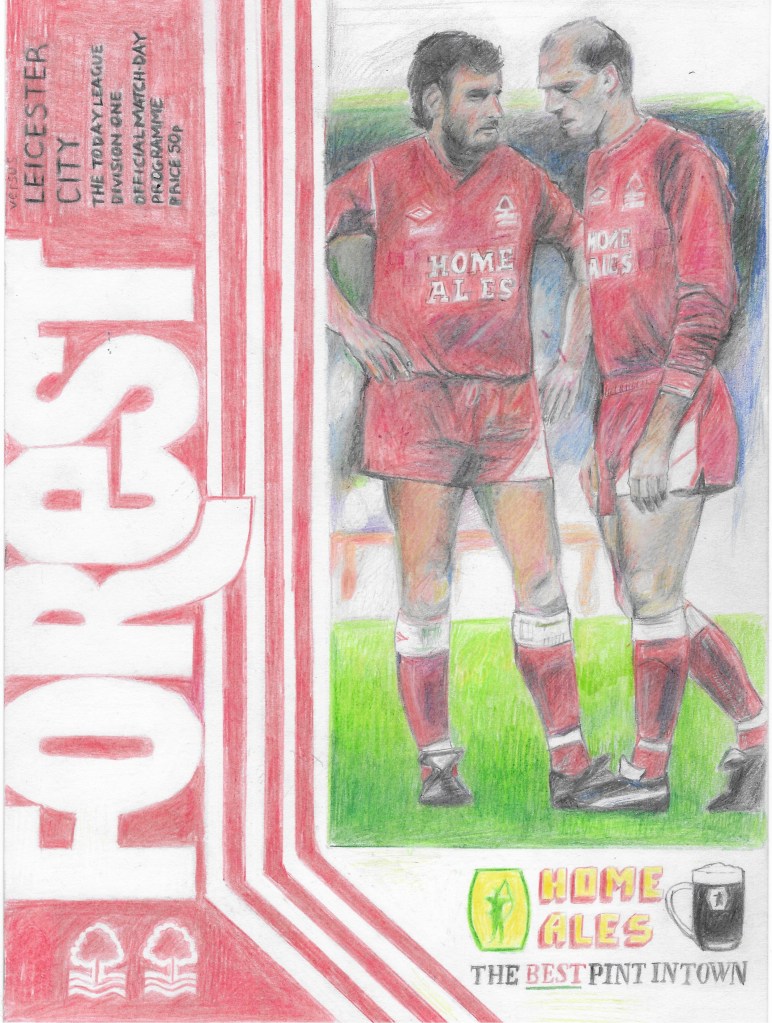
Dad buys you a programme, it’s 50p, and has Garry Birtles, in his second spell at the club, standing alongside Metgod, all in red with the words Home Ales across the middle of the shirt, a local brewery that will soon cease trading after 170 years of business.In Brian Clough’s column he thanks the fans for coming. He bemoans the effect colour television is having on attendances and says he’s “banging the drum for live football – the variety you see with your own eyes in lovely fresh air”. The air is certainly fresh, you would go as far as saying it’s nippy, winter hasn’t quite let go yet. But there’s an irony when you look at the back of the programme where there is an advert for John Player Superkings cigarettes – so much for fresh air.Dad ushers you through a narrow turnstyle. You hand your ticket to a man behind some red metal mesh who tears off the bit he needs and hands back the stub to you. Dad follows you and then has a quick glance of the ticket, before you both start climbing concrete steps up to the stand.
You’re sitting in the Junior Reds section. You joined the club through an advert in the Evening Post and received a package in the post that contained a letter from Brian Clough, a sheet of printed autographs, a car sticker, a badge and a t-shirt. Dad is not too far away but makes sure you know where he’ll be and tells me to stay where I am at half-time and not to wander off. He ruffles my hair and tells me to enjoy the game. I look across the luminous green pitch and even from my position five rows from the playing surface I can smell the wet turf. To my left is the Trent End, which looks like a farm building, and this is where all the early noise is coming from.
“Notting-um, Notting-um, Notting-um, Notting-um, Notting-um, Notting-um, Notting-um, NOT-TING-UM!” they chant. The Leicester supporters, in the opposing Bridgford stand, try their own song and get a sardonic wolf-whistle in return.
You’ll remember the game in flashes. Forest score two. Franz Carr, a tricky right winger, and Nigel Clough, referred to by his father as ‘the centre-forward’, get the goals. Both from close range after some neat passing.
The game finishes 2-1 to Forest.
As you leave you walk across Trent Bridge. You turn to your right this time and it takes your breath away. The City Ground lit up is a sight to behold, almost celestial. The glow from the floodlights turns the evening sky blue, forming a dome over the stadium. White light glitters gently on the now black waters of the Trent. This scene remains a key part of the magic.
You can’t wait for Dad to bring you again.
Season after season your emotions will be all over the place, you will have such massive highs beyond compared with anything else you will experience in life. You will also be hit by the lows, you’ll get low, frustrated, lose sleep, and wish Dad had never brought you to the City Ground in the first place. But there’s no going back. All of your hopes will be invested in the custodians of that shirt, that beautiful glossy red shirt with the little white tree. You don’t know it yet but over the decades this team, whoever plays, will help you through some dark times.
The kitchen cupboards smelled the same as they always did wherever my grandparents had lived. A heady mix of opened jars of piccalilli, strawberry jam, Branston pickle and a half-eaten pack of Digestive biscuits. Clearing the cupboard evoked memories of the house they lived in when I was a child.
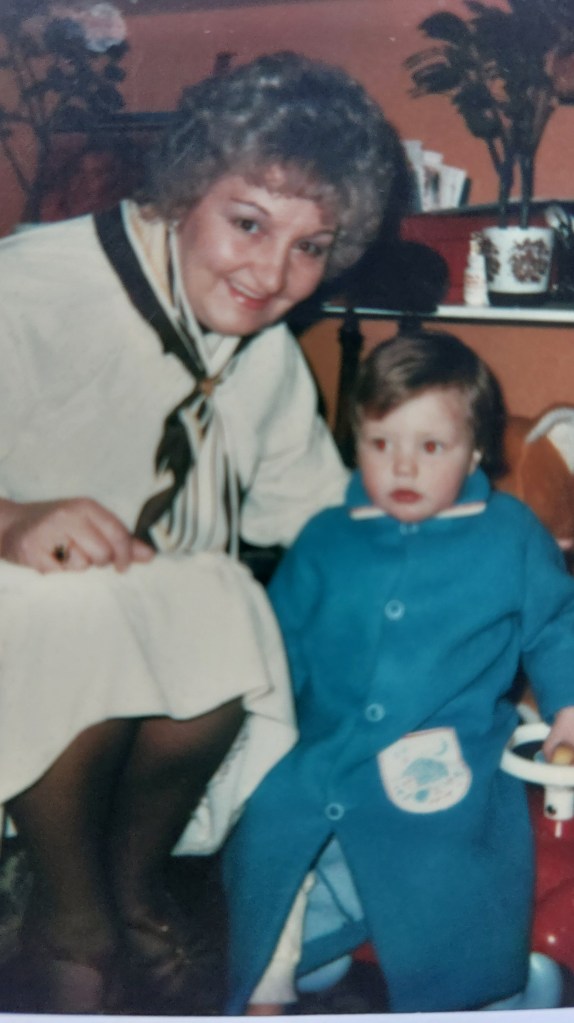
I spent so much time there while my parents worked. I would help my grandma, or Mama (Pronounced Mam-mar) as she was named, construct and bake meat pies. We’d play silly games we’d made up on the spot, watch Candlewick Green and Play School. Cherished memories.
Keep it together.
I shook the contents of the jars into the bin, washed them, and placed them in the recycling.
Three men, from a charity that did house clearances, arrived in two vans. The gaffer wore a black suit. He had a ponytail and a trimmed beard. He introduced himself as Sol. He reminded me of a nightclub bouncer. He directed the men into my grandparents’ ground floor flat. They obeyed him without a single word. My sister Sarah and I had already taken the TV, stereo and some of the bigger furniture away. Sol surveyed what was left, opening doors and poking his head into rooms, his expression never changing. He spied two bottles of Bell’s Whisky on a shelf in the living room.
‘What are you doing with them?’ he said.
‘Oh, would you like them?’ I said, jovially, grabbing both bottles by the neck. ‘Share them with the guys.’
‘No, no, they’re recovering alcoholics,’ said Sol, sternly, like I was supposed to know.
‘We can’t do that.’
One of the men looked straight ahead while carrying out a box. He’d clearly heard every word. I’d only bought the whisky a few days before. I always felt guilty doing so as I knew my grandad, who we’d always named Dada (pronounced Dad-dar), had a drink problem. As soon as he woke up, whether that was the middle of the night or the day, he’d pour himself a generous glass full before doing anything else. I didn’t have the heart to tackle it. What was the point?
He once called me late at night and told me he was in trouble. As my panic set in, he explained he’d run out of whisky. ‘You’ll have to wait until the morning then,’ I told him, annoyed.
Mama was just as bad. ‘We have it with lemonade,’ she’d say, defensively, like it somehow neutralised all the alcohol.
Sadly, the whisky helped soften the pain, for a few hours at least, of losing their only child, my mother.
Calling them after the ‘bar had opened’ was a much happier experience and was usually when the evening soaps had started. Before 6pm, you would get what we called her “Scooby Doo voice” – a tentative, worried, ‘hello?’, like she was expecting the worst from the person on the other end. I loved it when she realised it was me. She’d lighten up, then ask if I’d been to work, and whether Niki, my wife, and our boys were ok, and whether we’d had our tea. ‘Will they talk to me?’ she’d ask. Invariably, as small children, they’d be far too busy and while I tried to get their attention, Mama would be repeatedly cooing down the phone.
My grandparents moved from Nottingham to Ingoldmells, on the east coast, when I was 10. Until that point, they’d been living five doors down from us. They were in our lives daily. My mum ran her own hair salon at the front of our house and Mama would pop in to help out, shampooing hair and making tea. Whenever I was sick, she’d look after me. She’d make me ‘pie in soup’ for lunch, which is a recipe as simple as it sounds – a cooked steak and kidney pie placed in a bowl with hot tomato soup poured over the top. Don’t knock it until you’ve tried it. We’d watch any one of the Rocky films from the sofa. I’m surprised I never wanted to be a boxer I watched them so often. Mum and Dad had babysitters on call, and I remember the excitement of staying up late and watching Benny Hill, the Two Ronnies and even the Des O’Connor Show.
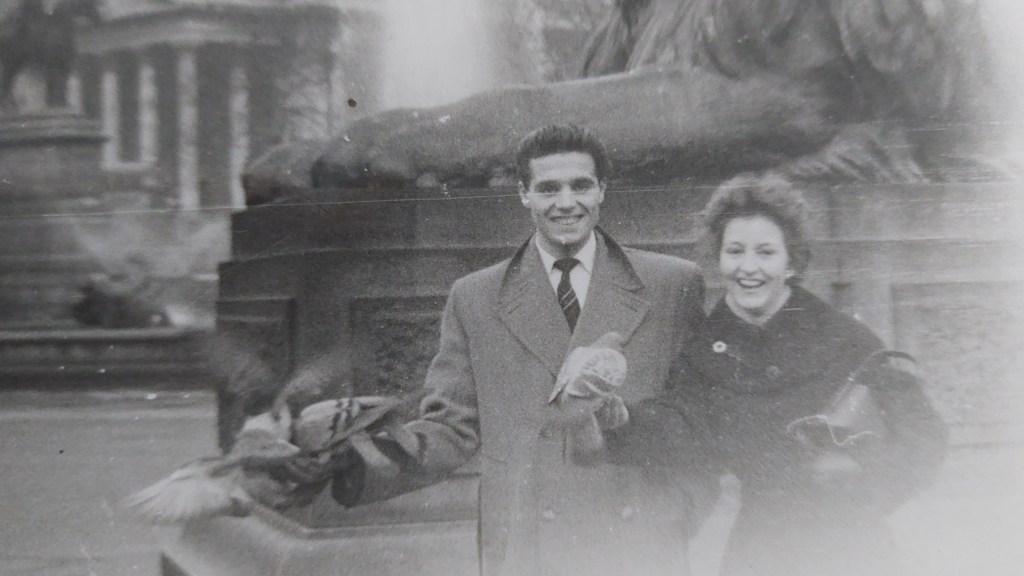
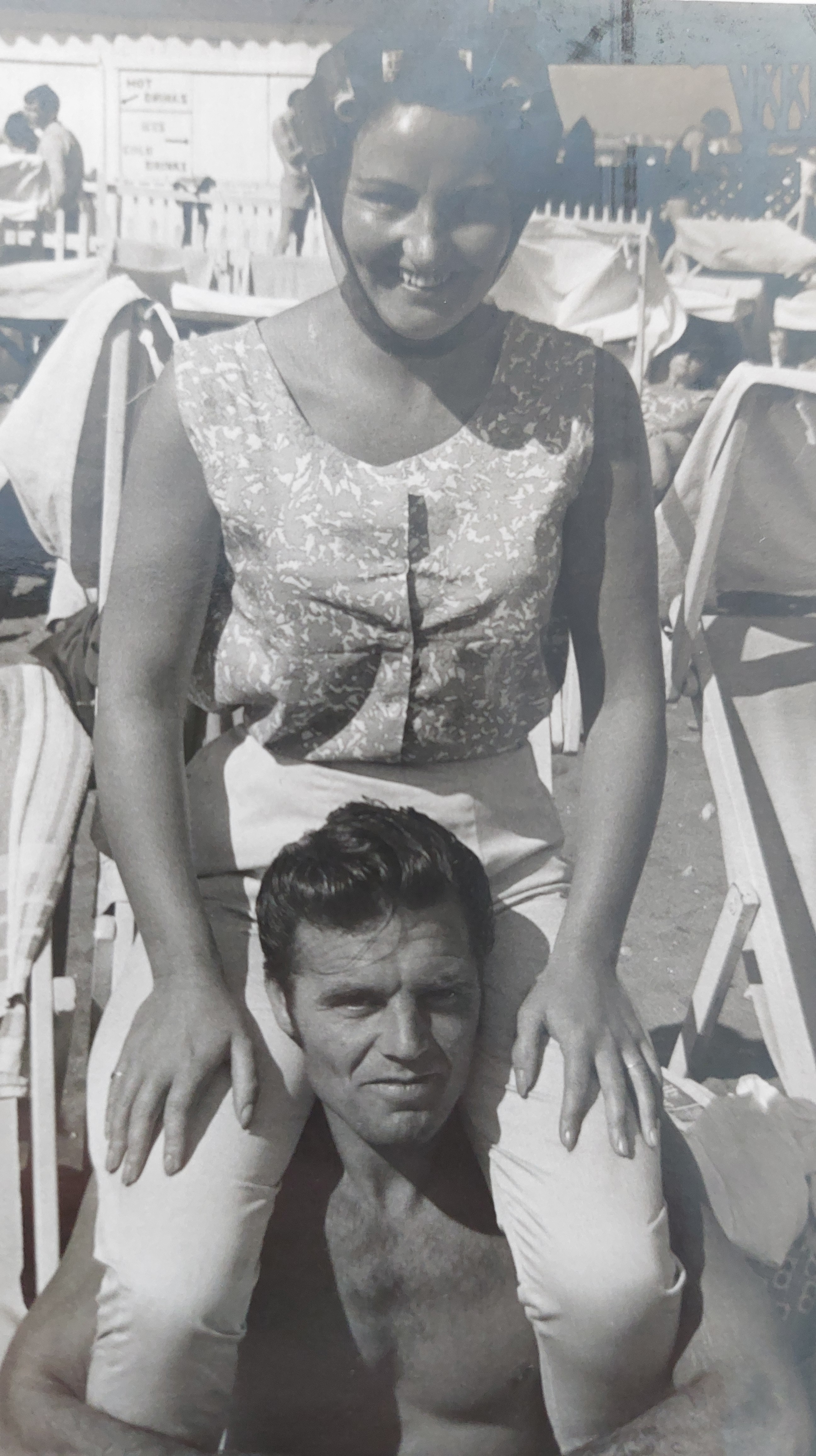
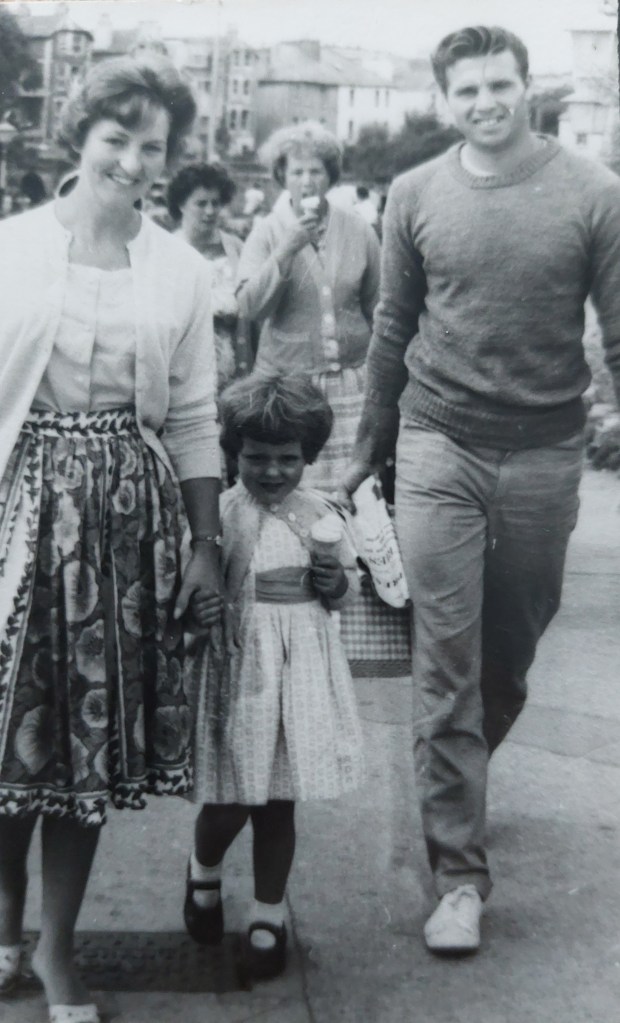
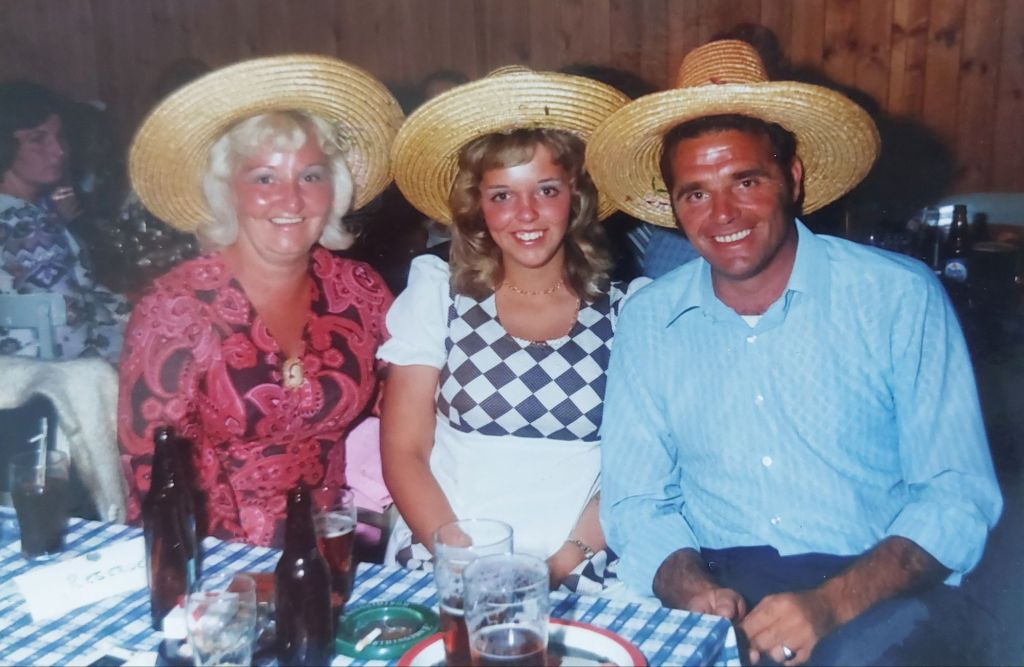
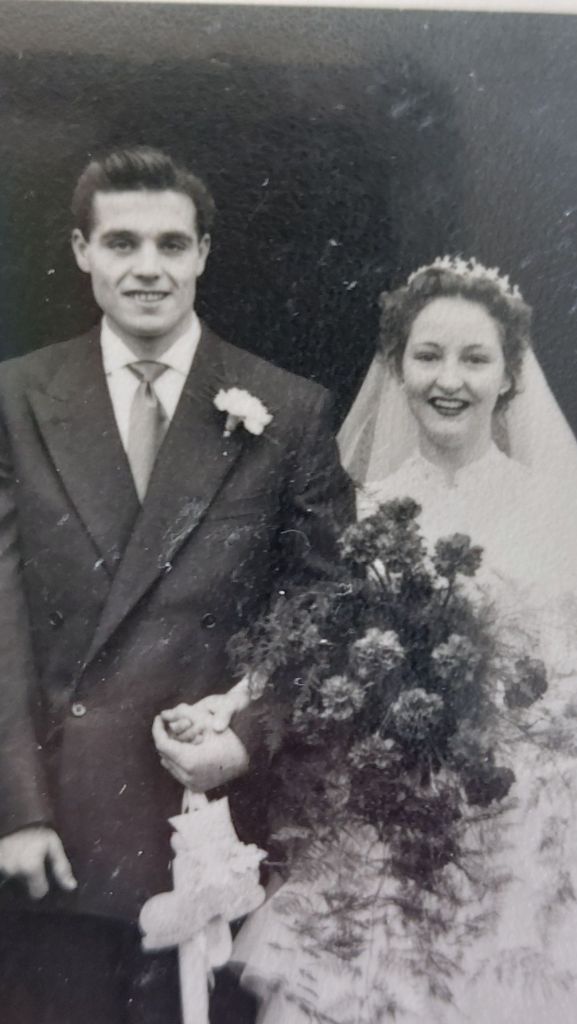
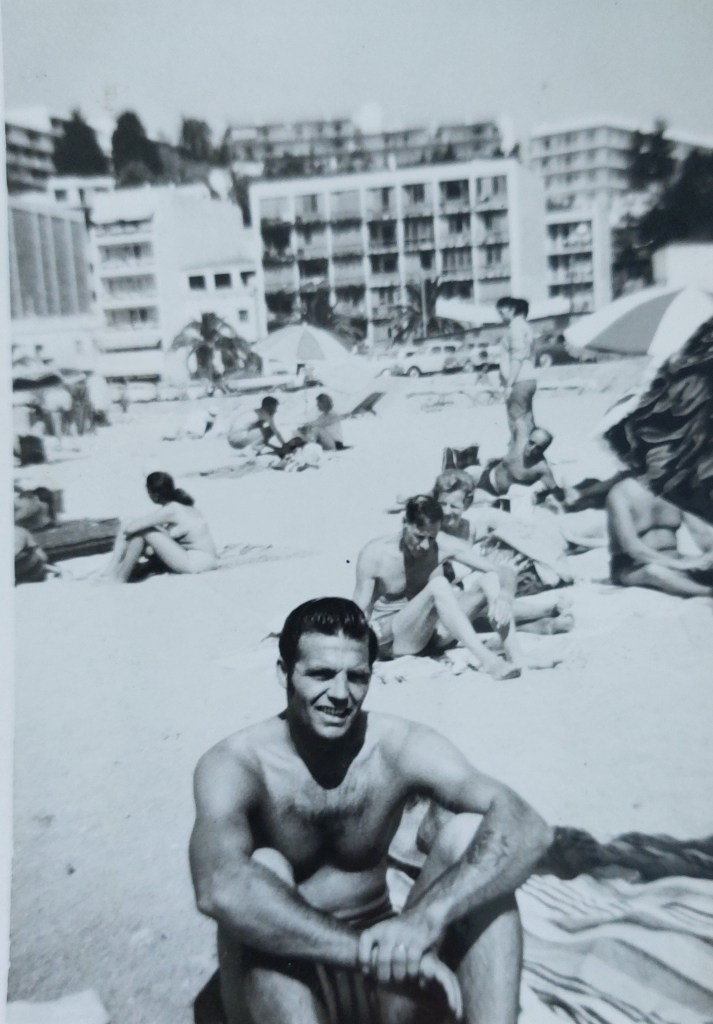
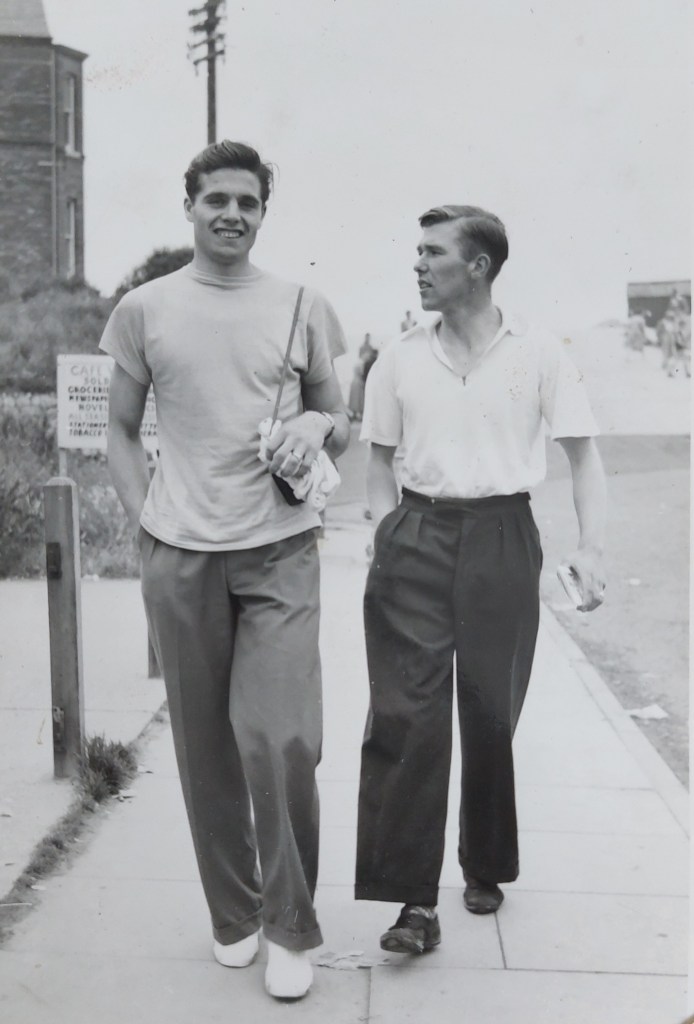
Life changed after Dada, a miner, was made redundant. He worked for a few years doing odd jobs – cleaning, painting and decorating, and gardening, but, still only in his fifties, he needed something else in his life. They’d both always wanted to live at the seaside and this was a good a time than any. They’d been visiting Ingoldmells, near Skegness, since they started courting. I have a photograph of them strolling up Sea Lane. Dada muscular and handsome, his hair like Elvis, and Mama pretty, slim and glamorous.
A golden couple.
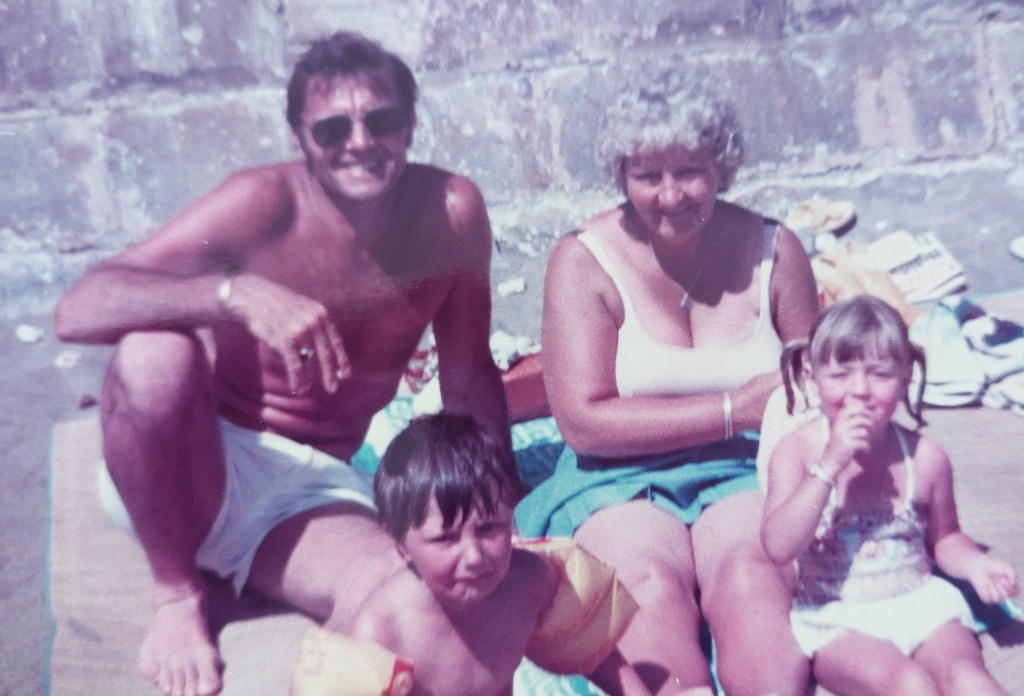
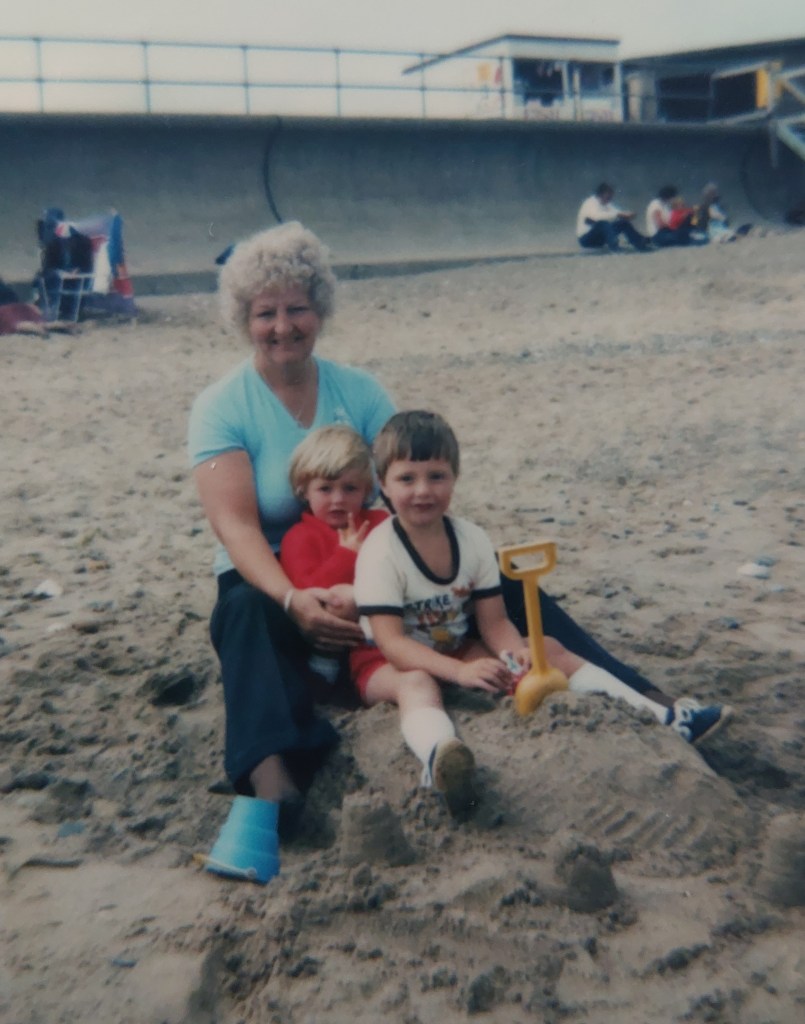
They had a caravan in Ingoldmells since before I was born and we had many holidays there. It was a magical place for Sarah and me, full of colour, noise, fun and excitement. A second home. Arriving in Ingoldmells felt like Christmas Day. Always.
The day they left, we watched them drive off in my grandad’s blue Sierra. I don’t remember crying, but I did feel disconsolate. I remember thinking ‘we’re on our own, now. How will we live without them?’ My parents were barely into their thirties. It felt like my grandparents took care of us all. In those forthcoming years my parents were divorced and entered new relationships. It’s symbolic how things collapsed during the time they were away.
We did see them often while they were living in Ingoldmells. Sarah and I spent most of the school holidays with them. Sometimes mum would drive us over for the weekend, they were only a couple of hours away. They just weren’t on the same street anymore. They were there seven years before returning.
It was hastened by Dada’s heart condition. Once, within half an hour of me arriving on a bus to Ingoldmells, Mama was calling for an ambulance. He was wrapped in a blue blanket, strapped to a chair as it was lifted into the vehicle. He was pale and talking to himself. I’d never seen him that way. Mama broke down in tears.
Dada was a simple man. By his own admission he wasn’t the brightest. He left school and went straight down the pit to work. He was a coal miner for 36 years.
The hard labour made him physically strong, my dad remembers feeling intimidated by his size when they first met. However, poor conditions at the pit and laxed safety left him blind in one eye and having to use glasses. Breathing in coal dust also caused emphysema, which eventually contributed to his death. But, ask him about his life as a miner, and he would say they were the best years of his life. I was proud he was a miner. It meant a lot in the community I grew up in.
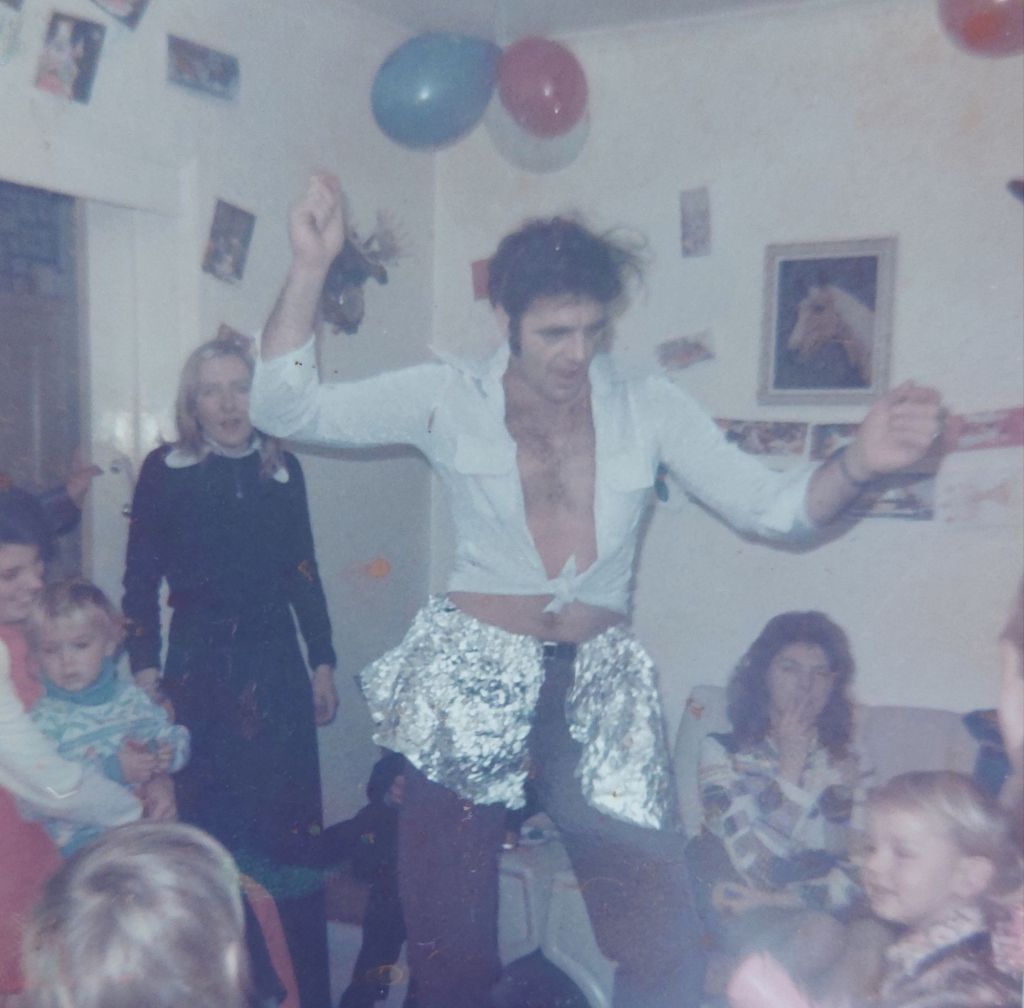
He loved football, he could have turned professional, but the risk of serious injury in the 1950s usually meant be unable to work and that meant poverty. He and Mama decided it wasn’t worth the risk. He was a Notts County fan, but he wouldn’t lose sleep over them losing. He just loved watching any game, whichever team was playing. He wasn’t much of a talker, even when it came to football, Mama usually did the talking for him. When he’d had a few, though, he was the life and soul of the party. There’s a picture of him dressed and dancing like Elvis, silver foil as trousers, and one with his mates with balloons under their tops pretending they had massive breasts.
He never told me off, I didn’t give him much cause to, but I remember feeling like I was taking a risk one night when we were walking back from a pub in Ingoldmells. I gleefully told him all the swear words I’d learned from Beverley Hills Cop II. He chuckled and guffawed as I repeated them, mimicking Eddie Murphy, acting out scenes, giving him the whole plot. All the time we were looking over our shoulders to see if anyone else was listening. There was a real warmth about him, he was kind and caring.
He did have a temper, but usually it was related to frustration and feelings of injustice. He’d apparently offered his brother John out for a fight on his wedding night, because he’d been rude about Mama. As an adult, I prevented him being knifed when some dickhead nearly ran him over. He shook his walking stick at him and the man stopped, wound his window down and started threatening him. My grandad told him to fuck off and it took every ounce of diplomacy I had from it turning into a tragedy.
Mama was one of 13 children and one of the youngest. She told me a middle-class childless couple wanted to adopt her and apparently it very nearly happened. Mama’s mother had a change of heart at the last minute.
Three of her four brothers fought in World War Two. One of them didn’t return. George Smith was on the HMS Hood when it was sunk by the German Battleship Bismarck. Only three men survived out of a crew of 1,418. Mama was only five-years-old when this happened and it was never clear that she had much memory of George, but still, his death had a profound impact on her for the rest of her life. She had a picture of him enlarged and framed. She also bought a plastic replica model of the ship from the Sunday Mirror magazine. They formed a small shrine on a brown varnished shelf as you entered the flat. We named our son, George, not with my great uncle in mind, but we allowed Mama to make that conclusion. She cried when we told her.
Hola
Her brother Walter fought the Germans with the RAF and spent a lot of time after the war in Rhodesia (now Zimbabwe). She often repeated a story about him returning and giving her a huge Easter egg because she was his favourite. He died before I was born, but my grandma stayed in touch with his wife Barbara. There weren’t many who did. She upset a lot of the family with her rudeness. Even her own daughter. Barbara later developed deafness and Mama and her communicated through a special telephone system. She often became flustered with it, having to end her sentences with ‘over to you’. But it only showed how much she cared about her whole family. It was her duty. Everyone got a birthday card. When I was clearing the flat, I found at least 20 unwritten cards in a plastic bag.
If anything, Mama cared too much. She got involved, interfered, with any family dramas she’d be told about, offering to ‘have a word’ with him or her, the so-called trouble causer. She’d also invent scenarios she was adamant were true. She’d once noticed Niki wasn’t wearing her engagement ring and created a narrative whereby the wedding was clearly going to be called off. The truth was we’d been grouting our bathroom and she didn’t want to damage it.
Towards the end of Mama’s life, her agoraphobia, and love of soap operas and crime dramas, helped create this internal fantasy world, blurring the lines of reality, where her neighbour upstairs had murdered his girlfriend (and buried her between his floor and their ceiling). She also told Sarah that Al Qaeda terrorists were training in the woods.
I’d always wondered, but was afraid to ask, why a couple who had 17 siblings between them, only had one child. I’d assumed they were happy with just Mum. But Mama, not long before she died, out of the blue, explained.
‘After your mam…’ she said.
‘We kept trying and when another one didn’t come along, I thought, well, we’ll have to wait for grandkids.’
I assumed there’d been a fertility issue and perhaps little medical help to change that in the late 1950s and early 1960s. My grandparents were only 43 when I was born. Plenty of people have children in their forties. They still could have been parents themselves.
‘When you were born, I ran through work, shouting ‘I’ve got a grandson, I’ve got a grandson!’
As touching as the story was and how my arrival had given them happiness, it was sad they never did have a second child. In later life (while this couldn’t have been predicted) following Mum’s death, it left Sarah and I as their main carers. Sarah was in a relationship and was commuting to Rutland, from Nottingham, to visit her partner. I had two small to children to prioritise. I visited as much as possible. I did what I could. I would do anything for them.
The wider family, that had been so close in the past, were now elderly themselves. The majority of my grandparents’ nieces and nephews had mostly moved around the country. They’d lost touch with the others. There were some who stayed in contact, but largely by telephone. Mama would never ask for help. Even from me at times. I wished for an uncle or aunt to take on the stress of looking after two elderly people
I once arrived at the flat once to find Mama on the floor of her bedroom. An ambulance was four hours away. Dada didn’t have the strength and so I had no choice but to lift her on to her bed. She wasn’t the lightest and it took a lot of effort. It wasn’t what either of us wanted.
*
‘Listen,’ said Sol, seriously.
‘There’s more stuff than we thought. I’m going to need another hundred.’
I knew he was right. There was much more than I had anticipated. How had they got so much into such a small flat. There were two walk-in cupboards. The right-hand cupboard in the short corridor, that led to the sole bedroom and bathroom, was stuffed with sheets, towels and blankets. On the shelves opposite were old plastic plant pots, tins of paint and varnish, tools, trays of screws, nuts and bolts. In the other cupboard were several shelves of videos (including Die Hard, The Guns of Navarone, various westerns and all the Rocky films), and cassette tapes with my grandma’s handwriting on the label – Cliff (Richard), Tom Jones, Tina Turner, Shakey (Shakin’ Stevens), Billy Fury… The videos and tapes brought back memories, which I had to shut down.
Get this done. Clean the place. Lock the door. Leave. It‘s just stuff. They’re gone.
In the kitchen were paper bags full of drugs. All prescription. Pain killers. Multi-coloured capsules. God knows what for. Geriatric junkies. I’m sure popping them with The Bells took them into another dimension, as the Prodigy song went. ‘Never get old,’ my grandma would say, heaving herself off the sofa to take her tablets. When we removed my grandad’s chair, among the crumbs, dust and nail clippings, were countless tablets he’d dropped and failed to retrieve.
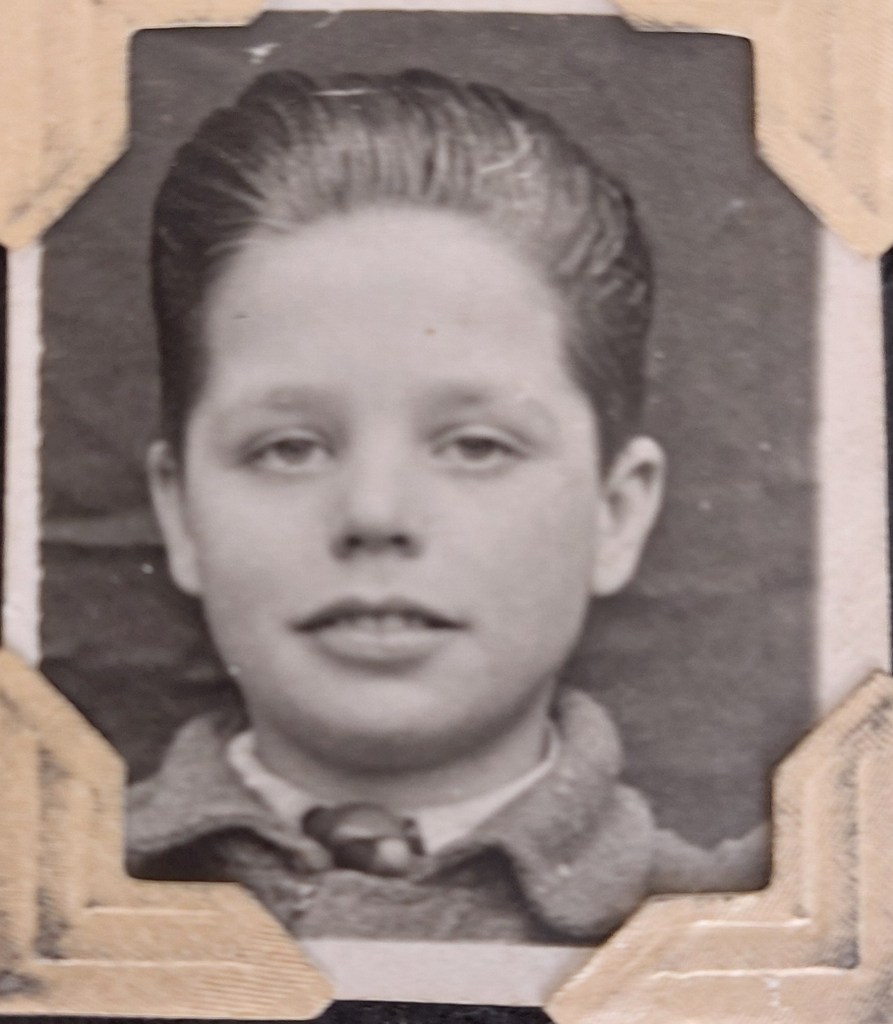
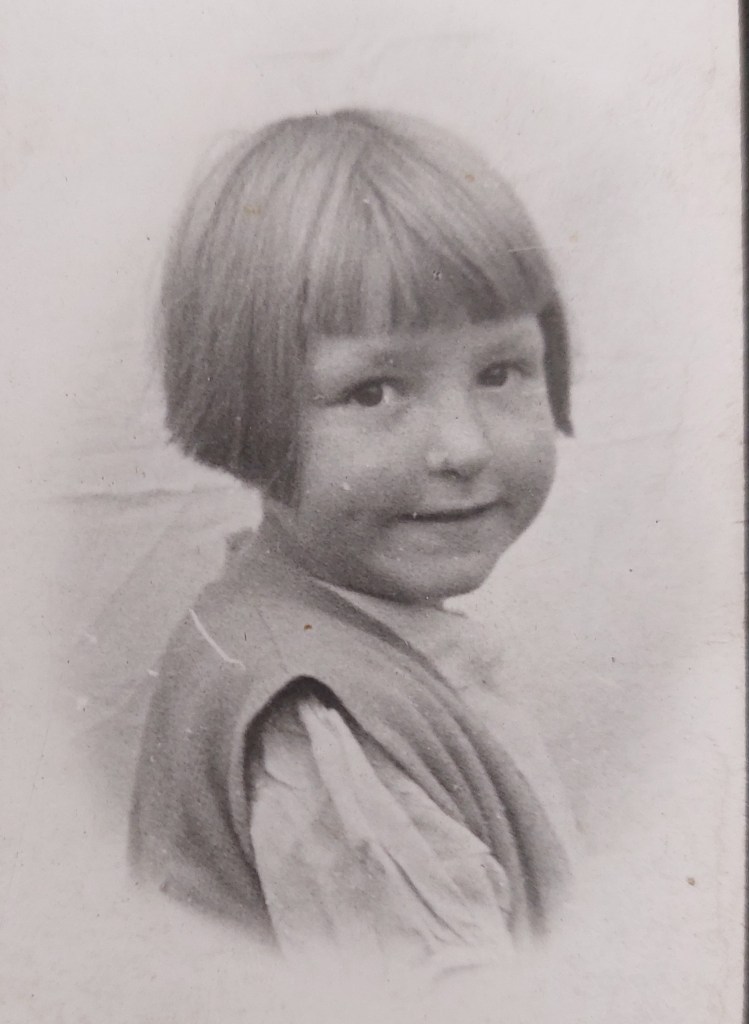
Beneath the neatly folded sheets I found a large plastic bag stuffed full of photographs. I knew it would hurt to go through them, but I had to look. I pulled out one Super Snaps envelope. Inside was a sepia picture of Mum as a little girl, her eyes wide with excitement on a fairground ride. Leafing through I stopped at another picture of her posing awkwardly as a teenager in the back garden, clearly not appreciating the camera being brought out. Time travelling further forward, a photograph of her as a mother, Sarah and I smiling either side. I was wearing a t-shirt with Mr T on the front. There was also a picture of Mum on her last holiday. A walking stick betraying her frailness. She was 45. A short life in four photographs.
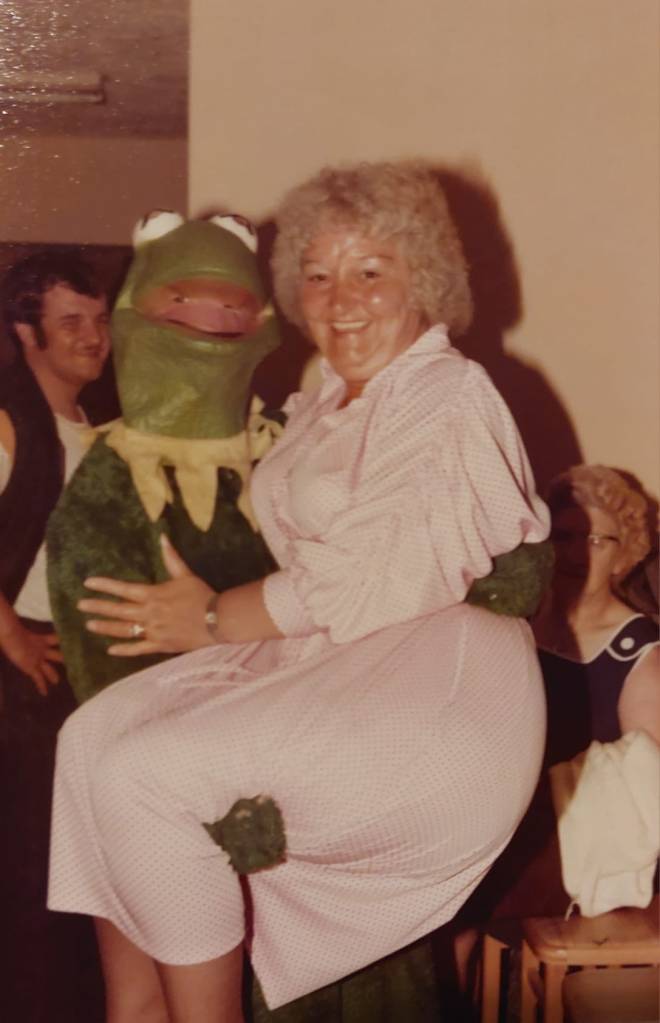
There was one picture in the bag I found quite disconcerting. It was of a woman at a party (held at a pub I knew well as a child) wearing a Miss Piggy mask and fake tits. Who the hell is that? I thought, before it dawned on me. My own grandmother. Why and for what reason, we’ll never know.
*
Once Sol and his men had finished loading boxes of grandparents’ possessions and furniture, he came for payment.
‘I guess you’ll sell all this,’ I said. ‘Make a bit of money for charity?’
‘There’s a few bits which might make something,’ he replied, counting the wad of cash I’d given him.
‘Most will just go in the skip.’
Clean up. Get out. Lock up.
Days before Sol and his crew showed up, two of my grandma’s remaining sisters, Barbara (not the deaf one) and Freda, came round to take some items. To my surprise they had coveted the kitsch plaster cast dogs my grandma had collected. Dead-eye westies and terrified looking terriers were heading for the bin in my mind.
‘Y’not getting rid of them dogs, are ya?’ said Barbara, outraged, like we were binning Fabergé eggs.
‘They might be worth summat.’
I sincerely doubted it. They were three for a tenner in Wilkos.
‘Take as many as you like,’ I replied.
The dog theme didn’t stop in the flat. In their car they’d had nodding dogs on the parcel shelf. It caused some mirth when my wife Niki borrowed the vehicle and pulled into the staff car park.
Dada had to give up the car in his early seventies. He’d been suffering with numbness and a lack of sensation in his feet. The doctor said it was likely caused by excessive alcohol consumption. The car would go before the whisky, though. He’d been driving like this for a while, lifting nerveless stumps between the pedals. Which terrified me every time he went out. His final drive came, according to Mama, when he mistook the brake for the “exhilarator” and nearly careered into someone’s front room. He made the sensible decision to sell the car after that. He bought a mobility scooter instead and his trips usually entailed popping to the corner shop for, well, I think you can guess.
Barbara and Freda were with Mama in her final days. A medical bed was installed for her in the front room. She’d quickly gone downhill following a spell in hospital and was sent home to die. It was an agonising few weeks watching her there, disorientated, making animal-like groans, the cancer slowly killing her. It was never clear whether Dada knew what was happening. Did he think she was going to get better? We didn’t have the heart to tell him. Perhaps he was in denial. The first time Barbara and Freda saw her like this they collapsed into tears. I was watching from the kitchen. The only way I thought I could make myself useful was by making tea and offering biscuits.
‘We’re the only ones left, Fre,’ said Barbara, holding my grandma’s hand, dabbing at her eyes with a tissue.
‘The last two, Barb,’ Freda replied, kissing my grandma’s forehead.
I imagined Mama suddenly sitting bolt upright, responding, ala Monty Python, ‘I’m not dead yet.’
Sarah was with her when she died. I travelled over. I kissed her already cold forehead. In truth, I’d said goodbye to her weeks before. We both knew her time was coming to an end. I wrote her a letter and told her how much she meant to me, and everything she’d done for me. Crucially, I’d explained why she should never feel guilt for moving away. It was something that ate away at her. They could have had more time with Mum. I know she appreciated the words. I found the letter during the clearance among her important documents.
We called for a nurse to confirm her death and issue a certificate. Following their visit we then contacted the funeral director. It all felt quick, but we didn’t want to leave her body there. Dada was traumatised as it was. He didn’t wait for them to arrive. He scuttled into his bedroom and wasn’t seen until the next day. Sarah stayed over and the first thing he said to her in the morning was ‘has she gone?’ before breaking down in tears.
*
Sol was on the phone again pacing outside the van. The other men slammed the back doors shut, got inside and obediently waited. I plugged in the vacuum cleaner and started with the bedroom. I paused as I looked at the carpet. An archipelago of blood stains remained from where Dada had fallen on the way to the toilet a few weeks before he’d died. His blood was so thin from the Warfarin (a blood thinning medication) it barely clotted. He was nowhere near the phone and the emergency buzzer hadn’t worked. We later discovered a cable had become stuck under a chair leg, blocking the signal.
He pulled his duvet on top of him and slept on the floor covered in blood and excrement until morning. He was discovered by workmen who were fitting a walk-in shower. One of them called me to tell me he was in a bad way and an ambulance was on its way. Dada played it down. ‘I’m alright, duck’ he said. ‘Don’t worry. You get off to work.’ I met him later at the hospital. They told me he wouldn’t be able to live on his own anymore. Plans were made, but it didn’t matter, he died a few weeks later following an asthma attack.
He’d lived for four years following the death of his beloved wife. We didn’t think he’d get past four months. I went to see him as much as I could. I usually found him watching This Morning, a glass of whisky in his hand. He never had much to say. He’d react to some of the news items, a special on ‘Killer Clowns’, for example.
‘You know what I would do if some youth dressed up like that and jumped out on me?’
Before I could reply, he continued…
‘I’d give him a good smack and break his bloody neck.’
I went round once when he was watching Rocky III. For a man suffering increasingly from dementia, he knew every word of the film. He’d say the lines before Rocky Balboa and Apollo Creed uttered them on screen. He’d then chuckle to himself and have a swig from his glass.
He lived in a bubble I was slightly envious of. News couldn’t affect him; the worst had already happened. I asked him if he was going to vote in the 2015 election and he replied, ‘I’ve not heard anything about it.’
His long-term memory was unaffected, but he would often repeat his stories. The baby of his family, by at least 10 years, he would tell me how protective his mum was of him. How much she doted on him. How he used to swim in the abstracted water from coal mines, which he said was lovely and warm. But also, how abusive his dad was, kicking their jack russell if he got in his way. Dada spoke of standing up to him before running out on to the fields with the dog. He didn’t talk about Mama and Mum. Not to me, but he would with Sarah. He told her how much he missed them and wanted to be with them. Perhaps it was an old-fashioned thing of not wanting to cry in front of another man.
For 21 years the centre of my grandparents’ universe was Melanie, my mother. She was their sole reason for living, for existing. She was their focus, the source of their anxiety, their fears and worries, but above all, their happiness. She’d survived three apparent near-death experiences as a child. Once when she had measles, her temperature rocketing, another when she was nearly run over by a car following a game of chase with her cousins, and finally, after getting a boiled sweet stuck in her throat – her Uncle Walter having to shake her upside down to release it. The event made the local newspaper and Mama kept the yellowing snippet, perhaps as a reminder of a lucky escape.
The arrivals of Sarah and me, made that world a little larger. As Mum was barely out of her teens when I was born, it felt like we were all my grandparents’ children. At times I sensed a touch of jealousy from Mum that she had to share. She’d accuse us, jokingly, of being spoiled. Having no siblings, it was the first time she had to share herself. When I went to university and Sarah moved out, Mum got them back to herself again.
Tragically, it wasn’t for long.
It only recently occurred to me the reason why the death of her brother George had been so traumatic for Mama. It wasn’t memories of him that hurt so much, but more the memory of seeing how his death devastated the family, particularly her mother. Her little boy, lost at sea. Never to return.
Mama was the strongest of us all in the agonising weeks as Mum lay dying. She never gave up. She hoped for a miracle. You never give up on your children. There’s not much that will ever hurt more than seeing your mother infantilised by disease. The cancer stripping her of her mind, her dignity and finally her life. But perhaps seeing her own mother nursing her, soothing her, brushing her teeth because she couldn’t do them herself anymore, and talking to her like she would have done when she was a child, was far worse.
I didn’t want this to be a sad story. My intention was to celebrate all three lives. This small family. My favourite times were being in their company, in the front room where I was now standing, and just listening to them. The gossip, the memories and the absurdity of what they talked about. The way they discussed market traders like they were crap superheroes: the Egg Man, Potato Man, Fish Man and Meat Man. There was also the day Mum and Mama were discussing potential pets and Dada, who had been silently watching the TV, suddenly piped up, ‘I’d like a nice cock’.
I chuckled to myself, before putting the two bottles of whisky in my rucksack. I grabbed the keys, had a final look around the flat and left for the last time, locking the door behind me. I took a full black bag to the bin and collected my bike. I passed through the gate, shutting it behind me for the last time. Before cycling away, I had a quick look over my shoulder in case Mama was waving me off. It was only then after holding it in for so long the tears started to fall.
They’re all gone. They’re never coming back.
I felt gratitude too. I was proud of them. They made me who I am.










 Neil Heath